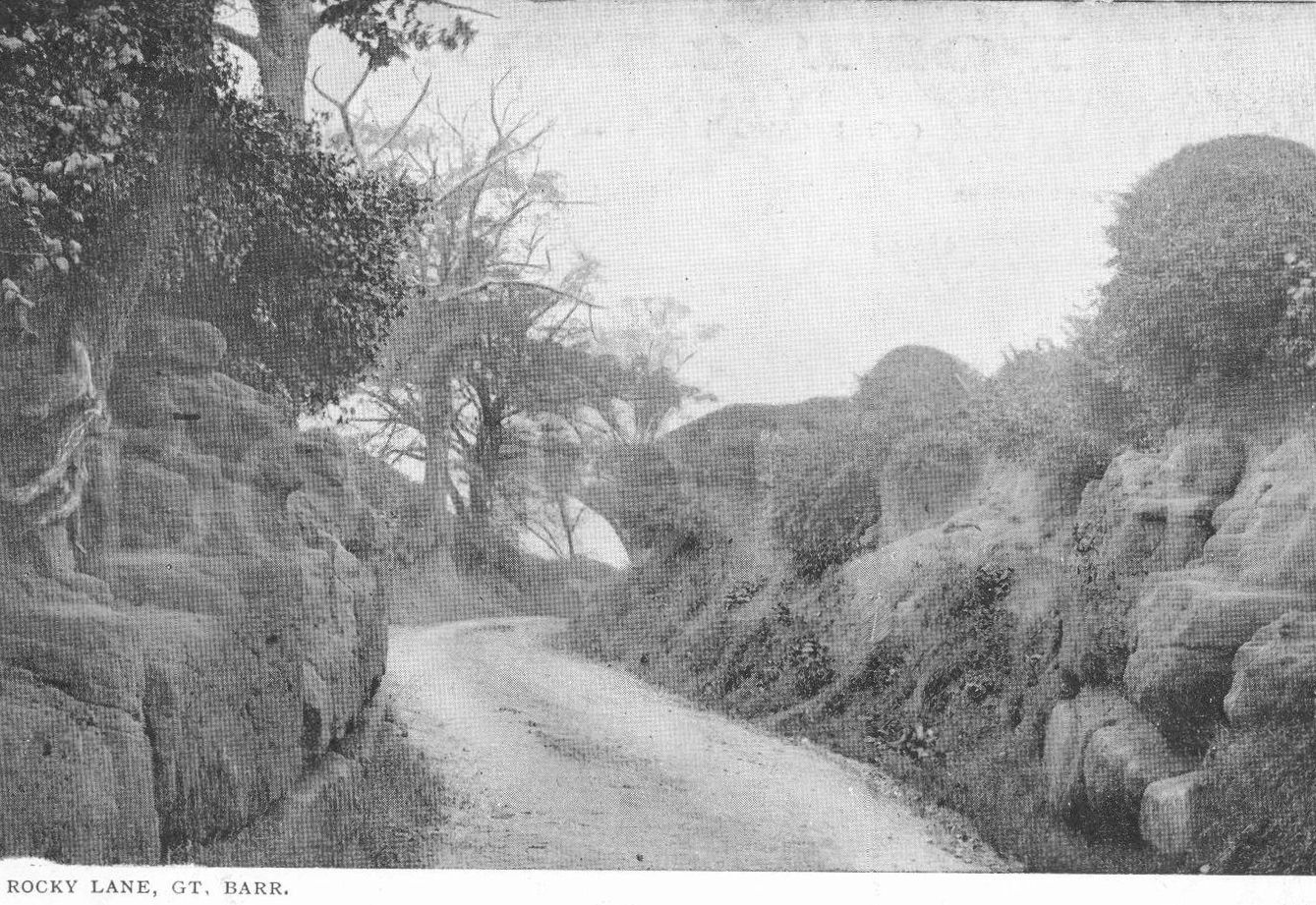
Great Barr is one of the oldest historic districts on the north-western edge of Birmingham, sitting between Perry Barr, Handsworth Wood, Kingstanding and Hamstead. Long before it became part of the modern city, it was a rural parish centred on farmland, woodland and one of the most important country estates in the area. Although today it is largely suburban, Great Barr still retains a strong identity that comes from its long history and its distinctive landscape.
At the heart of old Great Barr stood Great Barr Hall, one of the grandest country houses ever to exist within Birmingham’s modern boundaries. Built in the seventeenth century for the Scott family, the hall was a vast mansion overlooking the River Tame and surrounded by landscaped parkland, lakes and farmland. For generations it dominated the area both physically and socially, shaping how Great Barr developed. Although the hall was demolished in the twentieth century, parts of its parkland survive within what is now Great Barr Park, and the name of the hall remains deeply tied to the district’s identity.
Great Barr remained largely rural well into the nineteenth century, with scattered farms, cottages and country lanes running through its fields. The arrival of industry and the expansion of Birmingham gradually changed this, and by the early twentieth century housing estates began to replace much of the farmland. Even so, Great Barr never became densely built in the way that inner Birmingham did, and it has retained a greener, more open character than many other parts of the city.
In 1908 Great Barr was the scene of one of Birmingham’s worst industrial tragedies when a fire broke out at Hamstead Colliery. The underground blaze trapped dozens of miners, filling the workings with smoke and poisonous gases and making rescue almost impossible. Despite the efforts of specialist rescue teams brought in from outside the region, twenty-six men lost their lives, including a rescuer who was overcome during the operation. The disaster shocked the country and led to renewed attention on mine safety and the need for properly equipped rescue brigades, and it remains one of the most significant events in Great Barr’s industrial history.

The Old Crown and Cushion was a long-established public house on Birchfield Road in Perry Barr, traditionally known locally simply as “the Crown & Cushion.” It was once a coaching inn or roadside pub serving travellers along what was an important route into Birmingham, and references to it go back at least to the mid-1800s, with local advertisements and census records showing it operating in the 1860s and 1870s.
One of the most significant surviving historic sites in Great Barr is St Margaret’s Church, which dates back to medieval times and was the parish church for the area long before Birmingham expanded northwards. The churchyard and surrounding land offer a rare glimpse of what Great Barr was like when it was a small rural community rather than a suburb. Nearby, traces of the old landscape, including hedgerows, mature trees and winding lanes, still reflect the area’s agricultural past.
Great Barr is also closely connected with St Margaret’s Hospital, later known as the Colony, a large mental health institution that once stood close to Great Barr Hall. Built in the early twentieth century, it formed part of Birmingham’s network of psychiatric hospitals and became one of the area’s most striking and controversial landmarks. Although much of the site has since been redeveloped, parts of the original buildings remained standing for many years and became well known through urban exploration and local memory.
In the modern era, Great Barr has developed into a broad residential district, with post-war housing estates, schools, local shopping areas and large green spaces. It is not a single administrative ward but a historic area divided between several Birmingham wards, which is why its name survives more in local use than in council boundaries. Despite this, the identity of Great Barr remains strong, rooted in the long history of its hall, its church and the landscape that once made it one of the most important rural estates on Birmingham’s edge.
Today, although the great houses and institutions have largely disappeared, Great Barr continues to reflect its past through its parks, surviving landmarks and place names. It stands as a reminder that large parts of modern Birmingham were once country estates, villages and farmland, with Great Barr playing a central role in that story.



Leave a Reply