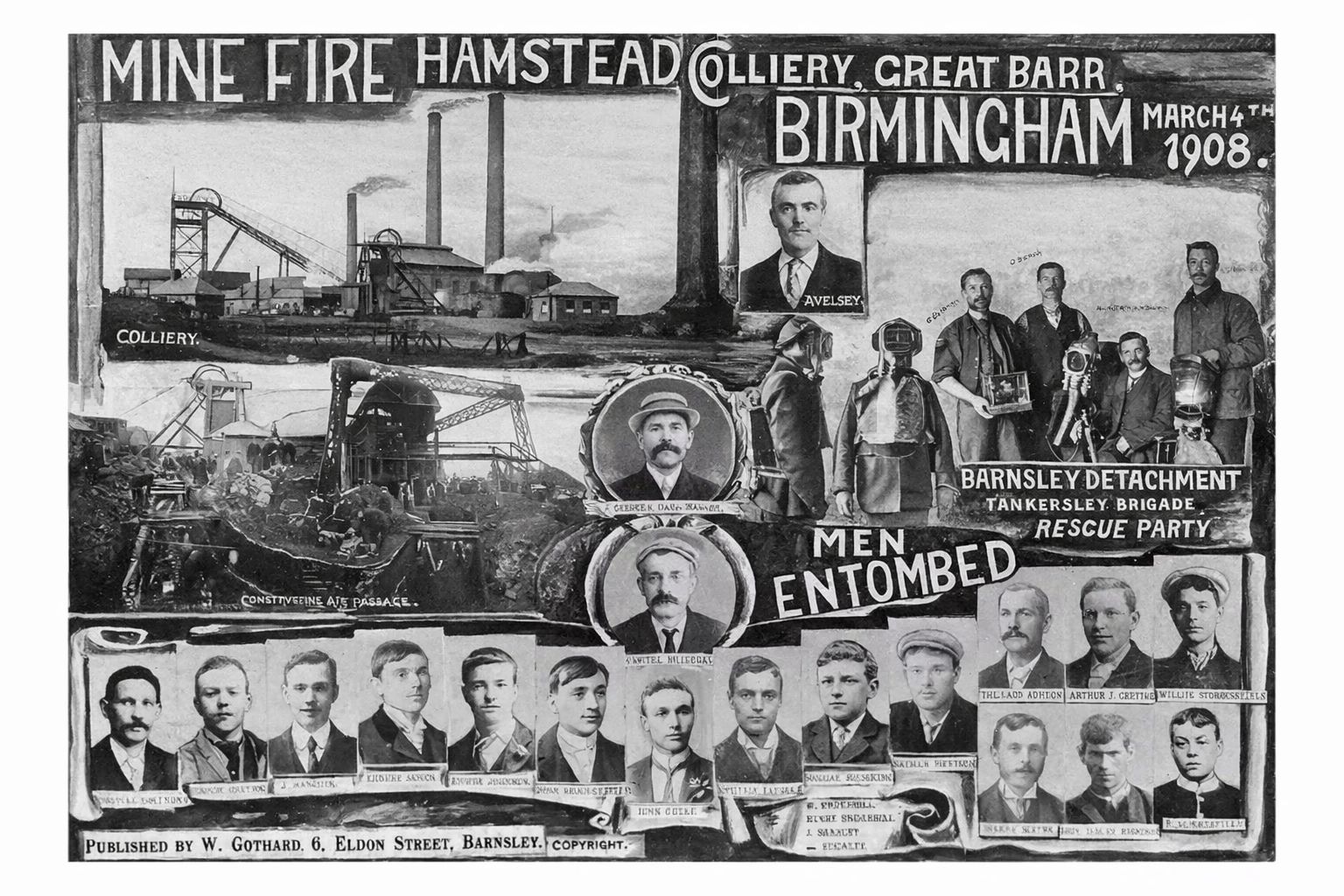
Hamstead Colliery stood on the edge of Great Barr, in what was once part of the South Staffordshire coalfield, and for decades it was one of the most important industrial sites in the area. The pit served Birmingham’s growing industries and the expanding suburbs around Handsworth, Perry Barr and Great Barr, drawing hundreds of men into dangerous underground work that powered the city above ground. In the early twentieth century it was a busy, modern colliery by the standards of its day, with deep shafts, mechanical winding gear and a complex network of underground roadways.
On 4 March 1908 that system became the scene of one of the region’s worst mining disasters. A fire broke out deep underground, most likely caused by a combination of timber supports, machinery and coal dust igniting in one of the working areas. As the fire spread, thick smoke and poisonous gases rapidly filled the mine, cutting off men working in the affected district from any escape route. Some miners managed to reach the surface, but many were trapped far below ground as conditions deteriorated.

Rescue attempts began almost immediately, but they were severely hampered by the heat, lack of visibility and deadly atmosphere underground. Specialist rescue teams were brought in from Yorkshire, including trained brigades equipped with breathing apparatus, something that was still relatively new at the time. These men worked in appalling conditions, inching their way through smoke-filled tunnels in an attempt to reach the trapped miners. Despite their efforts, the fire continued to burn and large parts of the mine remained inaccessible for days.
By the time the workings could finally be entered safely, it was clear that the disaster had claimed a heavy toll. Twenty-six men had died, including one of the rescuers, who was overcome while trying to reach those still trapped. The scale of the loss devastated families across Great Barr, Handsworth and surrounding districts, where many households depended on the pit for their livelihood. Funerals and memorials followed, and the disaster became one of the defining moments in the area’s industrial history.
The Hamstead tragedy had an impact far beyond Birmingham. It drew national attention to the dangers faced by miners and the lack of properly equipped rescue services at many collieries. Inquiries and official reports examined how the fire had spread and what could have been done to contain it, leading to renewed emphasis on mine safety, fire prevention and the training and provision of rescue brigades.
Today Hamstead Colliery itself has long disappeared beneath later development, but the memory of the 1908 disaster remains part of Great Barr’s story. It stands as a reminder of the human cost of the coal industry and of the generations of local men whose lives were shaped, and in some cases cut short, by the pits that once powered Birmingham’s growth.







Leave a Reply