
St Margaret’s Hospital, often known historically as Great Barr Park Colony or simply “the Colony”, was one of the largest and most important mental health and learning-disability institutions in the Birmingham and Walsall area. It stood on the former Great Barr Hall estate and transformed what had once been aristocratic parkland into a vast complex of hospitals, homes, farms and workshops that operated for much of the twentieth century.
The site began its life as a care institution in the early 1900s when local authorities purchased large parts of the Great Barr estate to relieve pressure on overcrowded workhouses. It was soon developed into a residential colony for people with learning disabilities and long-term mental health needs, following the then-popular model of housing patients in a self-contained rural community rather than in a single urban asylum. Over the following decades the Colony expanded rapidly, with rows of ward blocks, staff housing, kitchens, farms, laundries and workshops built across the site.
By the inter-war years the Colony housed well over a thousand residents. Men and women lived in separate areas and many worked in gardening, farming, maintenance and domestic services, which were seen as both therapeutic and practical. The scale of the site made it one of the largest institutions of its kind in the Midlands, effectively operating as a small town with its own infrastructure.
During the Second World War the site was used as part of the emergency hospital system, treating civilian and military casualties alongside its long-term residents. After 1948 it became part of the National Health Service and was renamed St Margaret’s Hospital, continuing its role as a specialist centre for people with learning disabilities and complex care needs.
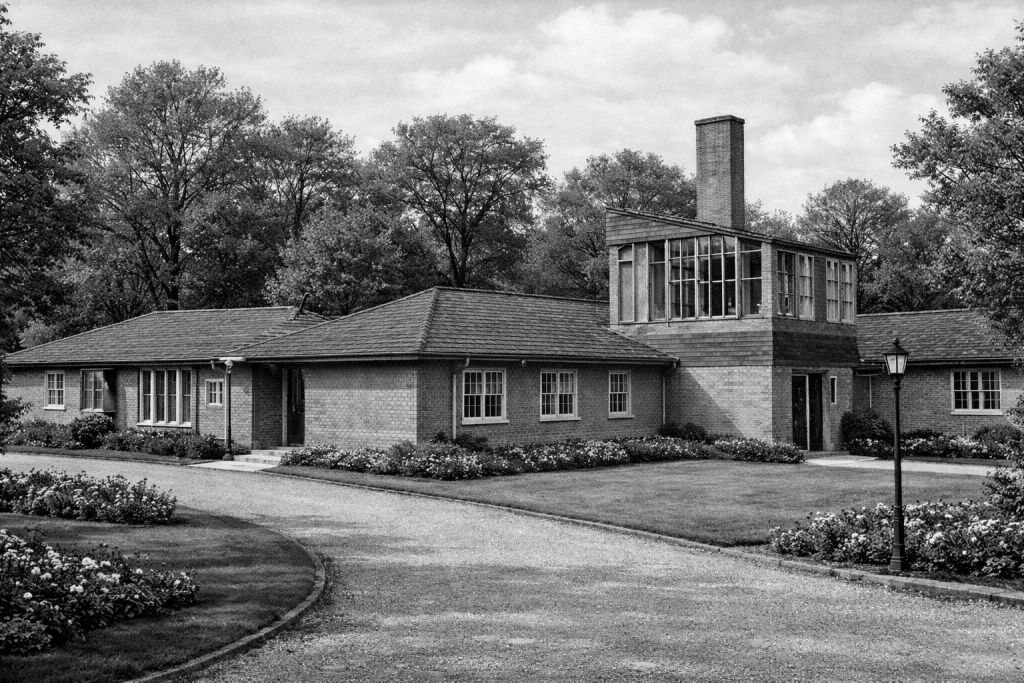
From the late twentieth century, attitudes towards institutional care changed, and large hospitals like St Margaret’s were gradually phased out in favour of smaller community-based services. Residents were rehoused elsewhere and the hospital formally closed during the 1990s and early 2000s. However, the buildings themselves did not disappear immediately. For many years after closure, large parts of the former hospital remained standing in a derelict and abandoned state.
These empty ward blocks, corridors and service buildings became well known to urban explorers and photographers and were widely documented in online photographs and YouTube videos, some filmed as recently as five years ago. The footage shows that St Margaret’s was still a substantial physical presence long after it stopped operating as a hospital, even though the buildings were deteriorating and increasingly unsafe.
Only later were most of the surviving hospital structures finally demolished as the land was redeveloped for housing and open space. Today, very little of St Margaret’s Hospital remains visible, but its long afterlife as an abandoned and explored site has left a strong mark on local memory. Together with the nearby ruins of Great Barr Hall, it stands as one of the most haunting reminders of how this part of north-west Birmingham once played a major role in the region’s mental health and social care history.






Leave a Reply