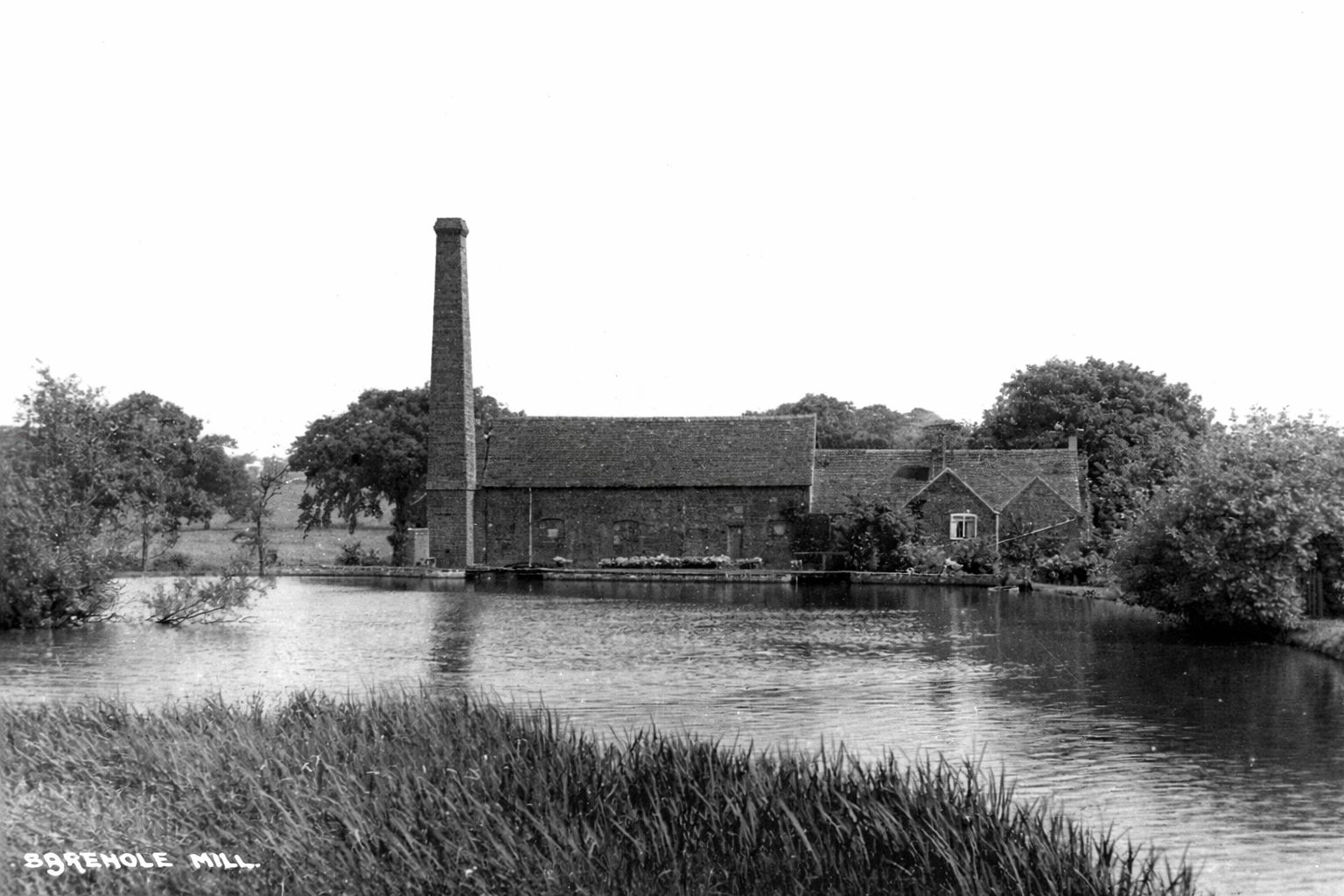
Sarehole Mill is one of Birmingham’s most important historic buildings, standing beside the River Cole on the edge of Hall Green and Moseley. It is a rare survivor of the rural Midlands that existed before the city spread across the landscape, and today it remains one of the best-preserved examples of an eighteenth-century watermill in the region.
The mill was built in 1757, although milling had taken place on the site for centuries before that. Powered by the River Cole, Sarehole Mill was originally used to grind grain into flour for the surrounding farming communities. For much of its working life it served a largely rural population, supplying local farms, bakeries and households at a time when Birmingham was still a small town rather than a major industrial city. The mill remained in use into the nineteenth century, even as factories and housing began to close in around it.
Sarehole Mill is best known today for its association with J. R. R. Tolkien, the author of The Hobbit and The Lord of the Rings. Tolkien lived nearby in Edgbaston and later in Moseley as a child in the early 1900s, and he spent many hours exploring the countryside around Sarehole. The mill, its millpond, the River Cole and the surrounding fields made a deep impression on him, and they are widely believed to have inspired the peaceful rural settings of the Shire and the watermills that appear in his stories. In particular, Tolkien is thought to have drawn on Sarehole Mill when imagining the mill at Hobbiton and its later destruction in The Lord of the Rings.
Just beyond the mill lies Moseley Bog, now officially known as the Moseley Bog and Joy’s Wood Nature Reserve. In Tolkien’s childhood this was a wild, tangled area of wet woodland, pools and streams, and he described it as one of his favourite places to explore. The bog’s mysterious, shadowy paths and dense vegetation are often linked to Tolkien’s later depictions of places such as the Old Forest and Fangorn, where nature feels ancient, powerful and slightly dangerous. Together, Sarehole Mill and Moseley Bog formed a landscape that helped shape Tolkien’s imagination.
By the early twentieth century, the mill was no longer commercially viable, and it eventually closed as an industrial site. For a time it fell into disrepair, but its historic importance was recognised, and it was later restored and preserved. Today, Sarehole Mill is operated as a museum and heritage attraction by Birmingham Museums. Visitors can see the original milling machinery, learn about traditional water-powered milling, and explore exhibitions about rural life and Tolkien’s connection to the area.
Sarehole Mill now stands as a rare link between Birmingham’s industrial growth and the countryside that once surrounded it. It is not only a surviving piece of the city’s pre-industrial past, but also a place of international cultural significance because of its role in inspiring one of the most influential writers of the twentieth century.







Leave a Reply