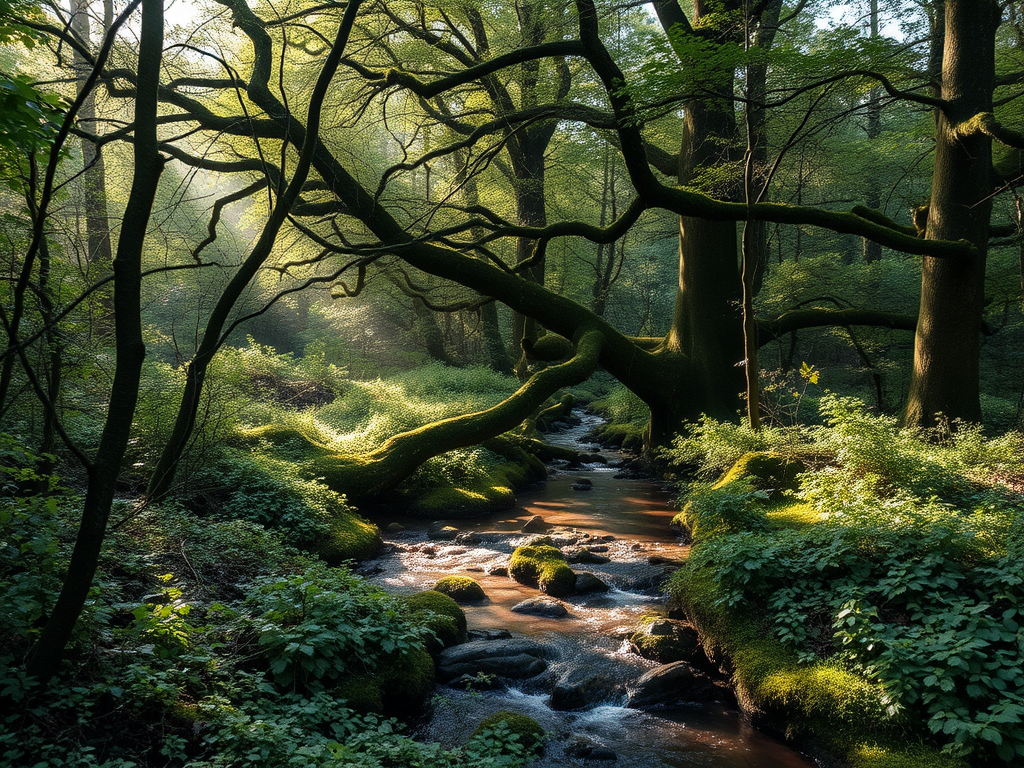
Moseley Bog is one of Birmingham’s most important natural and historic landscapes, lying between Moseley, Kings Heath and Hall Green. It is not just a park or a nature reserve, but a rare surviving fragment of ancient woodland and wetland that preserves what much of south Birmingham once looked like before the city spread across it.
The bog is part of the valley of the River Cole, which has flowed through this landscape for thousands of years. For centuries the area was used as common land, woodland and water meadow, supporting grazing, coppicing and small-scale farming. Its damp ground and thick vegetation made it unsuitable for building, which is one of the reasons it survived when surrounding fields were developed into suburbs.
Moseley Bog is also famous for its connection to J.R.R. Tolkien, who spent part of his childhood in the nearby area. The tangled trees, streams and quiet clearings of the bog are widely believed to have inspired scenes in The Hobbit and The Lord of the Rings, giving this small corner of Birmingham an international cultural significance.
In the twentieth century the bog came under threat from development, but it was saved by determined local campaigning, particularly by figures such as Sylvia Capstick, whose efforts helped secure its protection. The site later came under the care of the Wildlife Trust, ensuring that its wildlife, history and landscape would be preserved for future generations.
Today Moseley Bog is a Local Nature Reserve and one of Birmingham’s most cherished green spaces. Its woodland paths, pools and streams offer a glimpse into the ancient countryside that once surrounded the city, making it a powerful reminder that even in a modern industrial metropolis, deep layers of natural and human history still survive.







Leave a Reply