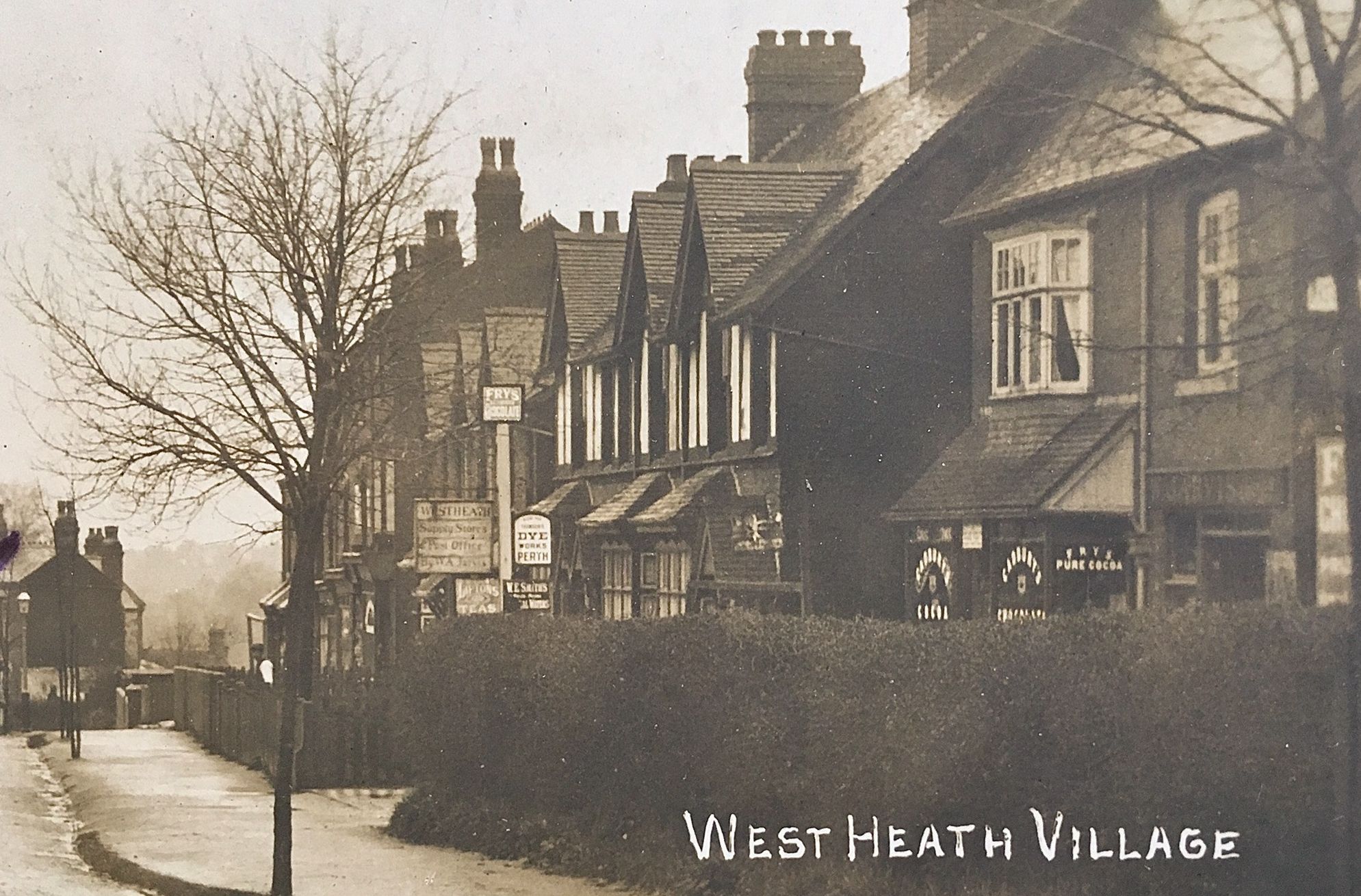
West Heath is a residential district of south Birmingham, lying between Northfield, Kings Norton, Longbridge and the Worcestershire boundary. Although today it appears as a typical suburban area, its history is rooted in the rural landscape that once stretched across the southern edge of Birmingham.
The name West Heath reflects the open heathland that once covered this part of Worcestershire, where common land was used for grazing, wood gathering and small-scale farming. For centuries West Heath was made up of scattered cottages, farms and tracks linking Kings Norton with the countryside beyond. It remained largely undeveloped until the late nineteenth and early twentieth centuries, when Birmingham’s rapid growth pushed steadily southwards.
The arrival of new transport links and the expansion of nearby Longbridge transformed West Heath into a residential community. Large numbers of houses were built to accommodate workers employed at the Austin Motor Company and later British Leyland at Longbridge, as well as those working in factories and offices across south Birmingham. The area developed a strong working-class identity, closely tied to the rhythms of shift work at the car plant.
One of West Heath’s most distinctive landmarks is St John the Baptist Church, which stands at the heart of the district and has long served as a focal point for community life. Schools, local shops and social clubs grew around it, reinforcing West Heath’s role as a self-contained neighbourhood rather than just an extension of Longbridge.
Although West Heath was never an industrial centre in its own right, its proximity to one of Britain’s most famous factories gave it a unique place in Birmingham’s industrial story. Generations of families in the area were connected to the car industry, and the rise and fall of Longbridge had a direct impact on the fortunes of the district.
Today West Heath remains a quiet, settled part of south Birmingham, characterised by its housing estates, green spaces and local amenities. Beneath its suburban appearance lies a history shaped by heathland, village life and the immense influence of Birmingham’s motor industry, making it an important part of the city’s wider story.







Leave a Reply