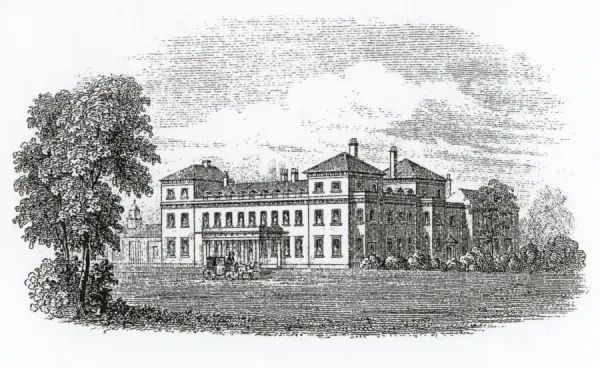
Sandwell Hall was a grand country house that once stood in what is now Sandwell Valley, close to the site of Sandwell Priory. Built in the 18th century, the hall replaced an earlier manor house and became the principal residence of the Earls of Dartmouth, one of the most influential landowning families in the area.

The hall was constructed around 1701, with later alterations and extensions during the 18th and early 19th centuries. Set within extensive landscaped parkland, Sandwell Hall was designed as a statement of wealth and status, overlooking the valley and commanding views across the surrounding countryside. At its height, the estate included gardens, farmland, woodland and water features, shaping much of the landscape that survives today.

During the 19th century, the growth of industry and population around West Bromwich began to encroach on the estate. Although the hall remained a private residence, maintaining such a large country house became increasingly impractical. By the early 20th century, Sandwell Hall was no longer occupied by the family and gradually fell into decline.
In the 1920s, the building was demolished, and its materials were reused elsewhere. The surrounding estate later passed into public ownership and became Sandwell Valley Country Park, preserving the wider historic landscape even though the hall itself was lost.
Today, no visible remains of Sandwell Hall survive above ground, but its historical importance is fundamental to understanding Sandwell. Alongside Sandwell Priory, the hall helped give the borough its name and shaped land ownership, settlement patterns and landscape development for centuries. Although vanished, Sandwell Hall remains one of the most significant “lost buildings” in the history of the Black Country.







Leave a Reply