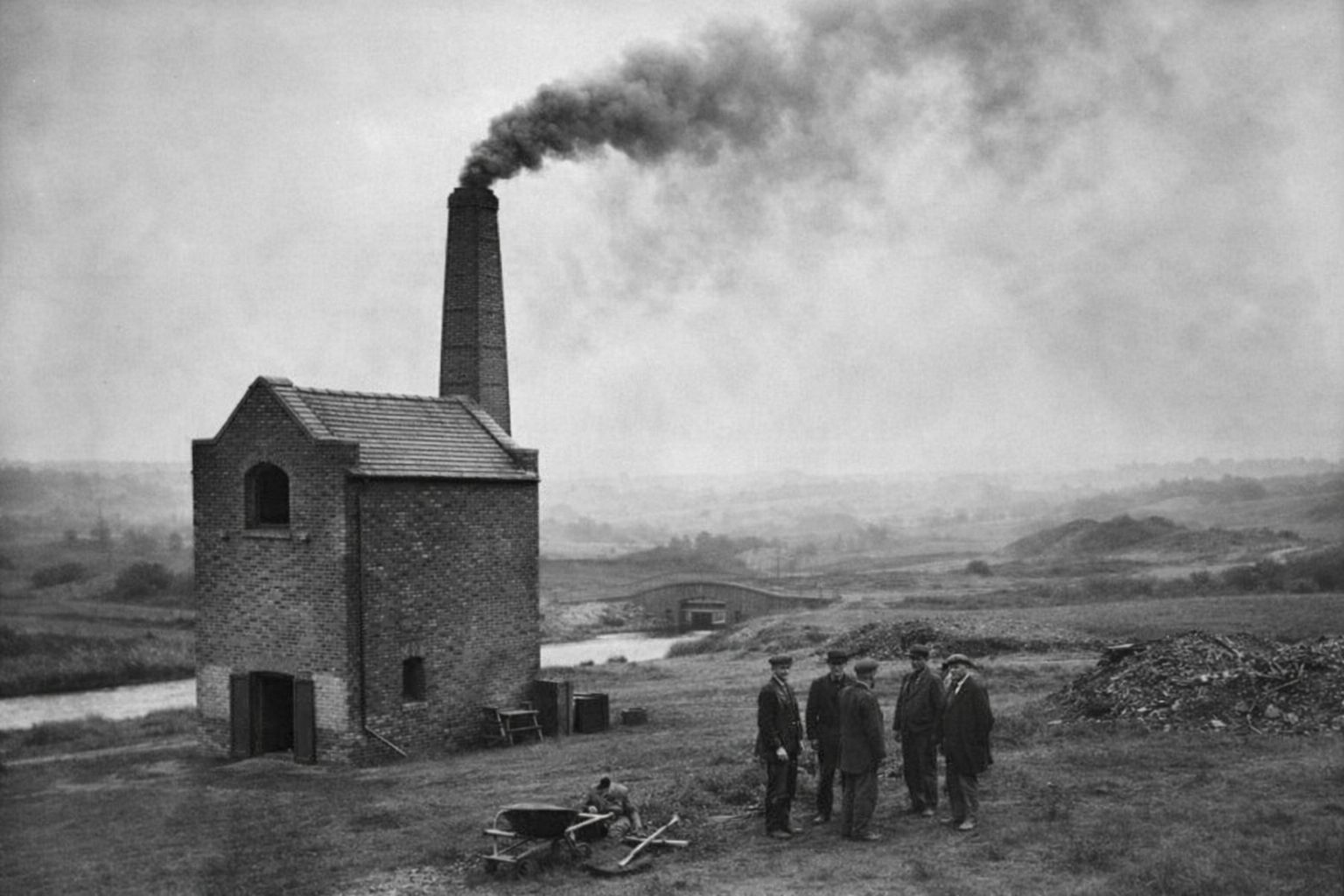
Cobb’s Engine House, also known historically as the Windmill End Pumping Station, is one of the most important surviving reminders of the Black Country’s industrial past. It stands near Windmill End Junction, close to the canals linking Dudley, Netherton and Bumble Hole, in an area now reclaimed by nature and popular with walkers and cyclists. Although roofless today, the dramatic brick structure and tall chimney remain powerful symbols of the region’s mining heritage.
The engine house was built around 1831 to serve the deep coal mines of the Windmill End area. Coal seams here lay far below the water table and were constantly threatened by flooding. To keep the mines workable, a large stationary steam pumping engine was installed, housed within the engine house and connected to a shaft more than 500 feet deep. The engine lifted vast quantities of water every day and discharged it into the nearby canal system, making continued coal extraction possible.
Throughout the 19th century, Cobb’s Engine House played a vital role in sustaining local industry. As mining technology developed, the pumping machinery was maintained and adapted, allowing the site to remain operational long after many neighbouring pits had closed. By the late Victorian period, it had become one of the most important pumping stations in the area, supporting mines across a wide section of the Black Country.
The decline of coal mining in the early 20th century eventually brought the engine’s working life to an end. Cobb’s Engine House ceased operation in 1928, making it the last colliery pumping engine in the district to shut down. The massive steam engine was later dismantled and removed, while the building itself was left standing as industry retreated from the landscape.
Architecturally, the engine house was built as a tall, robust brick structure with multiple internal floors to accommodate the engine, beams and associated machinery. The most striking surviving feature is the chimney, rising to around 95 feet, which once carried smoke and steam away from the boilers. Although the roof and floors have gone, the scale and form of the building remain clearly legible.
Today, Cobb’s Engine House is a Grade II listed structure and a protected industrial monument. It sits within an area that has been transformed into open green space and local nature reserves, where canals, pools and woodland have replaced spoil heaps and pit workings. Visitors can walk around the engine house, enter the open shell, and appreciate both its engineering significance and its dramatic setting.
Cobb’s Engine House stands as a lasting reminder of the ingenuity and labour that powered the Black Country. From its role in draining deep coal mines to its survival as a historic landmark, it tells the story of an area shaped by steam, coal and industry, and later reclaimed for community and nature.







Leave a Reply