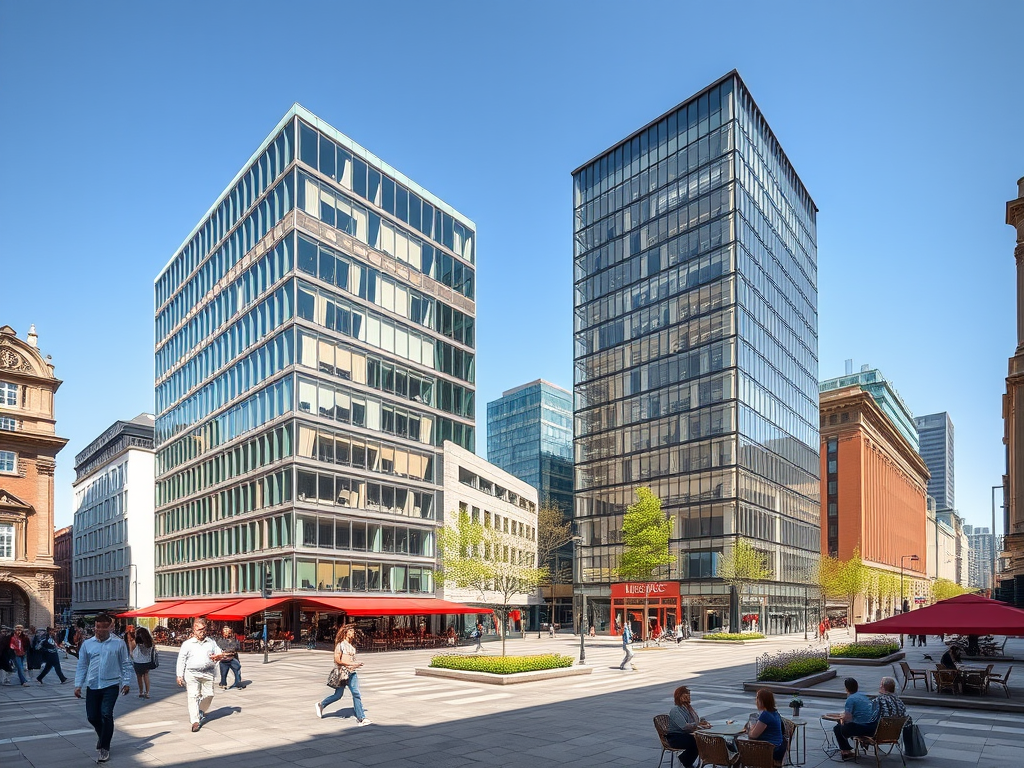
Paradise: Birmingham’s New Civic Heart
In the early decades of the 21st century, Birmingham embarked on one of the most ambitious city-centre transformations in the United Kingdom: the redevelopment of the area now known simply as Paradise. This new district, located just west of Victoria Square and adjacent to Centenary Square and the Library of Birmingham, represents a dramatic reimagining of how the city’s central public spaces and commercial core work together. More than just a collection of buildings, Paradise is intended to be a vibrant, people-focused district that knits together historic and modern Birmingham, enhances the urban experience, and positions the city for the future.
From Ring Road to Urban Quarter
For much of the second half of the twentieth century, the site now called Paradise was dominated by Paradise Circus, a large concrete road interchange and traffic system built in the 1960s. Designed in the era of car-centric planning, the ring road and underpasses created barriers between the city’s most significant civic spaces. Chamberlain Square, Victoria Square, Centenary Square and the emerging cultural quarter around the Birmingham Repertory Theatre and Symphony Hall were effectively cut off from one another, making the city centre difficult to navigate on foot.
By the early 2000s, plans were underway to remove this barrier and replace it with a more coherent urban landscape. The vision was to reconnect the city’s cultural institutions, improve pedestrian circulation, and create new high-quality public spaces and buildings. The removal of the road network began in stages in the 2010s, making way for a completely new district.
New Streets, New Places, New Buildings
Paradise was designed as a mixed-use quarter combining commercial, civic and public spaces. Its layout does not follow the old ring road but instead opens up a human-scaled network of streets and squares. The district now provides direct pedestrian routes between Victoria Square, Chamberlain Square, Centenary Square and the wider business and cultural districts west toward Broad Street.
Several major buildings have already reshaped this part of the city. One and Two Chamberlain Square form a striking gateway from Victoria Square into the new district. The HSBC UK headquarters brought a major national employer into the heart of Birmingham, while 99 Colmore Row re-established Colmore Row as one of the region’s premier business addresses. Alongside these are modern office buildings, cafés and restaurants designed to create active street life and a lively, usable public realm throughout the day and evening.
What Was Lost and What Was Gained
To create Paradise, the old motorway-style road system of Paradise Circus was dismantled and several dated office blocks from the 1960s and 1970s were demolished. Much of this land had been dominated by traffic, concrete ramps and underpasses that discouraged walking and weakened the relationship between Birmingham’s most important civic spaces.
In their place, the new district provides wide pedestrian routes, landscaped public squares, tree-lined streets and buildings designed to engage with the public realm. Instead of a barrier, Paradise now acts as a bridge between different parts of the city centre, allowing people to move easily from one square, building or attraction to another.
The Idea Behind the Concept
The driving idea behind Paradise is a shift away from car-dominated planning towards people-centred urban design. The project aims to create a place where people want to spend time, not just pass through. It is intended to support Birmingham’s economy by attracting global businesses, professional services and high-skill jobs, while also improving the quality of public life through well-designed streets, squares and cultural connections.
By linking the historic core around Victoria Square and the Town Hall with the modern cultural quarter around the Library of Birmingham and Symphony Hall, Paradise creates a continuous civic landscape that reflects both the city’s heritage and its ambitions.
How Paradise Is Changing Birmingham
Paradise has already changed the way Birmingham’s city centre feels and functions. Where there was once a hostile traffic interchange, there is now a walkable district with cafés, offices, trees and public spaces. The project has reconnected some of Birmingham’s most important landmarks, improved the experience of moving through the city on foot, and raised the architectural and environmental quality of the central area.
As further phases are completed, Paradise will continue to grow into one of Birmingham’s most important districts, helping to shape a city centre that is greener, more connected and more attractive to residents, workers and visitors alike.



Leave a Reply