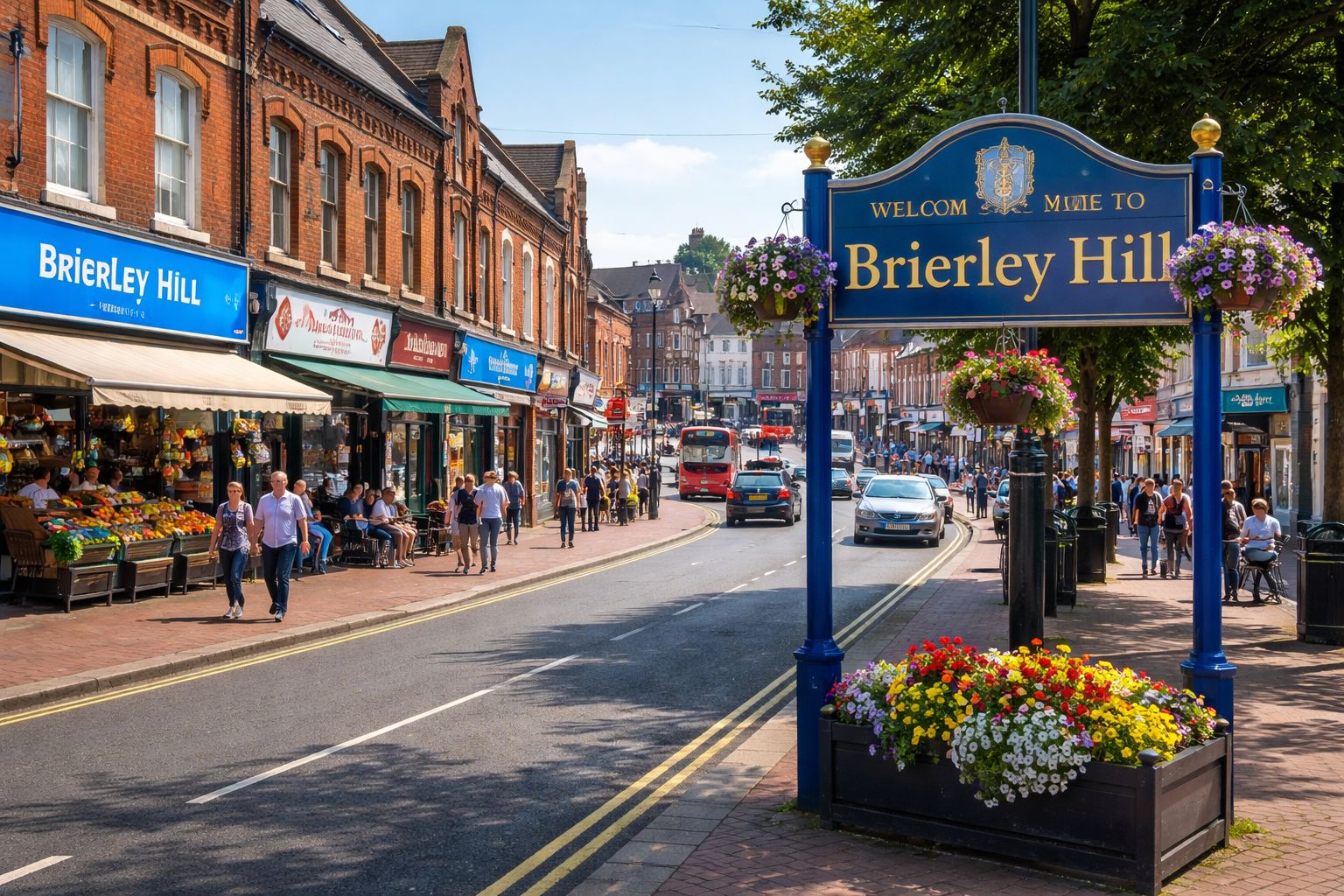
Brierley Hill is a historic town in the western part of the Black Country, now part of the Dudley borough, with a character shaped by heavy industry, canals, and later large-scale retail and regeneration. It lies a few miles south of Dudley and just west of the old Staffordshire–Worcestershire border, in an area that became one of the most intensely industrialised landscapes in Britain during the nineteenth century.
The town grew from a small rural settlement into a major industrial centre during the Industrial Revolution. Rich seams of coal, ironstone and limestone lay beneath the surrounding hills, and by the early nineteenth century Brierley Hill was surrounded by mines, ironworks, brickworks and glassworks. The area became particularly known for glassmaking, with the nearby Wordsley and Stourbridge glass district producing some of the finest hand-blown and cut glass in the world. Brierley Hill was also closely linked to the Black Country canal network, which allowed raw materials and finished goods to be moved cheaply and efficiently to Birmingham, Wolverhampton and beyond.
For much of the nineteenth and early twentieth centuries, Brierley Hill was a tough but prosperous working town, dominated by furnaces, chimneys and rows of terraced housing. Like much of the Black Country, it was a place where skilled industrial workers, especially in metalworking and glass, passed their trades down through generations. However, the collapse of traditional heavy industry after the Second World War hit the area hard. Mines closed, factories shut, and large tracts of land were left derelict by the 1970s and 1980s.
Out of this decline came one of the most dramatic regeneration projects in the West Midlands: the creation of the Merry Hill Shopping Centre. Built in the late 1980s on the former Round Oak Steelworks site just outside the town centre, Merry Hill transformed the local economy. It became one of the largest out-of-town shopping centres in the UK, drawing visitors from across the region and creating thousands of retail and service jobs. Alongside it grew the Waterfront office and leisure complex, bringing banks, call centres and professional services into an area once dominated by blast furnaces.
Although Merry Hill sits just outside the original town centre, it has come to define modern Brierley Hill. The traditional High Street, once busy with local shops serving a dense industrial population, has struggled to compete with the new retail district, but it remains an important part of the town’s identity and local life. The contrast between the old Black Country streets and the modern shopping and office developments reflects the wider story of the region’s transition from heavy industry to a service-based economy.
Brierley Hill is also becoming more closely connected to the wider West Midlands again through transport investment. The extension of the West Midlands Metro from Wednesbury through Dudley to Brierley Hill is bringing light rail back to an area that lost its railway links decades ago. This is expected to strengthen links with Birmingham, Wolverhampton and the rest of the Black Country, making the town more attractive for new businesses and development.
Today, Brierley Hill stands as a powerful example of Black Country resilience and reinvention. From a landscape once filled with coal pits, furnaces and glassworks, it has become a centre for shopping, offices and modern urban living. Yet beneath that new surface, its industrial heritage still shapes the town’s identity, giving Brierley Hill a strong sense of place rooted in the history of one of Britain’s most important manufacturing regions.



Leave a Reply