From Tudor Manor to Luxury Hotel
Moor Hall, originally known as Old Moor Hall, stands on the northern edge of Sutton Coldfield close to the Staffordshire boundary and is one of the area’s most historically significant buildings. Its roots go back to the medieval period, when the land was first associated with a local landowner named William de la More in the fourteenth century. By the early fifteenth century, the property was already established as a residence, with records showing that a man named Roger Harwell was living there in 1434. At that time, the hall would have been a modest stone house standing amid open heathland and farmland.

During the late fifteenth century, the estate passed into the hands of the Harman family. William Harman lived at Moor Hall with his son John Harman, who later became Bishop Vesey, one of the most influential figures in Sutton Coldfield’s history. It is believed that Vesey was born at the old hall in 1465, when the house was still a relatively simple two-storey sandstone building rather than the grand residence it would later become.
John Harman, later known as Bishop Vesey, rose rapidly at the court of King Henry VIII and became a powerful and wealthy churchman. In 1527 and 1528 he was granted land by the king in the area known as Moor Crofts and Heath Yards, along with large areas of waste ground. On this land Vesey built a new and far grander Moor Hall close to the earlier house of his birth. This new residence was intended to reflect his status, and at its height he maintained a household of around 140 servants, who were required to wear distinctive scarlet livery. Although no detailed plans survive, contemporary references suggest that the building was an imposing country house by the standards of Tudor England.
Moor Hall became one of Vesey’s principal homes and was also associated with the royal family. Princess Mary, the future Queen Mary I, spent part of her youth there while Vesey was her tutor. At the same time, Vesey used his influence to transform Sutton Coldfield itself. In 1528 he secured a royal charter that placed Sutton Park and surrounding lands into trust for the benefit of the town’s inhabitants, an act that still shapes the town today. He also rebuilt parts of the parish church, founded a grammar school, built bridges and paved streets, and sponsored new housing. When he died in 1555, aged over one hundred, he left behind a town that had been dramatically reshaped by his vision.
After Vesey’s death, Moor Hall passed through a number of owners. In the late seventeenth century it came into the hands of John Addyes, who later left it to his great-nephew John Hackett, a member of the family that owned nearby Moxhull Hall. By the eighteenth century the house had become rather unfashionable, described by some visitors as large but unattractive, and it was extensively rebuilt at considerable expense during that period in an attempt to modernise it.
Throughout the nineteenth century Moor Hall was usually occupied by tenants rather than owner-occupiers. One of the better-known residents was A. R. Dean, a successful carpet manufacturer. From 1866 the Lloyd family lived there, prominent industrialists, mine owners and bankers who were among the founders of what became Lloyds Bank. Sampson Lloyd was in residence by 1871, living at Moor Hall with his wife, children and household staff while maintaining his interests in both heavy industry and finance.
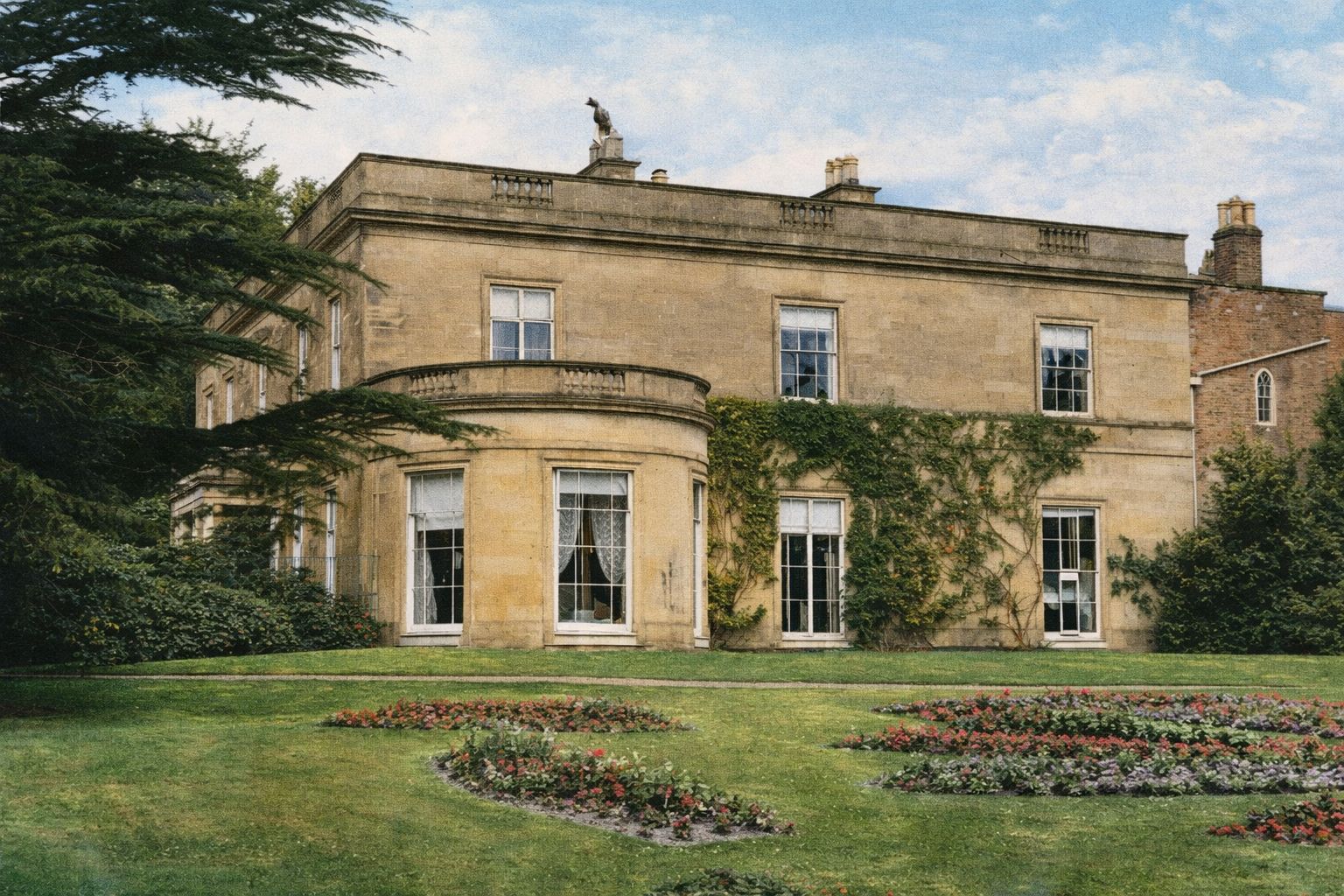
In 1903 the hall was purchased by Colonel Edward Ansell, a Birmingham alderman and the owner of Ansell’s Brewery. At that time the old Regency-fronted house stood empty and in a rather dated condition. Ansell decided to demolish it and build a new mansion on the site. The present Moor Hall dates from this period. It was designed in a Tudor-revival style with tall chimneys, decorative stonework and a clock tower, and was built using craftsmen working on site. The quality of the carving, stained glass and masonry was widely admired and remains one of the building’s defining features.
The Ansell family lived at Moor Hall until 1930, when the entire estate was sold at auction. The sale included not only the house but large areas of surrounding land, including what is now Moor Hall Drive and the land that later became Moor Hall Golf Club. The estate was bought by the Streather family for £35,000, marking the end of Moor Hall’s long history as a private family seat.
In the decades that followed, Moor Hall gradually moved away from private ownership and was eventually converted into a hotel and leisure complex. Today it survives as Moor Hall Hotel & Spa, located in the Roughley ward of Sutton Coldfield within Birmingham, combining a sixteenth-century lineage, early twentieth-century architecture and modern hospitality facilities. Its long and complex history, from medieval manor to Tudor palace, Victorian country house and finally luxury hotel, makes Moor Hall one of the most remarkable surviving historic buildings in the Sutton Coldfield area.







Leave a Reply