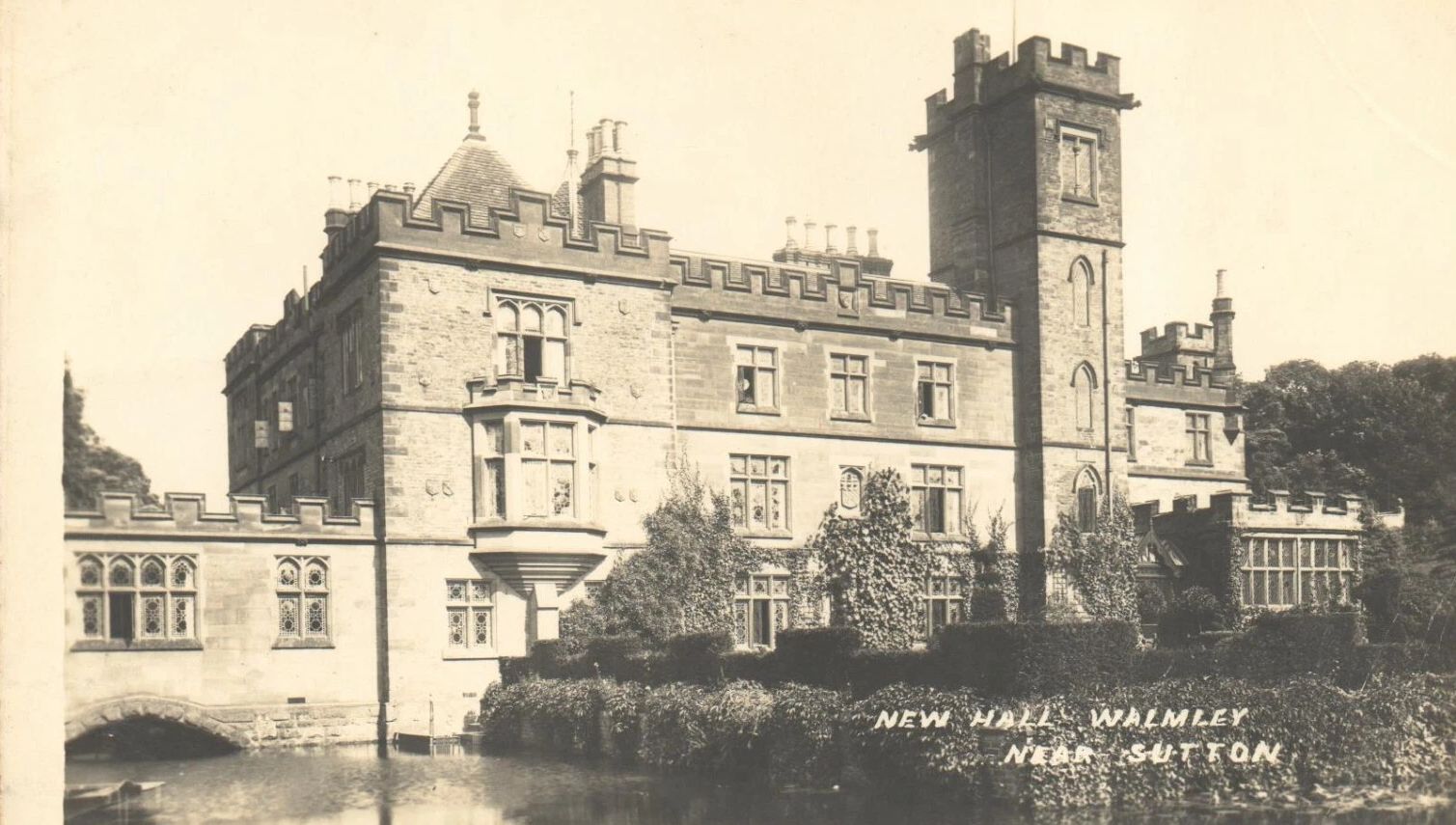
New Hall stands in Walmley, Sutton Coldfield, and is one of the best-preserved medieval moated manor houses in England. It was built in the thirteenth century, around 1220, by Roger de Somery II, a powerful local lord whose family held large estates across Warwickshire and Staffordshire. The building was originally called Walmley Hall, but it later became known as New Hall to distinguish it from older manor houses in the area.
Unlike most medieval houses, which were later rebuilt or demolished, New Hall has survived almost intact. It was built on an island within a wide water-filled moat, giving it both protection and status. Its thick stone walls, narrow windows and arched entrances reflect its dual role as both a fortified residence and a noble household. The hall originally stood in open countryside, surrounded by woodland, farmland and hunting grounds linked to the wider royal forest of Sutton Chase.
During the Middle Ages, New Hall was one of the most important manorial centres in the Sutton Coldfield area. It controlled surrounding farms, mills and tenants and formed part of the local system of feudal landholding. The Somery family later became Barons of Dudley, giving the hall regional importance far beyond its size.
After passing through several families, New Hall was sold in the sixteenth century to Bishop Vesey, who already controlled Moor Hall and large parts of Sutton Coldfield. Vesey incorporated New Hall into his wider estate, further strengthening its role in the management of Sutton’s land and people. Although the building was no longer a primary residence, it remained an important estate centre.
In the eighteenth and nineteenth centuries, as large country houses such as Little Aston and Moor Hall were rebuilt or replaced, New Hall remained largely untouched. Its medieval structure survived because it was never fashionable enough to modernise in the grand style, and because its moated setting made redevelopment difficult.
In the twentieth century New Hall was restored and adapted for a new role as a hotel, restaurant and wedding venue. This conversion preserved the building while allowing the public to experience one of the oldest surviving manor houses in the Midlands. Today it is known as New Hall Hotel & Spa, a rare example of a medieval moated manor still in continuous use.
New Hall is unique in Sutton Coldfield because it provides a direct physical link to the medieval landscape that existed long before Birmingham grew into a major city. Together with Moor Hall and Little Aston Hall, it shows how the Sutton Coldfield area evolved from forest and farmland into one of the most historic and prestigious parts of the West Midlands.







Leave a Reply