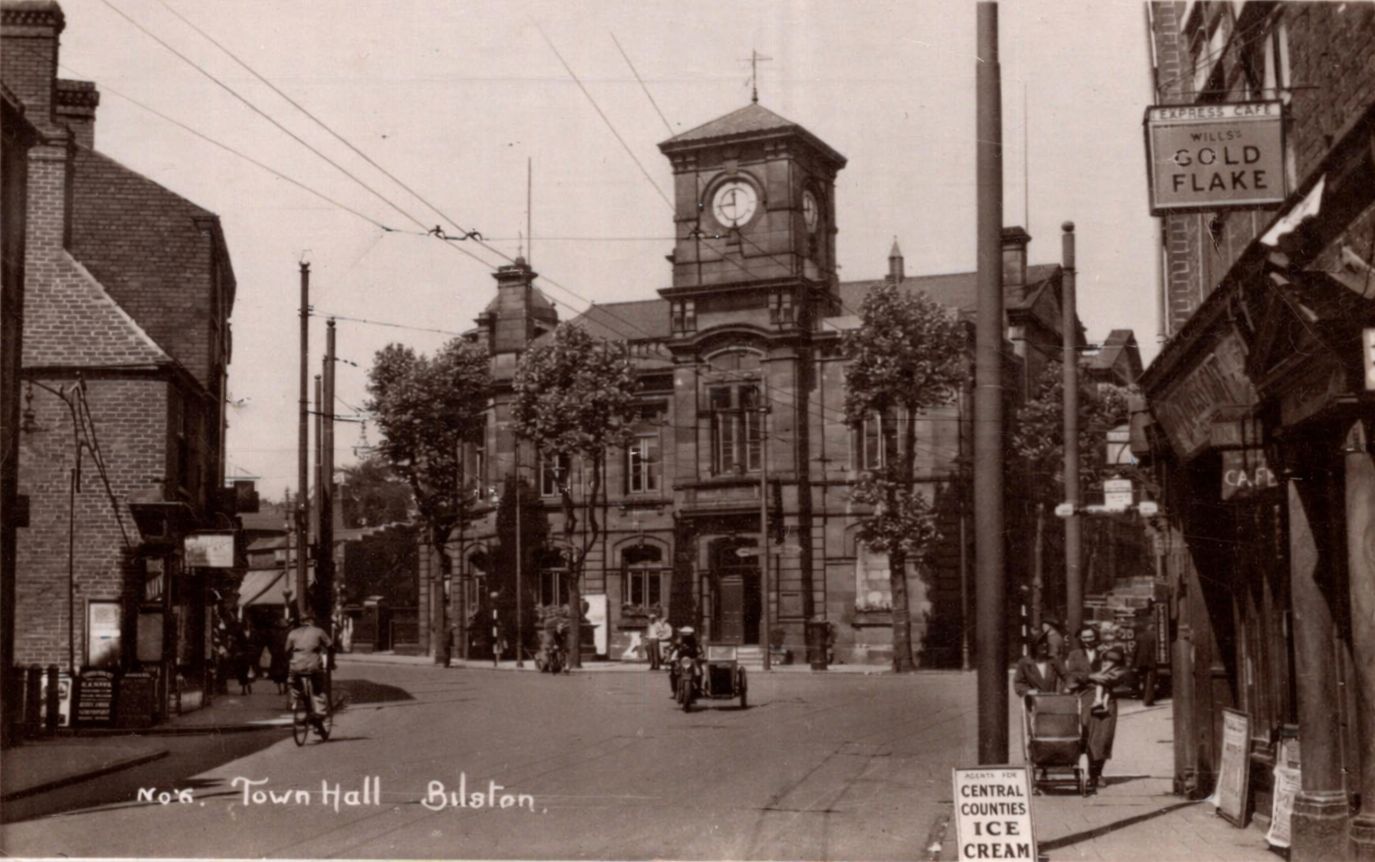
Bilston is a historic town in the Black Country, lying to the south-east of Wolverhampton and just a few miles from the centre of Birmingham. For centuries it has been one of the key industrial communities of the West Midlands, known for ironworking, engineering and later heavy manufacturing. Although today it forms part of the City of Wolverhampton, Bilston has always had a strong identity of its own, shaped by industry, transport and a close-knit working-class culture.
The origins of Bilston go back to Anglo-Saxon times, and its name is thought to derive from a personal name, Bealh or Billa, combined with “tun”, meaning a settlement or farm. By the Middle Ages it was already a small market and craft centre, but it was the Industrial Revolution that transformed it. Rich seams of coal and ironstone lay beneath the area, and Bilston quickly became a powerhouse of iron production, furnaces, forges and later steelworks. By the nineteenth century it was one of the most intensely industrialised places in Britain, its skyline filled with chimneys, furnaces and rolling mills.

One of Bilston’s most important historic buildings is St Leonard’s Church, which stands at the heart of the old town. Parts of the church date back to medieval times, and it has watched over the community through centuries of industrial growth, hardship and change. Close by is the former Bilston Town Hall, an imposing nineteenth-century civic building that reflects the town’s importance at the height of the industrial era.

Bilston is also closely associated with the story of modern manufacturing. It became a centre for metal goods, chains, locks, hollowware and later components for the motor industry. Thousands of local people were employed in foundries, stamping works and engineering shops, supplying factories across Birmingham, the Black Country and beyond. This industrial heritage is now preserved and interpreted at the Black Country Living Museum, which lies just to the south-east of Bilston and includes relocated buildings, workshops and furnaces from Bilston and neighbouring towns.
Green space has always been important to Bilston, offering relief from the dense industrial landscape. Hickman Park, in the centre of the town, is one of the best known local parks, with open lawns, trees and play areas providing a focal point for the community. Nearby, the canal network, once used to move coal and iron, now forms a quieter landscape of towpaths and waterways that link Bilston to Wolverhampton, Walsall and Birmingham.
Bilston’s transport history is another key part of its story. The town was served by canals, then by railways, and later by tramways that connected it directly to Wolverhampton and Birmingham. In modern times it has regained its rail link through the West Midlands Metro, which runs through Bilston town centre, underlining its continuing role as a transport hub in the region.
Although many of the heavy industries have gone, Bilston remains a place with a powerful sense of history and identity. Its churches, civic buildings, canals, parks and surviving industrial sites all tell the story of a town that helped power the Industrial Revolution and shape the modern Midlands. Today, as it continues to evolve and regenerate, Bilston still stands as one of the most important historic communities of the Black Country.






Leave a Reply