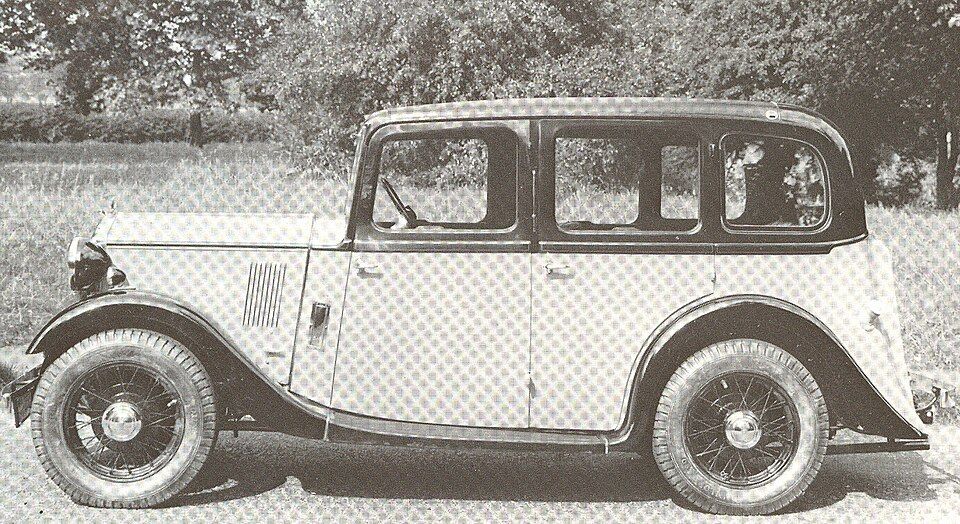
The Wolseley name occupies a special place in British industrial history, representing one of the earliest transitions from Victorian engineering into the age of motor vehicles. Wolseley’s story is closely connected to Birmingham and the wider Midlands, and it reflects both the pioneering spirit and later structural challenges of Britain’s motor industry.
Wolseley began not with cars, but with engineering and manufacturing. The business has its roots in the late nineteenth century through the work of Herbert Austin, who was employed at the Wolseley Sheep Shearing Machine Company. This company produced mechanical shearing equipment for the wool industry and was headquartered in Birmingham, where the city’s engineering skills and industrial infrastructure supported precision manufacturing. Under Austin’s influence, Wolseley began to experiment with motor vehicles, recognising the potential of internal combustion technology.
In 1895, Wolseley produced its first motor car, making it one of the earliest car manufacturers in Britain. By the turn of the twentieth century, Wolseley had become the largest British car maker, producing a wide range of vehicles and exporting them across the Empire. The company quickly gained a reputation for solid engineering, reliability and conservative design, characteristics that would remain associated with the Wolseley name for decades.
As the business expanded, Wolseley became a major industrial employer, with manufacturing spread across Birmingham and later into other Midlands locations. Its growth was part of a broader explosion of motor manufacturing in the region, alongside companies such as Austin, Rover and Daimler. Wolseley cars were often positioned as respectable, middle-class vehicles, appealing to professionals, doctors and civil servants rather than sporting drivers.
Wolseley also played a significant role during both world wars, producing military vehicles, aircraft components and engineering equipment in support of the war effort. These contracts reinforced the company’s importance to Britain’s industrial capacity and further embedded it in the Midlands manufacturing economy.
Despite its early success, Wolseley’s independence did not last. In 1914, the company was taken over by the Morris Motors group, bringing it under the control of William Morris (later Lord Nuffield). Under Morris ownership, Wolseley became part of a multi-brand strategy, positioned as a more refined and slightly upmarket marque within a growing automotive empire. Although this ensured Wolseley’s survival, it also reduced its autonomy and innovative freedom.
In the post-war period, Wolseley continued as a badge-engineered brand within the British Motor Corporation and later British Leyland. Cars carrying the Wolseley name were mechanically similar to Austin and Morris models but distinguished by more formal styling, higher trim levels and traditional design cues such as illuminated grille badges. This approach maintained Wolseley’s association with respectability and professionalism but gradually eroded its distinct identity.
By the 1970s, the British motor industry was in deep difficulty. Rationalisation within British Leyland led to the elimination of overlapping brands, and Wolseley was judged surplus to requirements. The final Wolseley car was produced in 1975, bringing an end to a marque that had once been Britain’s largest car manufacturer and one of its earliest pioneers.
Today, the Wolseley name no longer exists as a car brand, and it has not been revived in the way that Jaguar, MG or Land Rover have been. Its legacy survives through historic vehicles, archives and the lasting influence it had on the early development of British motoring. Wolseley’s story is particularly important to Birmingham’s history, as it demonstrates how the city’s nineteenth-century engineering expertise helped give birth to the British car industry itself.
Wolseley stands as a reminder that Birmingham and the Midlands were not simply centres of mass production, but places where entirely new industries were created. From sheep shearing machines to motor cars, the company’s evolution encapsulates the ingenuity and ambition that once defined British manufacturing.





Leave a Reply