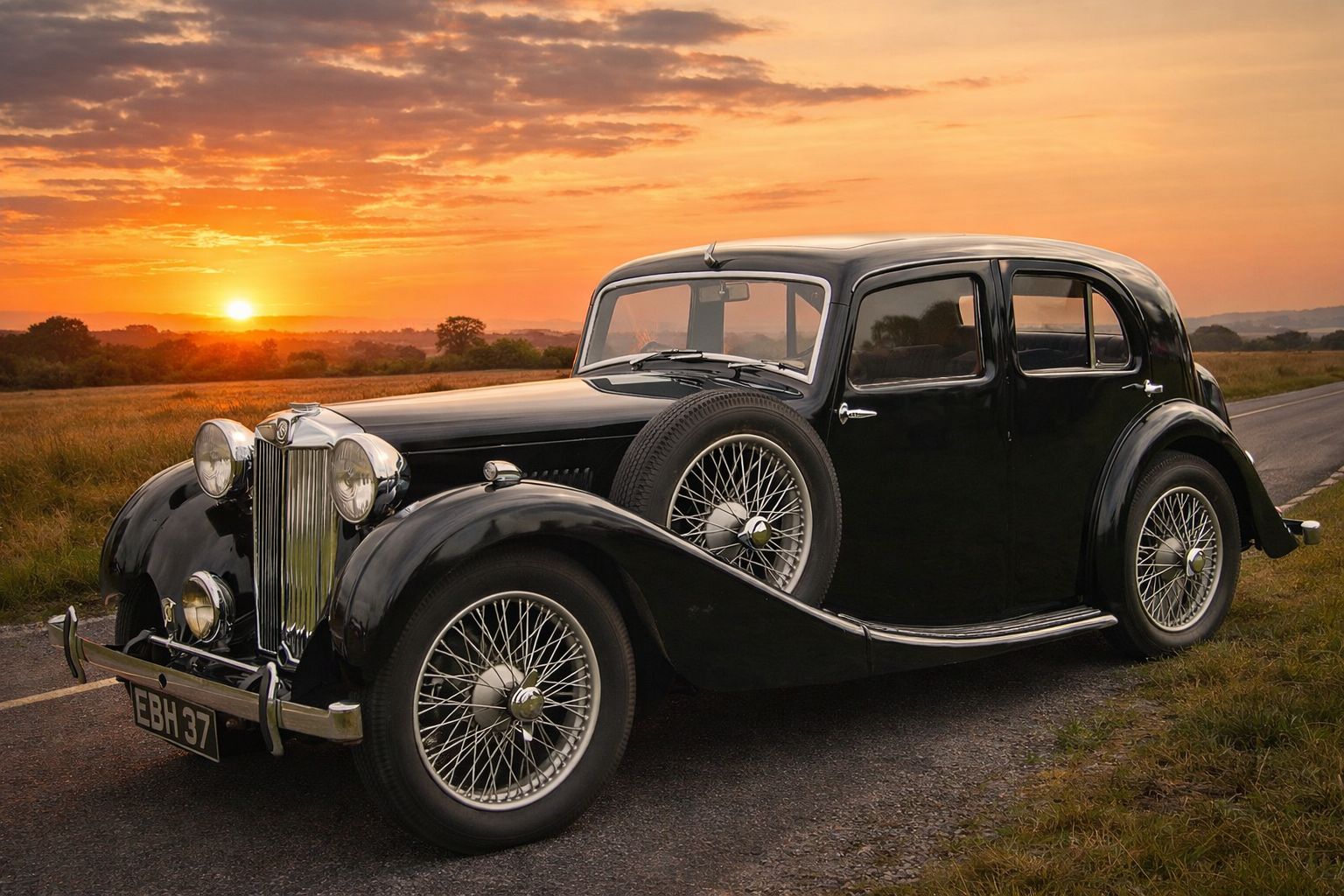
The MG Motor name is one of the most recognisable in British motoring history and is closely tied to the development, success and eventual decline of the UK’s mass-market car industry. Although today MG exists as a modern, internationally owned brand, its origins lie firmly in Britain and are deeply connected to the Midlands motor industry and the wider story of Birmingham and its surrounding manufacturing towns.
MG began life in the early 1920s as Morris Garages, a car dealership and workshop in Oxford run by Cecil Kimber. Kimber began modifying standard Morris cars to make them sportier and more appealing, and these modified vehicles quickly gained a following. The MG name soon became associated with lightweight, affordable sports cars that offered strong performance and driving enjoyment at a price accessible to the middle classes. By the mid-1920s, MG had become a manufacturer in its own right rather than simply a tuning operation.
The company grew rapidly between the wars, establishing itself as Britain’s leading sports car brand. MG cars were exported widely and gained an enthusiastic following in motorsport, particularly in speed trials, endurance events and circuit racing. Although MG’s main production facilities were located at Abingdon, the brand’s success relied heavily on the Midlands engineering ecosystem, including Birmingham-based suppliers producing engines, gearboxes, electrical components and body fittings.
After the Second World War, MG entered its most famous era. Models such as the MG T-Series, MGA and later the MGB became international icons, especially in the United States, where they came to symbolise British sports car culture. These cars were relatively simple, mechanically accessible and enjoyable to drive, reinforcing MG’s reputation as a purist driver’s brand. During this period, MG became part of the British Motor Corporation, later British Leyland, tying its fortunes to the wider restructuring of Britain’s car industry.
The decline of MG cannot be separated from the decline of British Leyland. From the 1970s onwards, underinvestment, industrial disputes, ageing production methods and increasing competition from overseas manufacturers undermined the group’s competitiveness. In 1980, MG car production at Abingdon was closed, a decision that caused widespread public backlash and marked the end of MG as a standalone sports car manufacturer in its traditional form.
Despite this, the MG name did not disappear. During the 1980s and 1990s, it was revived as a performance badge on sporting versions of mainstream Rover models, including hot hatchbacks and saloons. These cars kept the MG brand alive, though they lacked the clear identity of the classic roadsters. When MG Rover collapsed in 2005, production at Longbridge in Birmingham ceased, ending large-scale British-owned car manufacturing and bringing the original MG story to a close.
A new chapter began when the MG brand was acquired by the Chinese automotive group SAIC Motor. Under this ownership, MG was reinvented as a modern car marque producing affordable hatchbacks, SUVs and electric vehicles. While design and engineering input has, at times, retained a presence in the UK, large-scale manufacturing is now based overseas. MG cars are no longer British-built, though the brand continues to trade heavily on its British heritage.
Today, MG exists as a global automotive brand rather than a British manufacturer. It no longer produces traditional sports cars, instead focusing on mass-market and electric vehicles aimed at international buyers. While this represents a dramatic shift from its origins, the survival of the MG name ensures that one of Britain’s most famous motoring marques has not vanished entirely.
MG’s story encapsulates the broader trajectory of the British motor industry: innovation and global success, followed by industrial decline, consolidation and reinvention under foreign ownership. For Birmingham and the Midlands, MG remains a powerful reminder of a period when British cars dominated world markets, and of the enduring value of heritage even as manufacturing realities change.





Leave a Reply