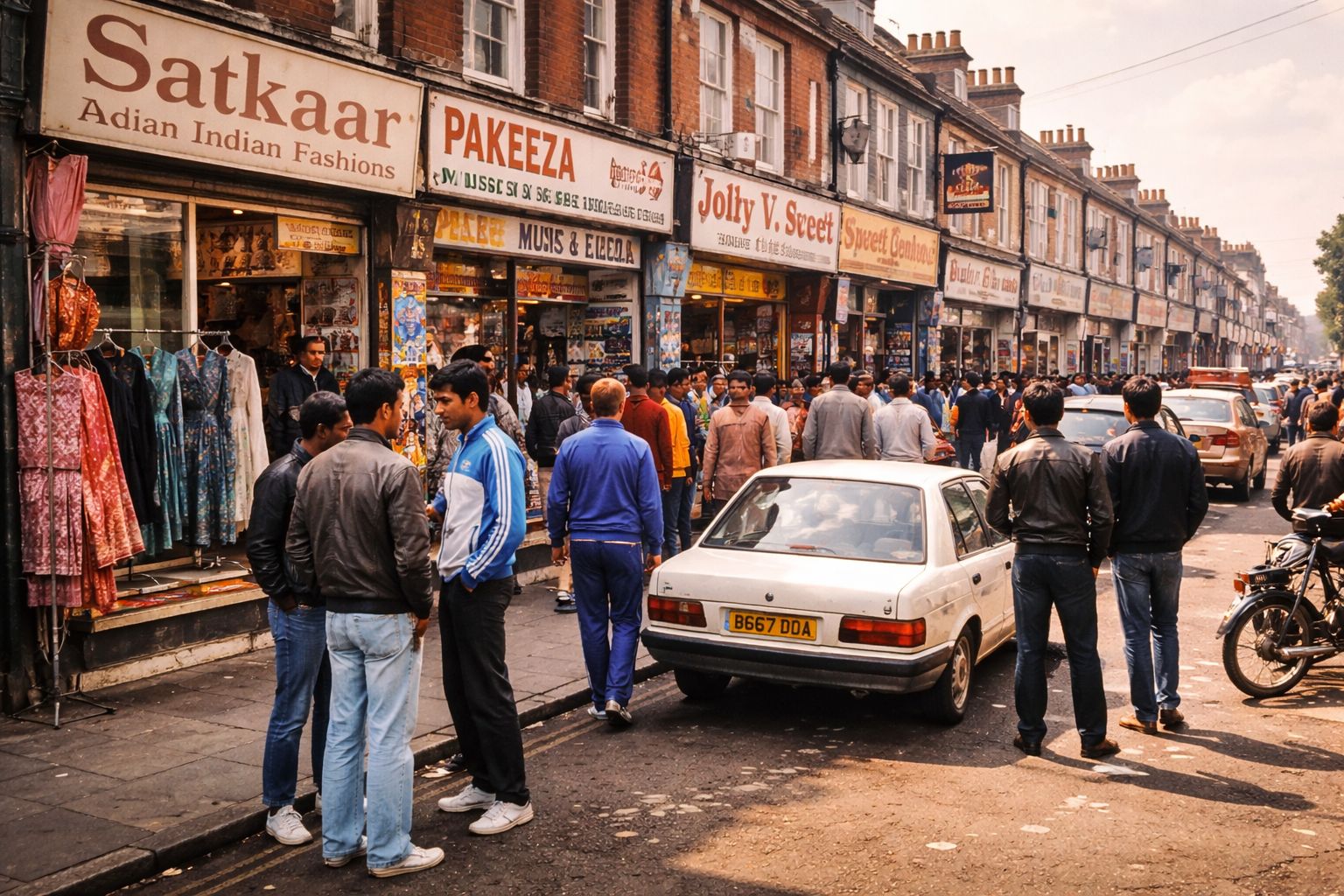
The song Soho Road holds a special place in the history of British Bhangra and is closely tied to Birmingham, a city widely regarded as one of the birthplaces of modern UK Punjabi music. More than just a dance track, Soho Road reflects the lived experience, identity and cultural confidence of Britain’s South Asian communities, particularly those centred around Handsworth.
Soho Road and Its Meaning
Soho Road is one of Birmingham’s most culturally significant streets. For decades it has been a focal point for the city’s Punjabi and wider South Asian communities, lined with shops, music stores, temples, restaurants and social venues. In the late 20th century it became a meeting place for musicians, promoters and audiences who helped shape the sound of British Bhangra.
When the phrase “Soho Road” appears in song, it is not simply a location but a symbol of community life, migration, youth culture and pride. The song captures a sense of place in the same way that certain streets or neighbourhoods do in reggae, hip-hop or soul music.
The Original Legacy and Apna Sangeet
The roots of Soho Road as a cultural idea are often linked to Apna Sangeet, one of the most influential Bhangra bands to emerge from Birmingham in the 1980s. Apna Sangeet were pioneers of the British Bhangra sound, blending traditional Punjabi rhythms with Western instrumentation and modern studio production.
Their music spoke directly to second-generation British Asians, addressing identity, celebration and everyday life in cities like Birmingham. Songs associated with places such as Soho Road helped anchor British Bhangra firmly in the UK rather than treating it as an imported tradition.
XS Soundz, Sardara S. Gill and the Modern Recording
A more recent and widely circulated version of Soho Road is credited to XS Soundz, featuring Sardara S. Gill, and released through Hi-Tech Music.
This modern recording does not replace the original cultural meaning of the song but rather reintroduces it to a new generation. With updated production and contemporary sound design, the track keeps the spirit of classic UK Bhangra alive while making it relevant for modern audiences, clubs and playlists.
Are These Artists Famous in Birmingham?
Apna Sangeet are unquestionably one of Birmingham’s most famous and important Bhangra groups, recognised nationally and internationally within Punjabi music circles. They are frequently cited alongside other Birmingham-based pioneers who helped establish the UK as a global centre for Bhangra outside South Asia.
XS Soundz and Sardara S. Gill are better understood as part of the later British Punjabi music scene, contributing to the continuation and revival of classic themes rather than originating the movement. Their work reflects how Birmingham’s Bhangra culture has evolved rather than disappeared.
Hi-Tech Music, meanwhile, is one of the most significant British Punjabi record labels, based in the UK and long associated with promoting British Asian talent. The label has played a major role in preserving, reissuing and modernising Bhangra music for contemporary audiences.
Cultural Importance and Enduring Appeal
What makes Soho Road endure is not chart success but cultural recognition. The song is still played at weddings, parties, cultural events and heritage celebrations because it represents a shared memory of place and identity. For many listeners, it evokes Birmingham’s streets, sounds and social life during a formative period for British Asian culture.
In this sense, Soho Road is less a single recording and more a musical landmark. It stands as a reminder of how Birmingham’s multicultural communities shaped a uniquely British form of Punjabi music that continues to influence artists today.







Leave a Reply