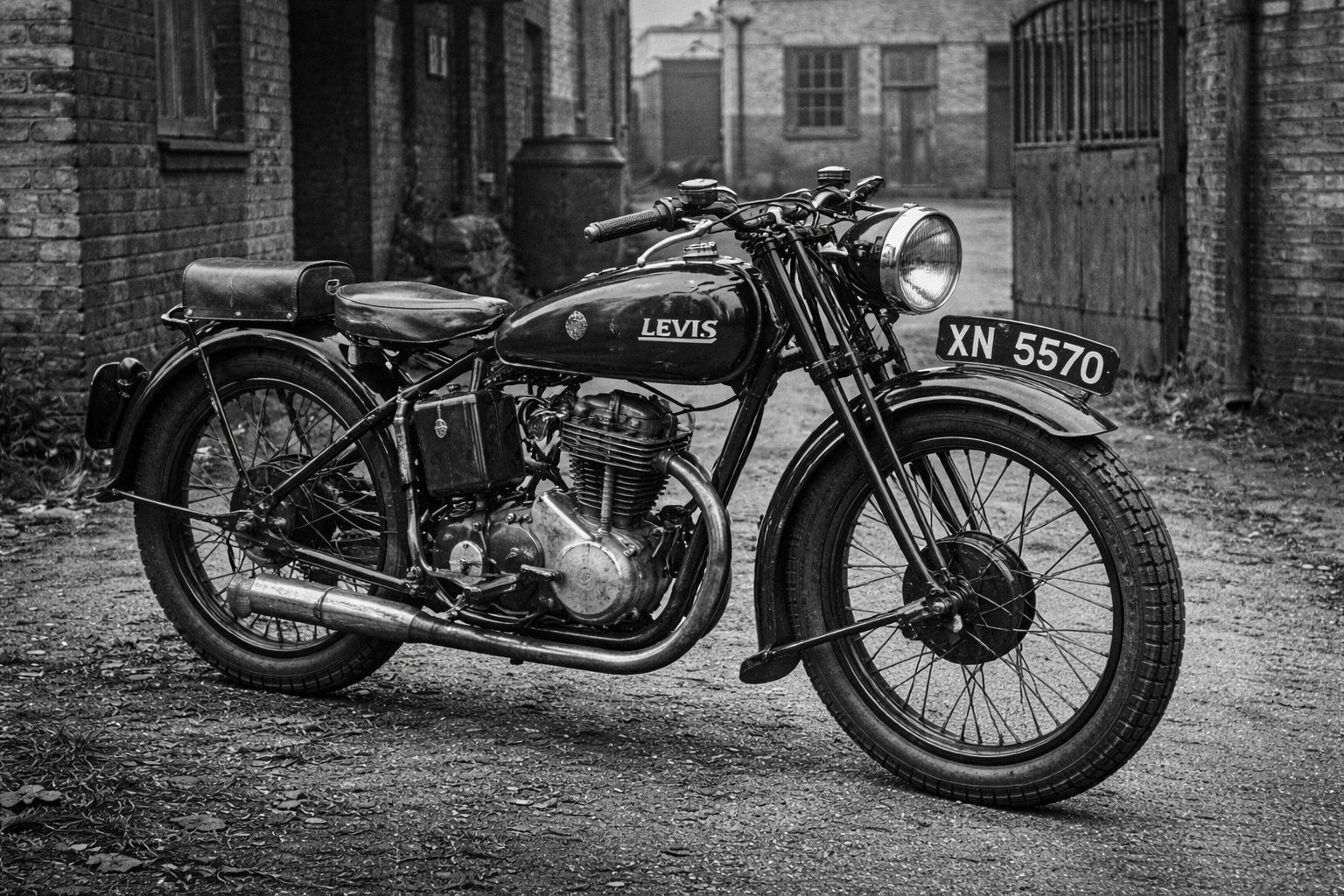
Forgotten Motorcycle Makers
The story of Levis Motorcycles and its later iteration as H.E.C. (formerly Humber & Co. / Levis-H.E.C.) is one of Birmingham’s lesser-known but historically intriguing entries in the early British motorcycle industry. Like many marques from the pioneering era of motorcycling, Levis and H.E.C. represent ingenuity, wartime challenge and the industrial spirit of the Midlands.
Origins: Levis Motorcycles in Birmingham
The Levis name first appeared in the early 1900s, initially as a bicycle maker before motorcycle production began. The business moved to Birmingham, one of the key hubs of British engineering and manufacturing at the time, drawing on the city’s skilled metalworkers, specialist suppliers and ready access to transport routes.
Levis motorcycles were designed to be light, simple, and robust — qualities that suited the relatively undeveloped roads and the growing appetite for personal mechanised transport. Early Levis machines used reliable single-cylinder engines and were often praised for their smooth running and ease of maintenance. They competed in a crowded marketplace alongside firms such as Royal Enfield, James and Excelsior.
H.E.C. Era and Wartime Production
As the motorcycle industry evolved and competition intensified, Levis entered a partnership that eventually led to the name H.E.C. (an abbreviation linked with Humber Engineering Company) appearing alongside Levis on production machines.
This period coincided with the run-up to, and outbreak of, the First World War. In 1940, the Levis/H.E.C. works in Birmingham suffered a direct bomb hit during the German Luftwaffe’s Blitz, which devastated many Midlands factories and disrupted production. Emergency shifts were made to wartime support equipment such as generators and compressors — items that could support the war effort — but the firm’s traditional motorcycle production was badly undermined.
After the factory’s destruction, the business never fully recovered its pre-war independence. Resources were stretched, facilities were disrupted, and the British motorcycle industry as a whole was beginning to feel competitive pressure from both domestic consolidation and the early growth of imported machinery.
Later Years and Fade from Production
In the post-war years, the motorcycle market became especially hard for smaller marques. Consumer expectations shifted towards higher performance and more refined machines, while imports became more attractive for many riders seeking reliability and price competitiveness. Levis / H.E.C., like other specialist makers of the era, faced challenges in investing for the future.
Production effectively wound down, and the brand disappeared from mainstream motorcycle manufacturing. Unlike larger or more commercially successful names such as BSA or Triumph, there was no enduring corporate successor to carry the Levis/H.E.C. name forward.
Legacy and Historic Interest
Today, Levis and H.E.C. machines occupy a niche but respected place in British motorcycle heritage. Surviving examples are prized by collectors and preserved by historic motorcycle clubs. These bikes represent a period in which Britain’s industrial towns and cities — especially Birmingham — were the heart of early motorcycle innovation and production.
The story of Levis / H.E.C. reflects broader themes of British industrial history: ingenuity challenged by war, the pressures of market competition, and the gradual consolidation of manufacturing as the 20th century progressed.





Leave a Reply