
Birmingham and the West Midlands
The Industrial Revolution transformed Britain from a largely agrarian society into the world’s first industrial nation, and few regions played a more decisive role than Birmingham and the wider West Midlands. From the late eighteenth century onward, this region became a centre of invention, manufacturing and industrial organisation, supplying goods, technologies and ideas that reshaped daily life in Britain and far beyond. Unlike factory towns built around a single industry, Birmingham and its neighbouring districts developed a uniquely flexible and innovative industrial economy.
Why the Midlands led industrial change
Birmingham’s strength lay in its diversity of skills rather than reliance on one resource or product. Metalworking, button making, jewellery, gunmaking, tools, locks, brassware and precision components were all produced within a dense network of small workshops. This culture of skilled craftsmanship allowed new ideas to be tested and adopted quickly. When new machines, materials or processes emerged, Birmingham’s manufacturers were able to adapt faster than many older, more rigid industrial centres.
The region’s central location also mattered. The Midlands sat at the crossroads of England, close to markets, raw materials and transport routes. This made Birmingham an ideal distribution centre for manufactured goods during a period when demand was expanding rapidly at home and overseas.
Innovation and invention
One of the most significant figures associated with the region was James Watt, whose improved steam engine was developed and commercialised in partnership with Matthew Boulton at the Soho Manufactory, just outside Birmingham. The steam engine revolutionised manufacturing by providing reliable power independent of water sources, enabling factories to operate on an unprecedented scale.
The Soho Manufactory became a symbol of modern industry, bringing together skilled labour, mechanised production and managerial innovation. It demonstrated how scientific knowledge, engineering expertise and entrepreneurship could combine to drive economic transformation.
The Black Country and heavy industry
While Birmingham excelled in skilled manufacture and innovation, the surrounding Black Country became synonymous with heavy industry. Rich deposits of coal and iron ore supported ironworks, foundries and later steel production. Towns such as Dudley, Walsall and Wolverhampton were filled with furnaces, forges and workshops that supplied raw and semi finished materials to manufacturers across Britain.
The Black Country provided the industrial muscle that complemented Birmingham’s precision and design skills, creating a powerful regional economy built on interdependence.
Canals, transport and infrastructure
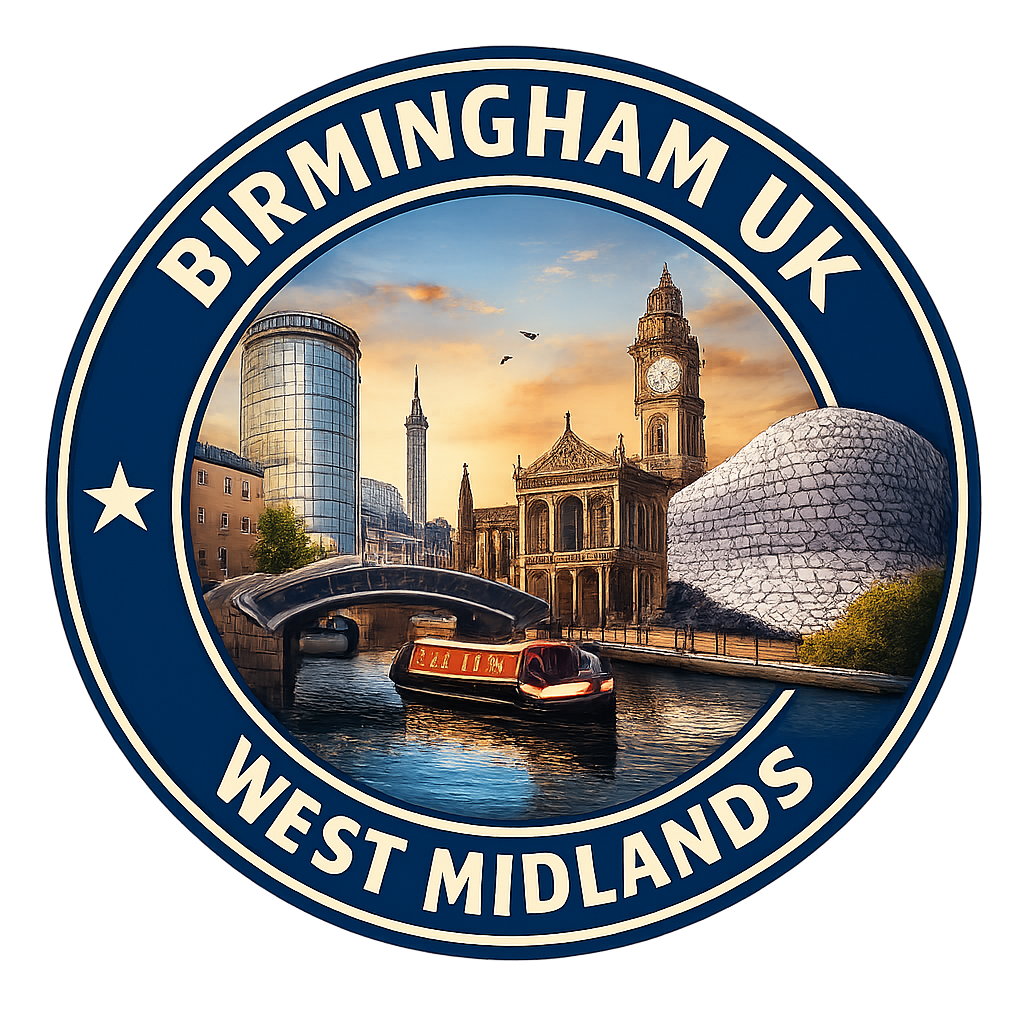
The Industrial Revolution in the Midlands was supported by one of the most extensive canal networks in Britain. Canals linked coalfields, ironworks and factories, allowing heavy materials to be moved cheaply and efficiently. Birmingham became the hub of this network, sometimes described as having more canals than Venice.
Improved transport reduced costs, increased output and helped Midlands manufacturers reach national and international markets. This infrastructure advantage reinforced the region’s industrial dominance throughout the late eighteenth and nineteenth centuries.
Social change and urban growth
Industrial success brought rapid population growth. Birmingham expanded dramatically as workers arrived from rural areas seeking employment. New housing, workshops and public buildings reshaped the landscape, but growth also brought overcrowding, pollution and poor living conditions. The Industrial Revolution created wealth and opportunity alongside hardship and inequality.
At the same time, Birmingham developed a strong civic culture. Industrialists and reformers invested in education, libraries and public institutions, helping to shape the city’s reputation as a centre of progressive thinking and reform.
Global impact and legacy
Goods produced in Birmingham and the West Midlands were exported across the world, from tools and machinery to weapons, hardware and decorative items. The region played a central role in establishing Britain as the “workshop of the world” during the nineteenth century and influenced industrial development far beyond Europe.
The legacy of the Industrial Revolution remains deeply embedded in the Midlands. Although many traditional industries have declined or disappeared, the region’s emphasis on skills, innovation and adaptability continues to shape its economy. Birmingham and the West Midlands were not merely participants in the Industrial Revolution; they were among its driving forces, helping to create the modern industrial world.




Leave a Reply