Birmingham’s Creative Heart
The Custard Factory is one of Birmingham’s most distinctive cultural and creative hubs, located in the Digbeth district just a short walk from the city centre. Today it is a thriving centre for arts, digital media, independent retail and community life, but its story began over a century earlier as a very different kind of factory.
From Industrial Legacy to Creative Quarter
The buildings that now form the Custard Factory were originally part of the Bird’s Custard factory, established in the early twentieth century by Sir Alfred Frederick Bird, the son of Alfred Bird who invented egg-free custard powder. At its height, the site employed hundreds of local people producing one of Britain’s most recognisable food brands, helping to reinforce Birmingham’s reputation as a powerhouse of industry.
Following the relocation of production in the 1960s, the Digbeth factory was left empty and gradually fell into decline. For many years the buildings stood unused, reflecting the wider industrial downturn affecting inner-city Birmingham during the latter half of the twentieth century.
A Bold Regeneration Begins
A major turning point came in January 1992, when the first phase of redevelopment began. The project aimed to transform the abandoned factory into a centre for creative industries, breathing new life into the area while preserving its industrial character. The initial refurbishment focused on Scott House, converting former production spaces into studios, offices and workshops for artists, designers and small creative businesses.
The response was immediate and overwhelmingly positive. Demand for flexible, affordable workspace meant the first phase became fully occupied almost as soon as it opened, confirming the viability of Digbeth as a creative quarter.
Expansion and Cultural Growth
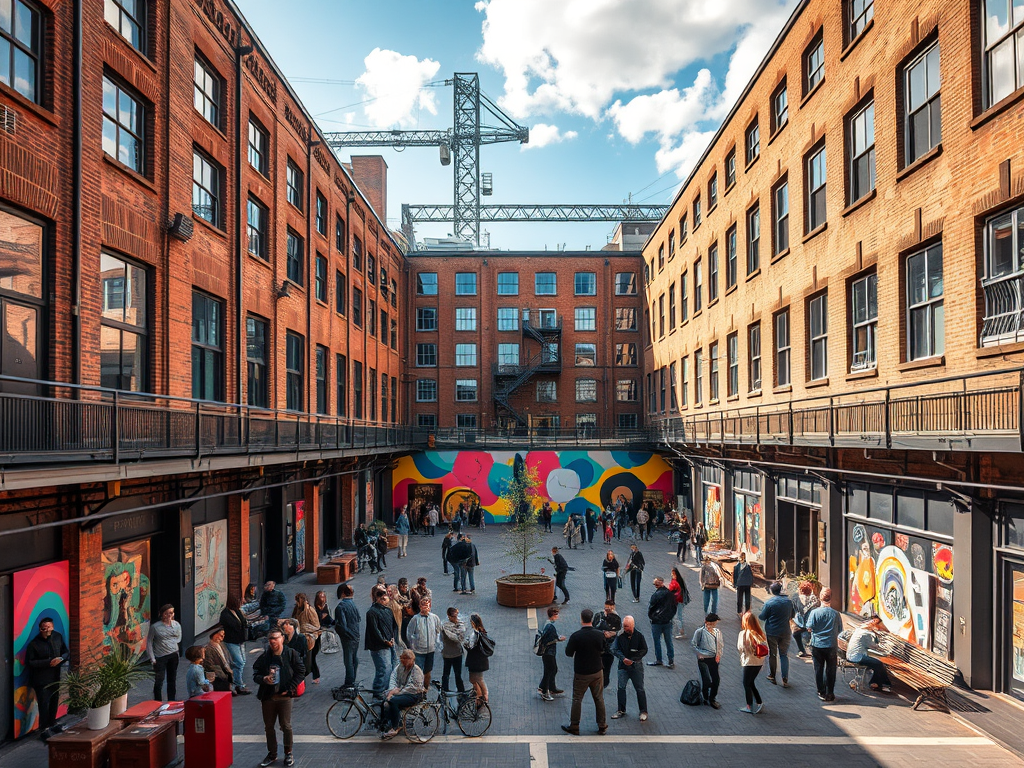
Building on this success, a second phase of development was completed in 2002. This phase introduced new studio offices, galleries, shops, cafés and public spaces arranged around a central square with water features. The area quickly became a social as well as professional hub, encouraging interaction between creatives, visitors and local residents.
Public art became a defining feature of the Custard Factory during this period. Sculptures, installations and murals helped give the site a playful and imaginative identity, reinforcing its reputation as a place where creativity extended beyond the studio walls.
Further expansion followed with the restoration of Zellig, a Grade II listed former factory building, which opened in 2010. This addition provided more workspace while preserving another important piece of Birmingham’s industrial heritage.
A Place for Arts, Enterprise and Community
The Custard Factory is more than a business location. Its courtyards and communal spaces host markets, exhibitions, performances and cultural events throughout the year. Independent shops, music venues, cafés and bars contribute to a lively atmosphere that attracts both locals and visitors.
The mix of digital media companies, artists, designers, start-ups and cultural organisations has helped establish the Custard Factory as one of the largest creative business clusters outside London. Its presence has also played a significant role in the wider regeneration of Digbeth, encouraging further investment and development in the surrounding area.
The Custard Factory Today
Today, the Custard Factory stands at the heart of Digbeth’s Creative Quarter and remains a symbol of Birmingham’s ability to reinvent itself. It continues to support creative enterprise while offering a unique destination for leisure, culture and community activity.
By successfully blending historic industrial architecture with modern creative use, the Custard Factory demonstrates how the city’s past can inform and enrich its future. It is a lasting example of adaptive reuse and one of Birmingham’s most successful and celebrated regeneration stories.







Leave a Reply