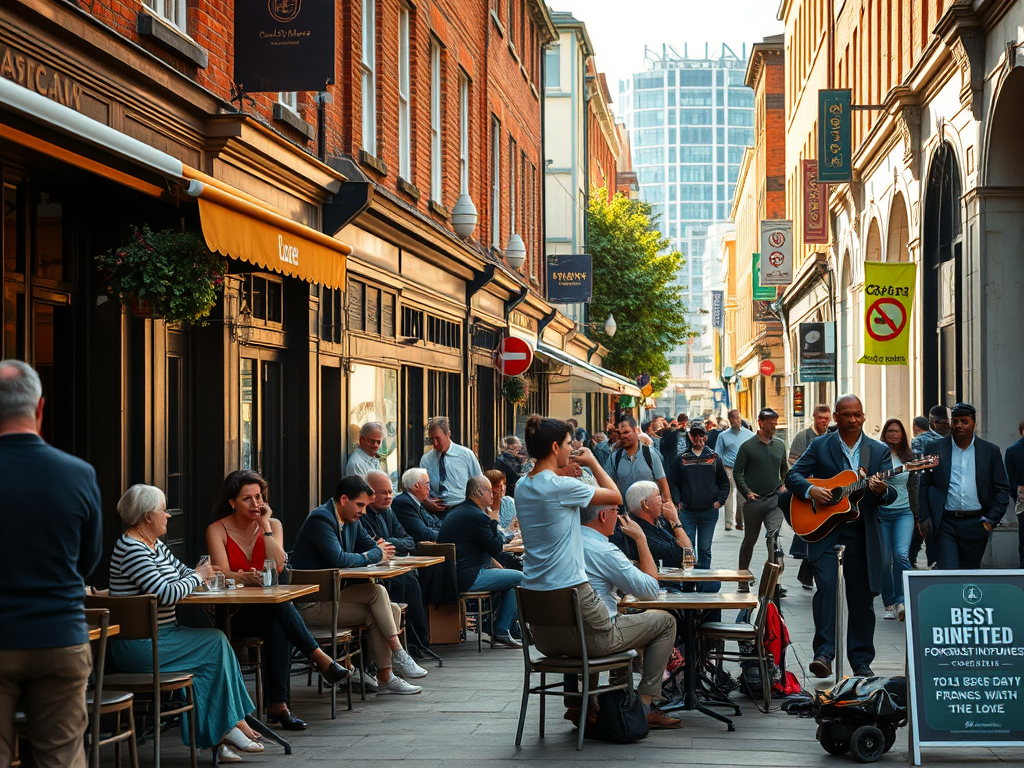
If you watch enough YouTube videos about Birmingham, you could be forgiven for thinking the city is uniquely unsafe. Dramatic thumbnails and sweeping statements often paint it as somewhere to avoid altogether. The reality, when you look at actual crime data rather than opinion, is far more balanced and far more familiar to anyone who understands how large cities work.
Birmingham is the UK’s second city. It has a population of well over one million people, a busy city centre, major transport hubs and a large night-time economy. Inevitably, this means crime exists. However, statistically Birmingham sits within the normal range for large UK cities, not at the extreme end. When compared with similar urban areas, its overall crime rate is broadly in line with cities such as Liverpool and notably lower than some others, including Manchester. The idea that Birmingham is somehow exceptional in this respect simply is not supported by the numbers.
How does Birmingham compare with other UK cities?
When crime is measured properly, using crimes per 1,000 residents, Birmingham is best described as average for a large British city. Like all major urban centres, it records higher levels of theft, shoplifting and public-order incidents than smaller towns, largely because of footfall, retail activity and nightlife. This pattern is common across the UK and is not unique to Birmingham.
It is also important to separate long-term trends from headlines. Many traditional street crimes are significantly lower than they were decades ago, while modern crime statistics are increasingly influenced by retail theft and fraud. Recent figures show overall crime across the wider West Midlands area has fallen, including reductions in burglary and robbery.
How does Birmingham compare with cities in the USA?
Comparisons between UK and US cities are often misleading, particularly online. The two countries record crime differently and operate under very different legal systems. That said, national data clearly shows that rates of serious violence, including homicide, are substantially lower in the UK than in the United States. Claims that Birmingham is “as dangerous as American cities” do not stand up to scrutiny when actual figures are examined. This does not mean Birmingham has no problems, but it does put YouTube-style comparisons into perspective.
Are there “no-go areas” in Birmingham?
The short answer is no. There are no areas of Birmingham that the police will not enter or that ordinary people cannot safely visit during everyday life. What does exist, as in any large city, are neighbourhoods and specific streets where crime levels are higher, particularly at certain times of day. These are often linked to busy roads, transport routes, retail zones or areas affected by long-term social challenges.
Describing entire districts as “no-go areas” is both inaccurate and unhelpful. Crime in Birmingham, as elsewhere, is often highly localised and can vary dramatically from one street to the next.
How safe is the city centre?
Birmingham city centre records a high volume of crime, but this needs context. City centres concentrate people, shops, bars, clubs and public transport, which naturally leads to higher recorded incidents. The most common offences tend to be shoplifting, phone theft, public-order incidents and alcohol-related disorder, particularly late at night.
For most visitors, the risks are the same as in any other major UK city centre: keep an eye on valuables, be aware of surroundings after dark, and avoid confrontations around nightlife hotspots. During the day, the city centre is busy, well-policed and heavily used by workers, shoppers and tourists.
How safe is Handsworth and surrounding areas?
Handsworth is often mentioned in online discussions, but it is not a single, uniform place. It includes quieter residential streets, busier high roads and areas that vary widely in character. Like many inner-city districts, crime levels can differ significantly depending on location and time.
Some parts of Handsworth and nearby neighbourhoods record higher levels of violent or antisocial offences, while others are largely residential and uneventful. Blanket statements about the area being “dangerous” ignore this reality and oversimplify a complex urban environment.
A balanced conclusion
Birmingham is not crime-free, but neither is it the urban danger zone some online commentators suggest. Statistically, it sits firmly within the expected range for a large UK city. It faces challenges that are common to all major urban areas, including theft, antisocial behaviour and pockets of deprivation, but it also benefits from ongoing investment, regeneration and a strong police presence.
For residents and visitors alike, Birmingham is best understood in the same way as London, Manchester or any other major city: most places are safe most of the time, a small number of areas need more awareness, and common sense goes a long way. Strip away the exaggeration, and what remains is a large, diverse city that is far more ordinary, and far safer, than its online reputation would suggest.







Leave a Reply