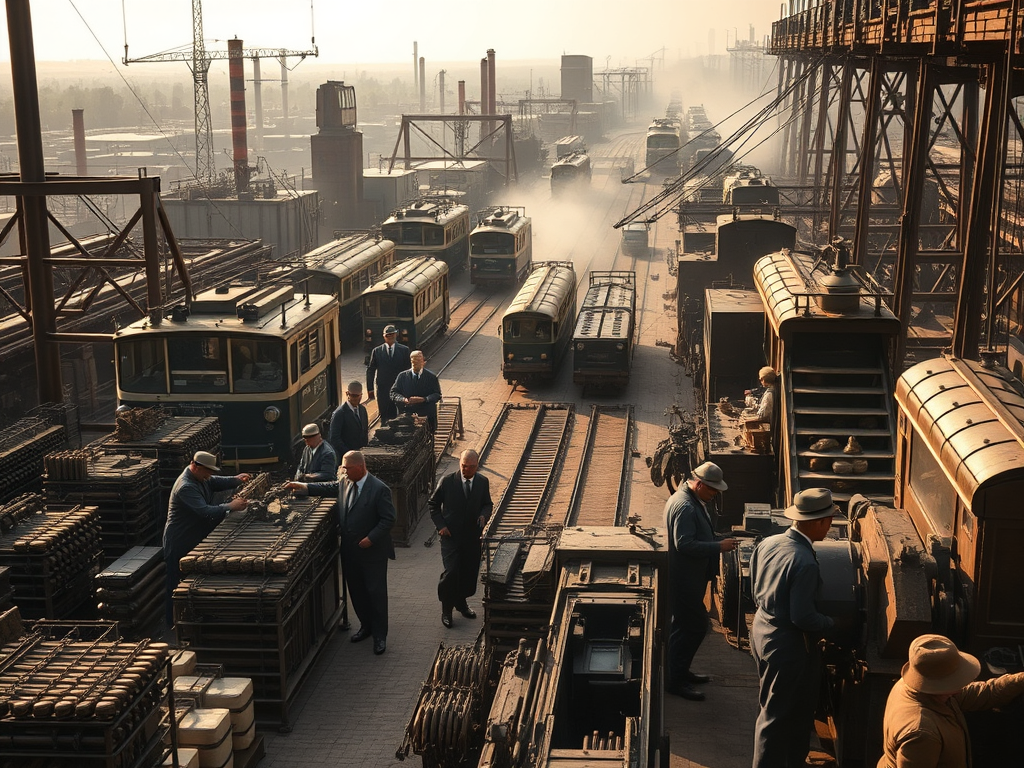
The decade from 1910 to 1920 was one of the most dramatic and transformative periods in Birmingham’s history. It began in the final years of the Edwardian era and ended in the shadow of the First World War, a conflict that reshaped every aspect of life in the city. Industry, society, politics, and daily routines were all profoundly affected as Birmingham moved from relative stability into total war and its difficult aftermath.
Birmingham on the Eve of War
In 1910, Birmingham was still a powerful industrial city with a population approaching three quarters of a million. Its reputation as the City of a Thousand Trades remained firmly intact. Factories, workshops, and foundries dominated the urban landscape, producing metal goods, tools, vehicles, and consumer products for both domestic and international markets.
Although social inequalities persisted, there was a growing sense of optimism. Improvements in public transport, housing reform, and education were slowly changing urban life. Electric trams continued to expand across the city, and suburban districts grew as better paid workers moved away from the industrial core.
National Politics and Leadership
This decade saw rapid political change at national level. Herbert Henry Asquith remained Prime Minister until 1916, leading Britain through the early and most difficult years of the First World War. In December 1916, David Lloyd George became Prime Minister and formed a wartime coalition government.
Politics during this period were dominated by the war effort. Civil liberties were restricted, industry was reorganised, and the role of the state expanded dramatically. Birmingham, as a major manufacturing centre, was closely tied to national decision making and wartime production.
Industry and Wartime Production
The outbreak of the First World War in 1914 transformed Birmingham almost overnight. Factories were rapidly converted to produce weapons, ammunition, aircraft parts, and military equipment. The city became a crucial centre for armaments manufacture, supplying the British Army on an unprecedented scale.
Traditional trades were absorbed into the war effort. Small workshops produced shell components, machine parts, and precision instruments. Large employers expanded their operations, often working day and night shifts to meet government demand.
Labour shortages soon emerged as men enlisted for military service. In response, women were recruited in large numbers to work in factories and workshops. Known as munitionettes, these women took on dangerous and demanding work, marking a significant shift in gender roles and expectations.
Work and Daily Life
Working hours during the war were long and exhausting. Industrial accidents increased, particularly in munitions factories where explosive materials were handled daily. Despite the risks, wages in war industries were often higher than before, providing some financial stability for working families.
Rationing was introduced later in the war as food shortages worsened. Households adapted by growing vegetables in gardens and allotments, part of a wider Dig for Victory spirit. Queues for basic goods became a familiar sight, and meals were simpler and more carefully planned.
For those not directly involved in factory work, life was shaped by uncertainty. News from the front dominated newspapers, and almost every family was affected by injury, loss, or anxiety.
Housing and Urban Conditions
Housing shortages worsened during the war years. Construction slowed as materials and labour were diverted to military needs. Overcrowding increased, particularly in working class districts where returning wounded soldiers and displaced families competed for space.
Despite these challenges, the war also highlighted the need for better living conditions. Discussions about post war housing reform gained momentum, laying the groundwork for future council housing developments in the 1920s.
Religion and Community Support
Religion continued to play an important role in Birmingham’s community life during this turbulent decade. Churches and chapels of all denominations offered spiritual comfort, particularly during the war years. Anglican, Methodist, Baptist, Quaker, and Catholic congregations all contributed to morale and mutual support.
Religious institutions organised relief efforts, cared for soldiers’ families, and supported widows and the bereaved. Prayer meetings, remembrance services, and fundraising events were common, reinforcing a sense of shared sacrifice and resilience.
Leisure, Morale, and Public Life
Leisure activities changed significantly during the war. Many forms of entertainment were adapted to support morale and fundraising. Music halls hosted patriotic performances, while cinemas grew in popularity as an affordable escape from daily worries.
Public spaces were used for recruitment rallies, charity events, and victory celebrations. The Armistice in November 1918 brought scenes of relief and celebration across Birmingham, although joy was tempered by grief and exhaustion.
The End of War and Its Aftermath
The years immediately following the war were difficult. Thousands of demobilised soldiers returned to Birmingham seeking work and housing. Industries faced uncertainty as military contracts ended, leading to unemployment and industrial unrest.
The influenza pandemic of 1918 and 1919 added further hardship, claiming many lives and straining health services. Yet the period also brought change. Women had demonstrated their value in industry, political reforms expanded the right to vote, and expectations of government responsibility for welfare and housing had grown.
A City Transformed
By 1920, Birmingham was no longer the same city it had been a decade earlier. The experience of total war had altered social attitudes, strengthened the role of the state, and reshaped industry and labour relations.
Although the years ahead would bring new challenges, Birmingham emerged from the decade with a stronger sense of identity and resilience. The sacrifices and transformations of 1910 to 1920 left a lasting imprint on the city and marked a decisive step into the modern era.




Leave a Reply