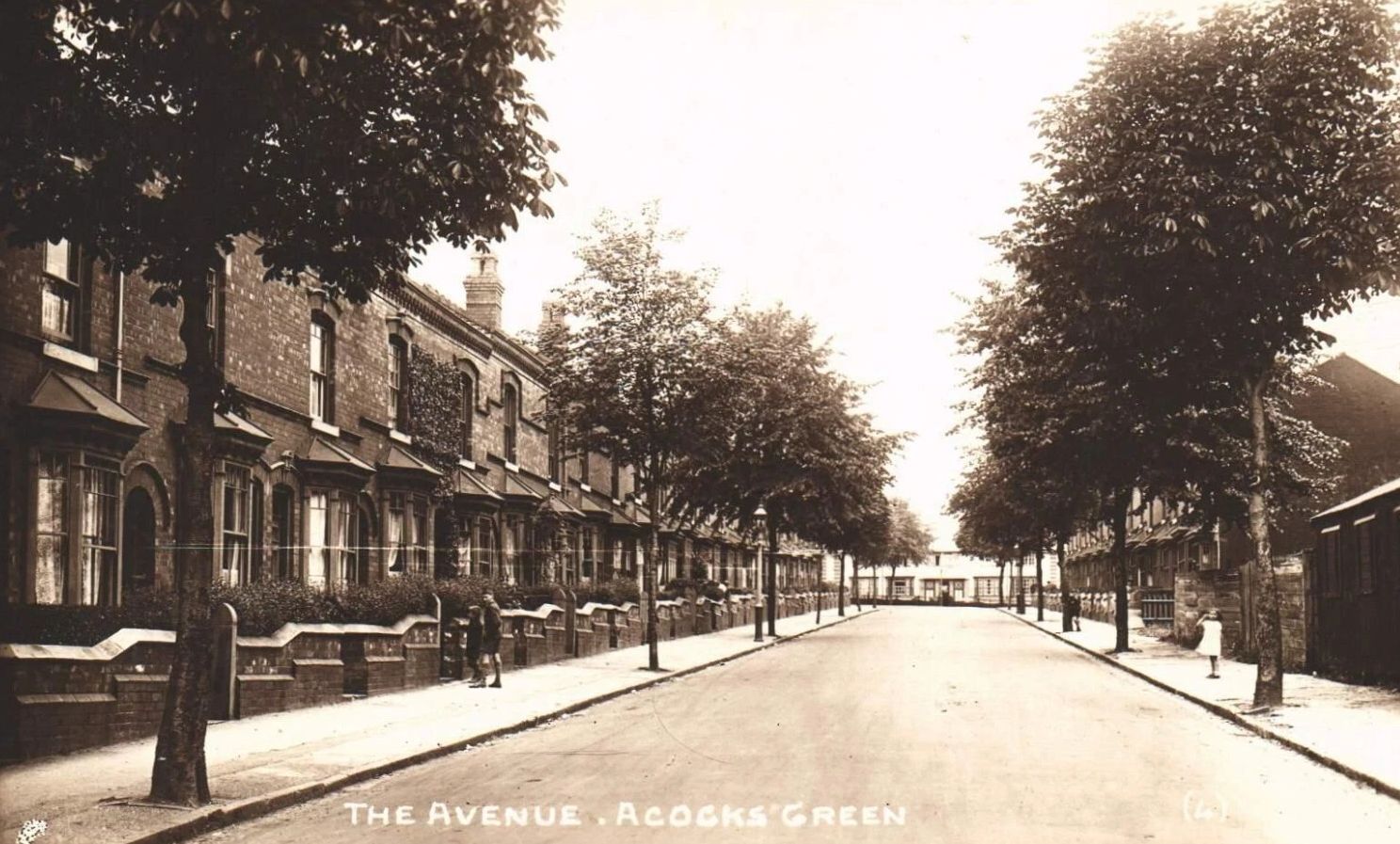
The name Acocks Green comes from the Acocks family, who built a large house in what would have been a small hamlet at the time. By the 17th century there were three hamlets in the area, consisting of two inns, scattered farms, and a tollgate established in 1725. An earlier Acocks Green House is recorded as having been given by Richard Acock to his son.

The first recorded mention of Acocks Green dates back to 1604, when it appeared in the Yardley Parish Register. This is an ancient and well-established site that was once a medieval settlement.
With the arrival of the 19th century, the Birmingham to Oxford railway opened a station at Acocks Green in 1852. Like neighbouring Yardley, Acocks Green became a desirable retreat for the city gentry, offering relief from the smoke of Birmingham in a semi-rural setting.
This period did not last. In 1911, Acocks Green was incorporated into the city of Birmingham. New housing, commercial premises, and municipal developments followed, bringing rapid expansion. Tram lines reached Broad Road in 1916 and were extended to the Green in 1922.
Today, Acocks Green is fully integrated into the city of Birmingham while retaining its much-loved central island, fondly known as “The Green”. Like many areas across Birmingham and the West Midlands, Acocks Green continues to search for a new identity as older character blends with modern regeneration and improvement.
For more detailed information on Acocks Green visit the Acocks Green History Society at: https://aghs.jimdofree.com/







Leave a Reply