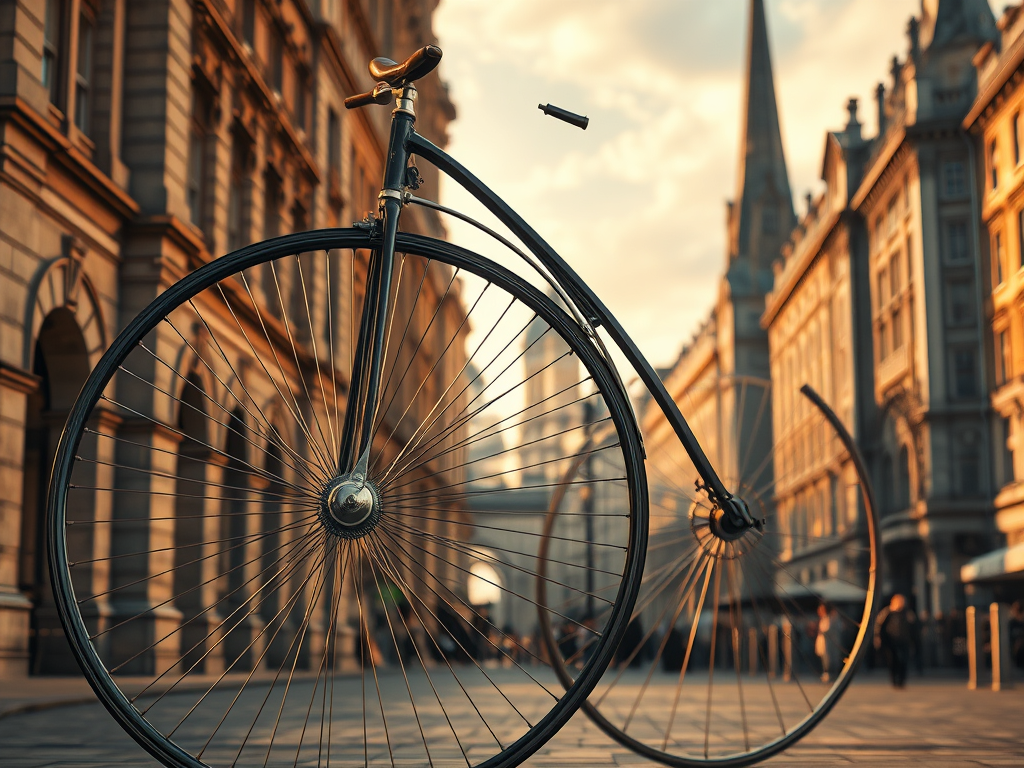
The penny farthing, with its huge front wheel and tiny rear one, is one of the most instantly recognisable inventions of the Victorian age, and no city was more closely associated with its rise and fall than Coventry. For a brief but extraordinary period in the late nineteenth century, Coventry was the world capital of bicycle design and production, and the penny farthing sat at the very heart of that story.
Before the penny farthing, bicycles were slow, heavy and uncomfortable machines. Early designs, known as “boneshakers,” used small wheels and iron tyres and were little more than curiosities. Everything changed in the 1870s with the development of the high-wheel bicycle, later nicknamed the penny farthing after the large and small British coins. By making the front wheel much larger, riders could travel further with each turn of the pedals, giving unprecedented speed and efficiency. It was risky, but it was fast, and in an era fascinated by progress and daring, it captured the public imagination.
Coventry was perfectly placed to lead this new industry. The city already had a strong tradition of precision engineering and metalworking, thanks to its watchmaking and sewing-machine trades. Skilled workers, machine tools and a network of small specialist workshops made it ideal for producing the fine steel tubing, spokes, bearings and gears needed for bicycles. By the mid-1870s, Coventry firms were at the forefront of penny farthing design and manufacture.
One of the most important Coventry companies was the Coventry Machinists Company, which later became the Coventry Machinists Company Ltd, makers of the famous “Facile” high-wheel bicycle. The Facile was one of the best-known penny farthings in the world and was widely exported, making Coventry a global name in cycling. Other firms such as Rudge, Humber and Singer also had strong links to the city and helped build Coventry’s reputation as the centre of the British bicycle industry.
At its peak in the late 1870s and early 1880s, the penny farthing became a symbol of modernity, sport and social status. Riding one required strength, balance and bravery, and it was especially popular among young, middle-class men. Cycling clubs sprang up across Britain, races were organised, and long-distance riding became fashionable. Coventry manufacturers could barely keep up with demand, exporting machines across Europe and to the British Empire.
Yet the penny farthing’s reign was remarkably short. Despite its speed, it was notoriously dangerous. Riders sat high above the ground, and a sudden stop or a small obstacle could send them flying headfirst over the handlebars in what was known as a “header.” Serious injuries were common, and the machine was impractical for women, older riders and anyone who wanted a safer way to travel.
The breakthrough came in the mid-1880s with the invention of the “safety bicycle.” This new design used two wheels of equal size, a chain-driven rear wheel and a much lower riding position. It was more stable, easier to mount and far safer. Crucially, it could be ridden by a much wider section of society, including women. Coventry was once again at the centre of the change, with firms such as Rover developing and perfecting the safety bicycle. In 1885, Rover’s safety bicycle design effectively made the penny farthing obsolete almost overnight.
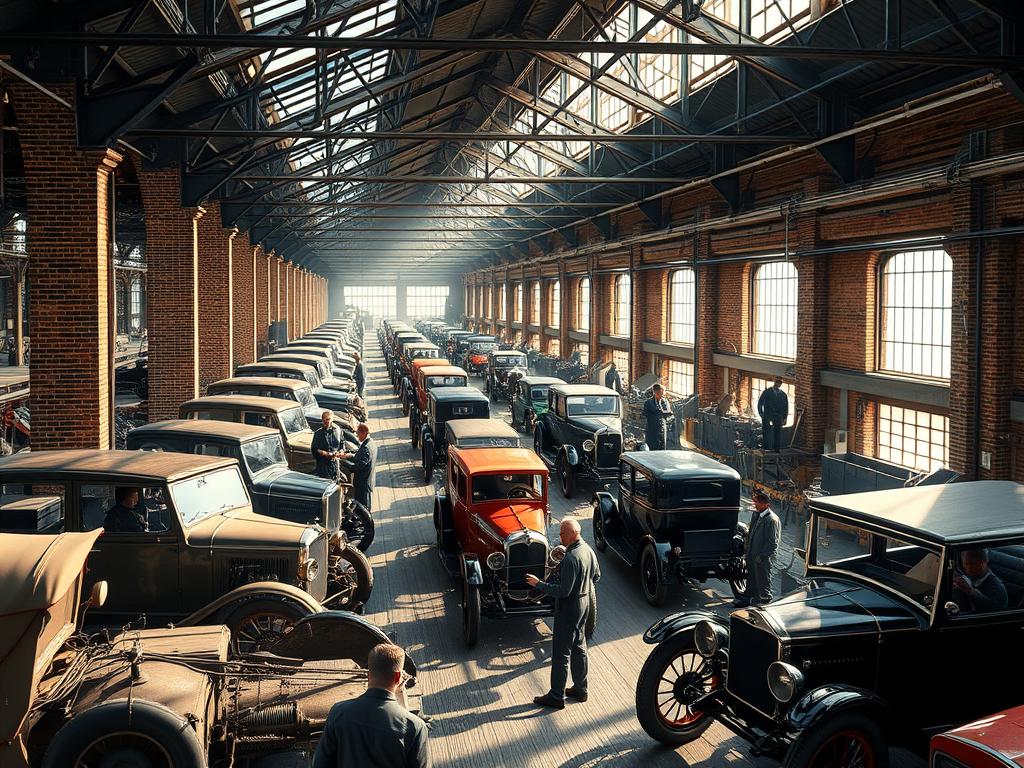
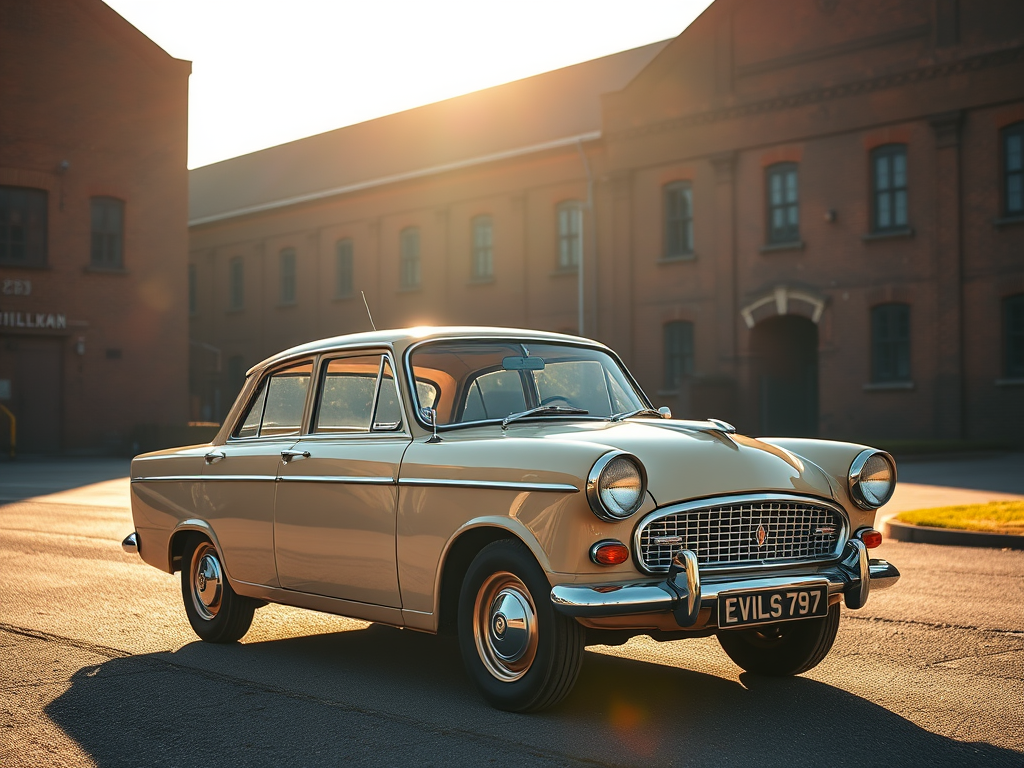
By the early 1890s, the penny farthing had all but disappeared from everyday use. What had been a revolutionary machine only a decade earlier was now seen as old-fashioned and dangerous. Coventry manufacturers rapidly retooled their factories to produce the new safety bicycles, and many of the companies that had made penny farthings went on to become major players in the next phase of the transport revolution, including motorcycles and eventually cars.
The penny farthing’s life as a practical machine was brief, but its impact was enormous. It established Coventry as the world’s leading centre for bicycle manufacture, laid the foundations for the city’s later dominance in motor vehicles, and helped make cycling a mass activity. Today, the penny farthing survives as a romantic symbol of the Victorian age, but behind that image lies a serious industrial story — one in which Coventry played the starring role.





Leave a Reply