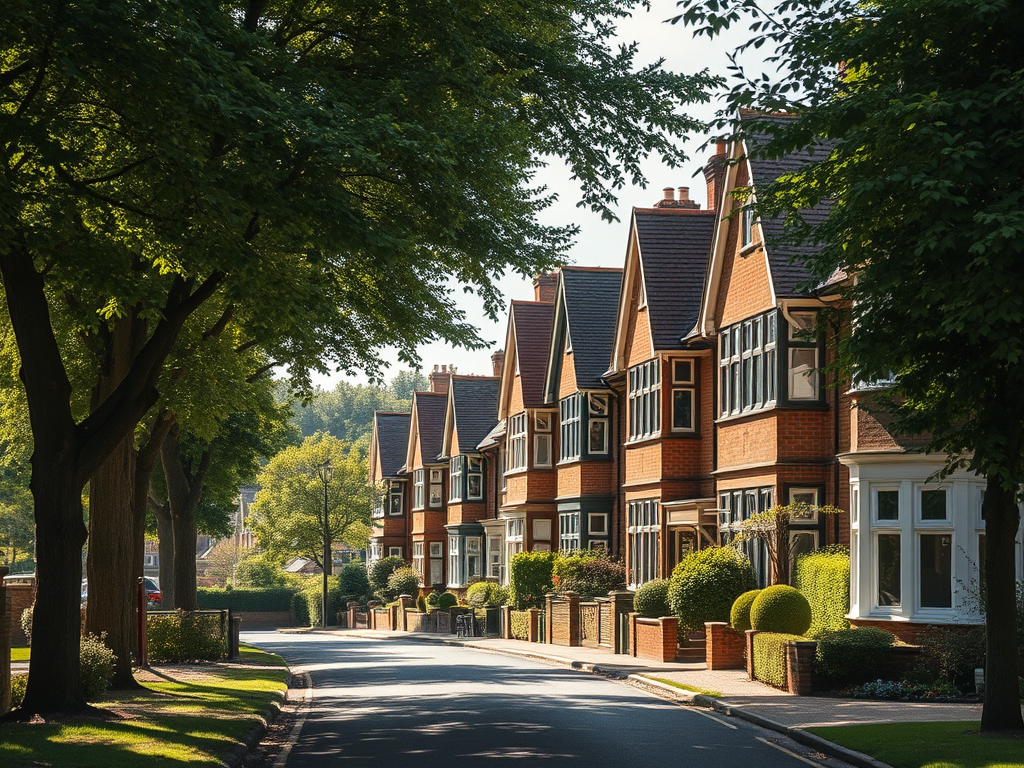
Dorridge is a prosperous and distinctive suburban village in the Metropolitan Borough of Solihull, lying just south-east of Knowle and close to the Warwickshire countryside. Although today it is best known for its large houses, tree-lined roads and commuter links, Dorridge is a relatively modern settlement compared with its older neighbours, having grown primarily in the railway age rather than the medieval period.
Until the nineteenth century, Dorridge was little more than open farmland and scattered cottages. The land formed part of rural Warwickshire, with farming and woodland dominating the landscape. There was no real village centre in the way that Knowle or Solihull had one, and the area was simply a collection of fields and lanes between older settlements.
Everything changed in 1852, when the railway line between Birmingham and Warwick was opened and a station was built at what became Dorridge. This transformed the area almost overnight. Wealthy professionals and businessmen from Birmingham were suddenly able to live in countryside surroundings while commuting quickly into the city, and new houses were built around the station to take advantage of this new connection. Dorridge became a classic Victorian and Edwardian railway village.
Large detached houses and villas were laid out on spacious plots, giving Dorridge a low-density, leafy character that still defines it today. Unlike many suburbs that grew in a piecemeal way, Dorridge developed with a clear focus on residential quality, making it attractive to middle-class and professional families from the start.
The centre of Dorridge formed around the station, with shops, cafés and services appearing along Station Road and Forest Court. This gave the village its own identity, separate from nearby Knowle, even though the two are now closely linked. The railway remains one of Dorridge’s most important features, with frequent services to Birmingham, Solihull, Warwick and London Marylebone, making it one of the most sought-after commuter locations in the West Midlands.
Dorridge also benefits from its position on the edge of the Warwickshire countryside. Green Belt land, footpaths and old hedgerows surround the village, preventing over-development and helping to preserve its semi-rural atmosphere. This balance between accessibility and open space is one of the key reasons for its enduring popularity.
Today Dorridge is one of the most desirable residential areas in the Solihull borough. It has no medieval church or ancient village green like Knowle, but its strong identity as a railway village, combined with high-quality housing, good schools and excellent transport links, has made it a modern counterpart to its older neighbour. Together, Knowle and Dorridge form one of the most affluent and well-established parts of the wider Birmingham and Solihull area.







Leave a Reply