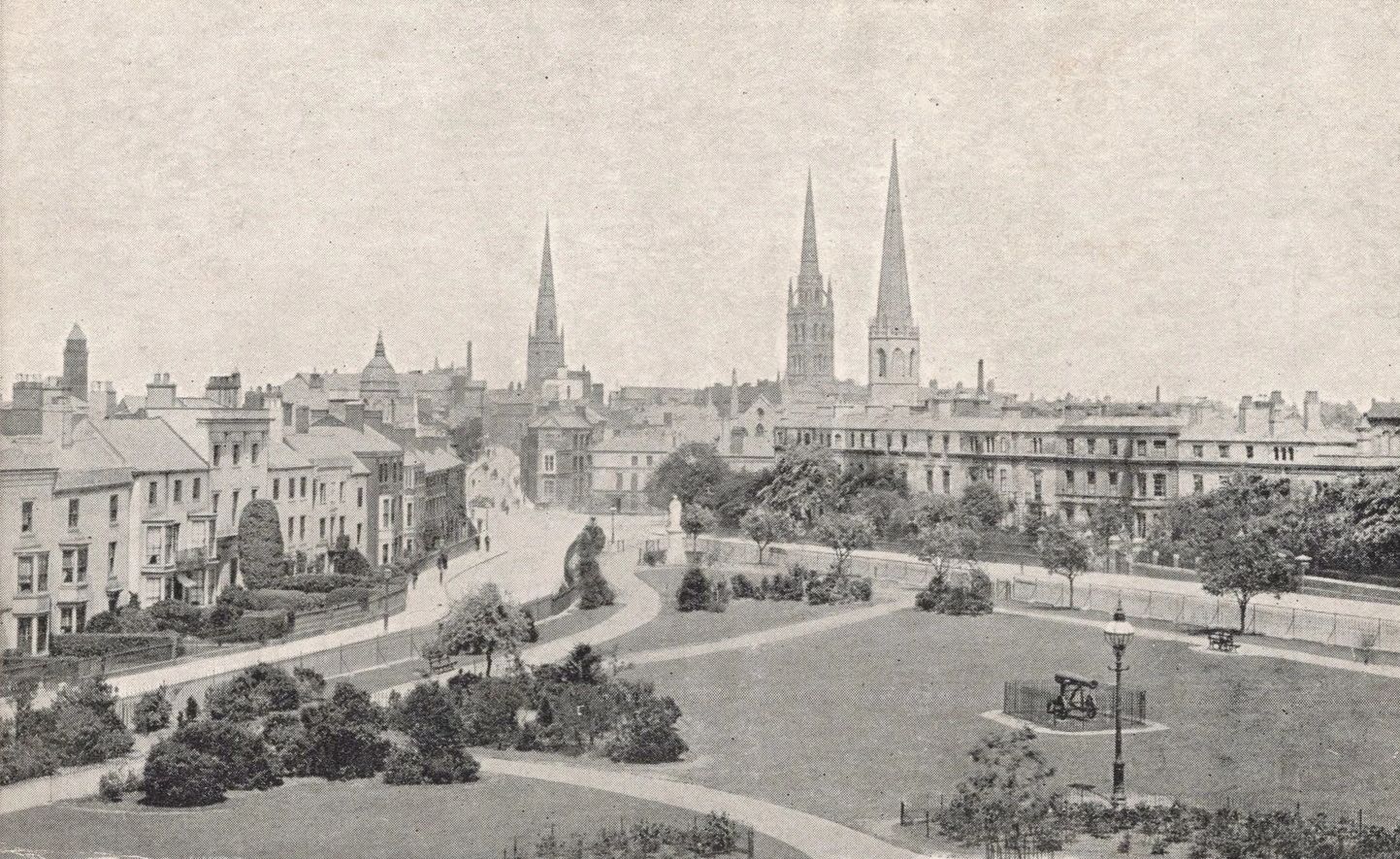
The old Coventry Cathedral stands as one of the most powerful and moving symbols of the Second World War in Britain. Its ruined walls and shattered spire tell the story not only of destruction, but of resilience, reconciliation and the rebirth of a city that refused to be broken.
Coventry’s medieval cathedral, officially known as St Michael’s Cathedral, was built mainly in the fourteenth and fifteenth centuries and was one of the largest parish churches in England. Its soaring spire, rising to nearly 300 feet, dominated the skyline and became the city’s most recognisable landmark. For centuries the cathedral was the spiritual and civic heart of Coventry, hosting services, ceremonies and gatherings that reflected the life of the city.
On the night of 14 November 1940, Coventry was targeted in one of the most devastating air raids of the war. German bombers carried out a concentrated attack designed to destroy the city’s industry and infrastructure. Incendiary bombs rained down on the historic centre, and within hours much of medieval Coventry was burning. The cathedral was hit repeatedly. Fire spread through the wooden roof, and by the morning the interior had been completely destroyed, leaving only the outer walls, the tower and the spire standing.
Rather than clearing away the ruins after the war, Coventry made a remarkable decision: the remains of the old cathedral would be preserved as a memorial. The blackened stonework, broken arches and open sky above were left as they were, turning the building into a permanent reminder of the cost of war. In the ruins, a simple altar was created from the rubble, and two charred medieval roof timbers were tied together to form the now-famous Cross of Nails, which became a powerful symbol of forgiveness and reconciliation.
Next to the ruins, a new cathedral was built in the 1950s and early 1960s, designed by architect Sir Basil Spence. Instead of copying the old building, it was deliberately modern, facing the ruins across a shared open space. This bold design created a dialogue between past and present, destruction and hope. The new cathedral was consecrated in 1962 and quickly became a global symbol of peace and rebuilding.
The old cathedral ruins have since become a place of reflection and international significance. They have been used for remembrance services, concerts and major civic events, and they form the heart of Coventry’s work on reconciliation between former enemies. The Cross of Nails has been shared with cities and churches around the world that have suffered from conflict, linking Coventry’s experience to a global movement for peace.
Today, walking through the open-air ruins of the old Coventry Cathedral is a deeply emotional experience. With the spire still rising above the city and the walls framing the sky, the building stands as a silent witness to the horrors of war and the strength of human endurance. More than a ruin, it is a living memorial — one that continues to define Coventry’s identity as a city of resilience, forgiveness and hope.







Leave a Reply