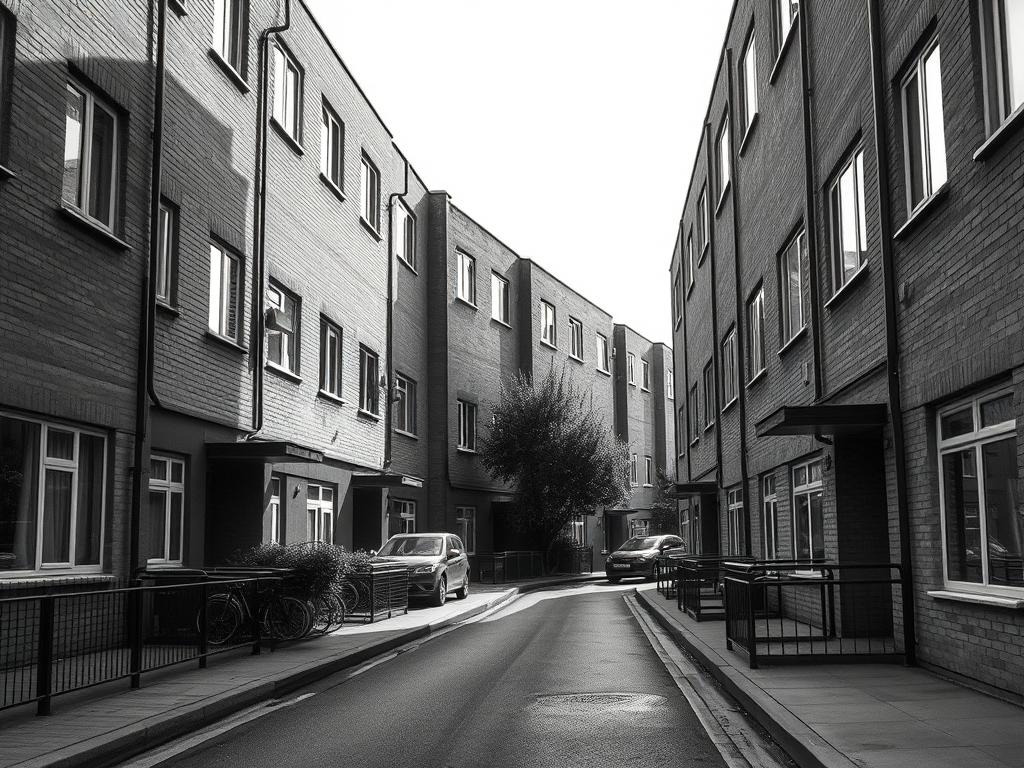
Shard End is a large residential district in the east of Birmingham, lying between Stechford, Lea Hall, Garretts Green and the boundary with Solihull. It sits on gently rising ground above the River Cole valley and developed mainly in the decades after the Second World War, when Birmingham faced a severe housing shortage and needed to rehouse families from overcrowded inner-city districts. Before this expansion the area was largely farmland and open fields belonging to estates around Lea Hall and Sheldon, with scattered cottages and smallholdings serving the rural edge of the city.
The modern Shard End estate was built primarily during the 1950s and 1960s as part of Birmingham’s ambitious post-war housing programme. It was designed to provide spacious, modern homes with gardens, schools and local shopping facilities, offering a marked improvement on the dense Victorian terraces many residents had left behind in areas such as Aston, Nechells and Digbeth. Much of the housing consists of semi-detached and short terraces, along with some low-rise flats, laid out on curving streets and crescents that reflect the planning ideas of the period, with green spaces woven into the layout.
Although Shard End itself is largely a twentieth-century creation, it lies close to several much older historic sites that shaped the area’s identity. One of the most important is Lea Hall, a moated medieval manor house located just to the west of the estate. The hall dates back to the thirteenth century and for hundreds of years was the centre of a large agricultural estate that controlled much of the surrounding land. Although the original manor house no longer survives, the moat and earthworks remain, and the site is protected as an ancient monument within Lea Hall Green, providing a tangible link to the area’s deep past.
Another significant historic feature nearby is the River Cole valley, which forms a green corridor running along the edge of Shard End. For centuries this river powered small mills and marked parish boundaries, and today it provides an important stretch of open countryside within the city. The Cole Valley Park and the Cole Valley cycle route offer walking and cycling links from Shard End through Sheldon and Yardley and on towards Small Heath and Moseley, giving the area an unexpectedly rural feel in places despite its suburban character.
Shard End’s community life has traditionally centred on its local shopping parade, schools and social clubs, which were created as part of the original estate planning. Over time the area has developed a strong local identity, shaped by the families who moved there during the great post-war rehousing period and by later generations who have grown up in the district. While it has faced many of the social and economic challenges common to large council-built estates, it also benefits from good transport links via nearby rail stations at Lea Hall and Stechford and from its proximity to major employment areas such as Birmingham Airport, the NEC and the industrial zones around Garretts Green.
Today Shard End remains a largely residential part of Birmingham, defined by its mid-twentieth-century housing, its green spaces and its closeness to older historic landscapes like Lea Hall and the River Cole. It represents an important chapter in the city’s story, reflecting the vast social changes that followed the Second World War and the drive to give thousands of Birmingham families better homes, cleaner air and a more spacious suburban environment while still remaining firmly part of the city.







Leave a Reply