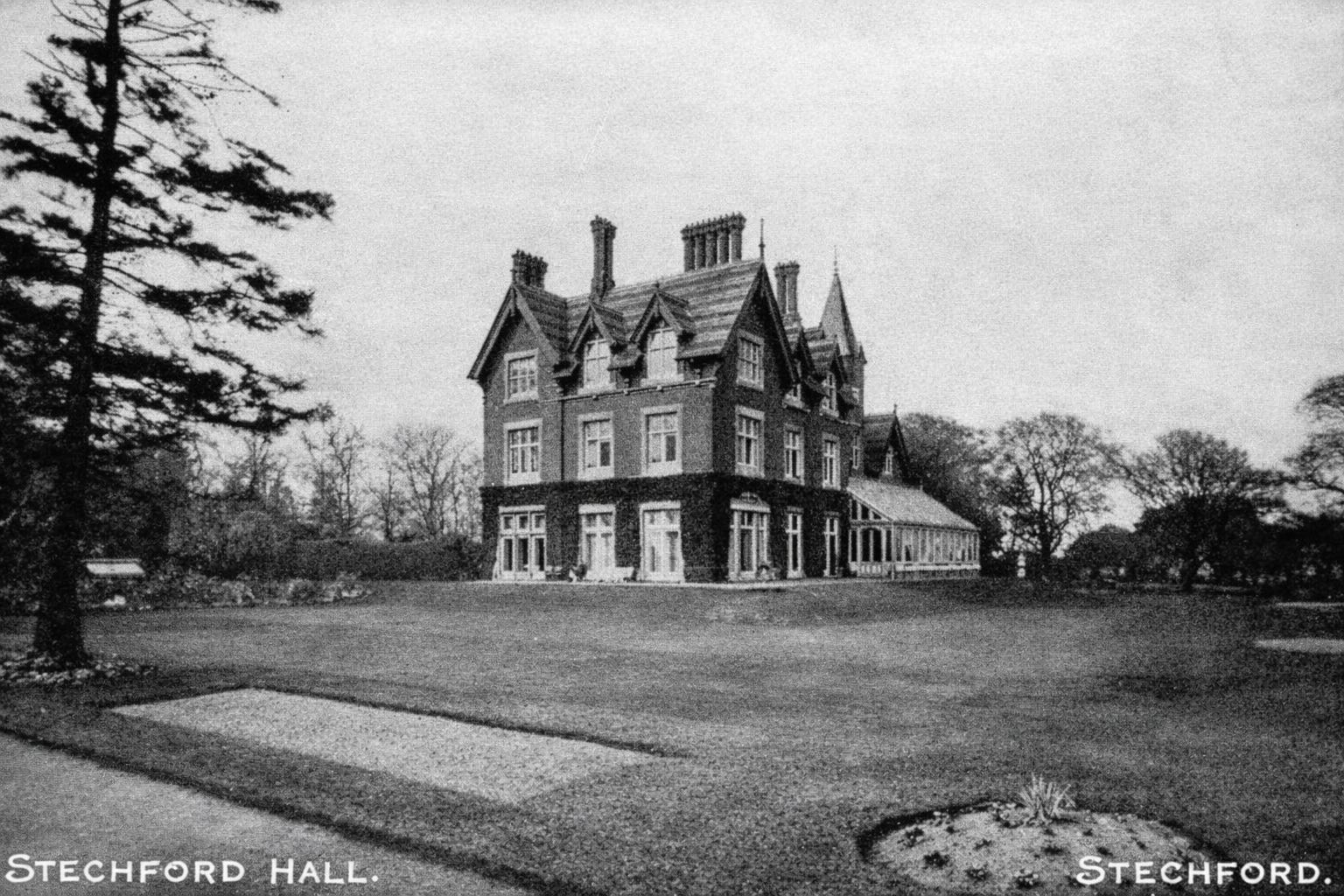
Stechford is one of the oldest settled districts of east Birmingham, lying between Yardley, Ward End, Shard End and the River Cole valley. Long before it became a railway suburb, Stechford was a rural manor and farming community centred on Stechford Hall, the estate that gave the area its name. The word Stechford comes from Old English and refers to a crossing place near a homestead, probably marking a ford across one of the small streams that once flowed into the River Cole.
Stechford Hall stood close to the river and was the centre of a large medieval estate controlling farmland, meadows and woodland across what later became much of east Birmingham. Although the original manor house has long since disappeared, later Georgian and Victorian versions of the hall remained into the nineteenth century, and the parkland surrounding it shaped the layout of the district. Modern roads, schools and green spaces still follow the lines of the old Stechford Hall estate, even though the house itself has gone.
The River Cole has always been central to Stechford’s history. For centuries it provided water, power and fertile land for farming, and small mills once operated along its banks. Today the Cole Valley Park preserves this historic river landscape, offering footpaths, woodland and open meadows that trace the boundary between Stechford and its neighbouring districts.
Stechford began to change rapidly in the nineteenth century with the arrival of the railway. Stechford station opened up the area to commuters, and streets of terraced houses and later semi-detached homes were built for people working in Birmingham’s factories, workshops and offices. This turned what had once been a manor estate and farming district into a busy suburban community.
Another important local landmark is Stechford Retail Park and the former industrial sites along Station Road and Flaxley Road, which reflect the area’s role as part of Birmingham’s manufacturing and trading belt during the twentieth century. Nearby Yardley and Sheldon also influenced Stechford’s growth, bringing older churches, village centres and transport routes into close connection with the district.
Today Stechford is a well-established residential area, shaped by layers of history that range from medieval manorial land to Victorian suburb and modern urban neighbourhood. Its true origins lie not just in the railway age but in Stechford Hall and the River Cole valley, which together created the foundation on which the modern district was built.







Leave a Reply