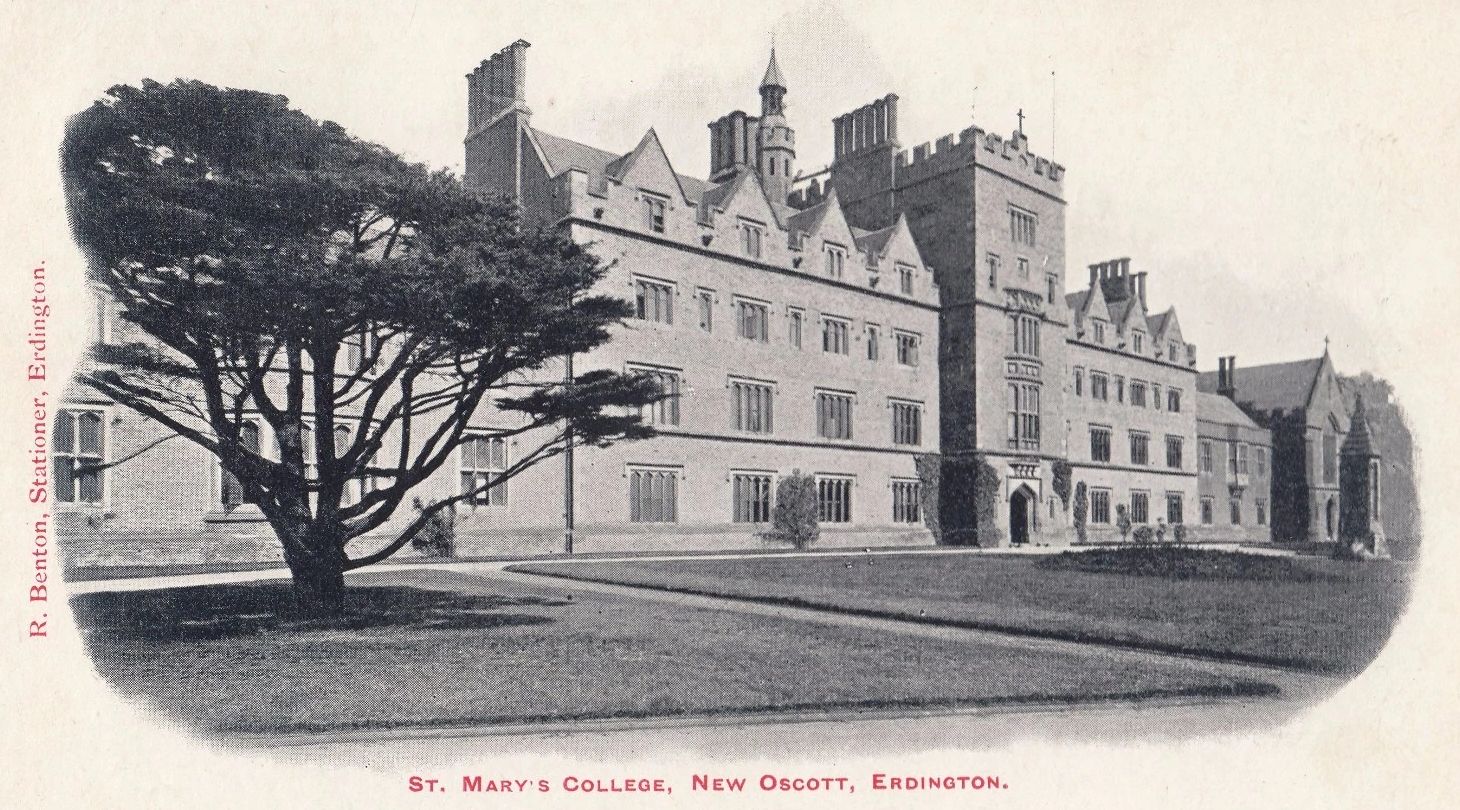
New Oscott is a residential district on the south-western edge of Sutton Coldfield, lying between Boldmere, Perry Barr and Oscott. Although today it appears as a typical early-twentieth-century suburb, the area has much deeper historical roots through its close connection with Oscott, one of the oldest settlements in this part of Birmingham. The name Oscott is far older than New Oscott itself and refers to land that was once part of a rural Warwickshire hamlet lying on the edge of Sutton Chase, the medieval royal hunting forest.
The most important historic building in the area is St Mary’s College, Oscott, one of the oldest Roman Catholic seminaries in England. Founded in 1794, the college was established here when the surrounding countryside was still quiet and remote, making it suitable for religious study and training. The substantial nineteenth-century buildings of the college, set within their own grounds, became a major landmark and gave Oscott national importance within the Catholic Church. It was this institution that fixed the name Oscott firmly on the map long before modern housing estates appeared.
New Oscott developed later as Birmingham and Sutton Coldfield expanded during the late nineteenth and early twentieth centuries. Housing spread out from Boldmere and along the main roads, gradually filling in what had been farmland and open land around the college. Streets of terraced and semi-detached houses were built for families who wanted to live in a healthier, greener environment while still being within easy reach of Birmingham. This suburban growth created what is now known as New Oscott, distinguishing it from the older Oscott settlement centred on the college.
Another defining feature of the area is its close relationship with Sutton Park, which lies immediately to the north. The park, once part of the royal hunting grounds, has long added to the appeal of New Oscott, offering vast areas of woodland, heathland and lakes within walking distance of suburban streets. This combination of historic institution, green space and planned housing has shaped the area’s character for more than a century.
Today New Oscott is a well-established residential district whose identity is rooted in both its historic connection to Oscott College and its role as part of Sutton Coldfield’s southern suburban expansion. It stands as a place where an important national religious institution, medieval forest land and twentieth-century housing all meet, giving it a depth of history that goes far beyond its modern streets.







Leave a Reply