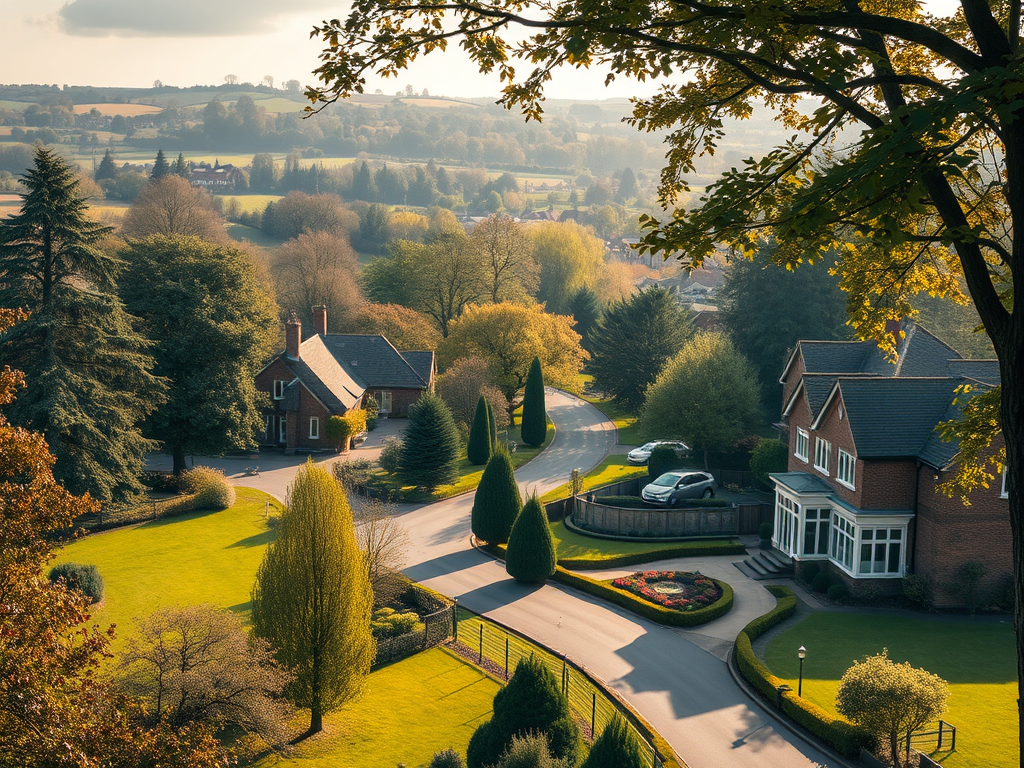
Little Aston is one of the most prestigious and distinctive residential districts of Sutton Coldfield, lying to the north of Four Oaks between Sutton Park and the boundary with Staffordshire. Although today it is best known for its large houses and tree-lined avenues, Little Aston began as a small rural hamlet surrounded by farmland and woodland on the edge of the ancient Royal Forest of Sutton Chase.
Little Aston owes both its name and much of its character to Little Aston Hall, the former Georgian and Victorian country house that once stood at the centre of a large private estate. When that estate was broken up in the early twentieth century, its parkland was developed as Little Aston Park, a carefully planned low-density residential estate of wide tree-lined roads and large detached houses. This transformation created the distinctive, park-like landscape that still defines Little Aston today and established it as one of the most prestigious residential districts in the Midlands.
The area took on its modern character in the late nineteenth and early twentieth centuries, when the arrival of the railway at nearby Four Oaks made it possible for wealthy industrialists, businessmen and professionals from Birmingham and the Black Country to live in a quieter, greener setting while commuting into the city. Developers laid out wide roads and generous plots, creating an estate of substantial detached houses set back from the road in landscaped gardens. This marked the beginning of Little Aston’s transformation into one of the Midlands’ most exclusive addresses.
Unlike many Birmingham suburbs, Little Aston was never built at high density. Its carefully planned layout, low housing density and mature trees give it a park-like feel, more like a private estate than a conventional suburb. Over time, many of the original early twentieth-century houses have been replaced or enlarged, but the spacious character of the area has been preserved through planning controls designed to protect its distinctive environment.
Little Aston’s location between Sutton Park and the open countryside of south Staffordshire has always been one of its greatest attractions. Residents enjoy easy access to one of Europe’s largest urban parks as well as to rural landscapes beyond the city boundary, reinforcing the area’s reputation as a place of quiet, high-quality living close to nature.
Today Little Aston remains synonymous with luxury housing and exclusivity within the wider Sutton Coldfield area. Its history as a carefully planned garden suburb for the Midlands’ wealthy elite continues to shape its character, making it one of the most recognisable and distinctive districts within Birmingham.







Leave a Reply