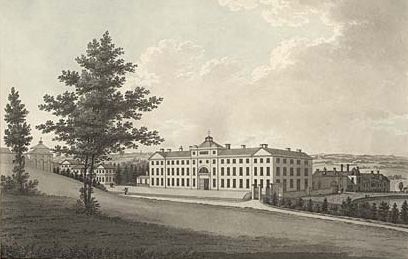
The Soho Foundry was one of the most important industrial sites in Birmingham and one of the places where the modern world was quite literally forged. Situated beside the Birmingham Canal in the Soho district of Handsworth, the foundry was created to build and develop James Watt’s steam engines, which powered the Industrial Revolution.
The foundry was established in 1796 by Matthew Boulton and James Watt as part of their expanding Soho enterprise. While Boulton’s earlier Soho Manufactory had produced metal goods such as buttons, buckles and decorative wares, the new foundry was designed specifically for heavy engineering. Here, Watt’s improved steam engines were cast, assembled and tested before being shipped to mines, mills and factories across Britain and overseas.

Soho Foundry became the world’s first large-scale factory dedicated to steam-engine production. It manufactured engines for pumping water out of mines, driving textile mills, powering ironworks and supplying energy to industries that were rapidly transforming Britain. The precision of the foundry’s work was legendary, and its output helped make Birmingham a global centre of engineering. The success of Soho Foundry also turned the nearby district into a thriving industrial community, with workshops, housing and canals all focused around its operations.

After the deaths of Boulton and Watt, the business continued as Boulton & Watt and later evolved into Soho Engineering Works. The foundry remained active throughout the nineteenth century, adapting to new forms of steam technology and later to electrical and mechanical engineering. For generations, skilled workers at Soho produced some of the most advanced industrial machinery in the world.
By the mid-twentieth century, however, heavy engineering was declining in inner-city Birmingham. Changing technology, competition and the movement of industry to newer sites made Soho Foundry increasingly uneconomic. The works finally closed in the 1960s, and much of the site stood empty and derelict for years afterwards.
In the late 1980s and early 1990s, most of the historic Soho Foundry buildings were demolished as part of redevelopment, although some parts were retained and incorporated into new uses. Today the area is known as Soho Wharf, with modern offices, apartments and canal-side developments replacing what was once one of the most important factories on Earth.
Although the furnaces and workshops have gone, the legacy of Soho Foundry is immense. It was here that the machines were built that powered mines, factories and cities across the globe, making Soho one of the true birthplaces of the industrial age.




Leave a Reply