
Vauxhall is a small but historically significant inner-city district of Birmingham, located immediately north-east of the city centre between Aston, Nechells and the northern edge of Digbeth. Although today it is largely absorbed into the wider urban fabric of the city, Vauxhall was once a clearly defined industrial neighbourhood that played an important role in Birmingham’s growth as a manufacturing powerhouse during the nineteenth and early twentieth centuries.
The area developed rapidly alongside the expansion of canals, railways and heavy industry. Its proximity to the Birmingham and Fazeley Canal, the Grand Union Canal and later the railway network made it an ideal location for engineering works, metal trades, warehouses and workers’ housing. Like many parts of inner Birmingham, Vauxhall grew as a tightly packed industrial community, with factories, foundries and small workshops interwoven with rows of terraced housing built for the labour force that powered the city’s economy.
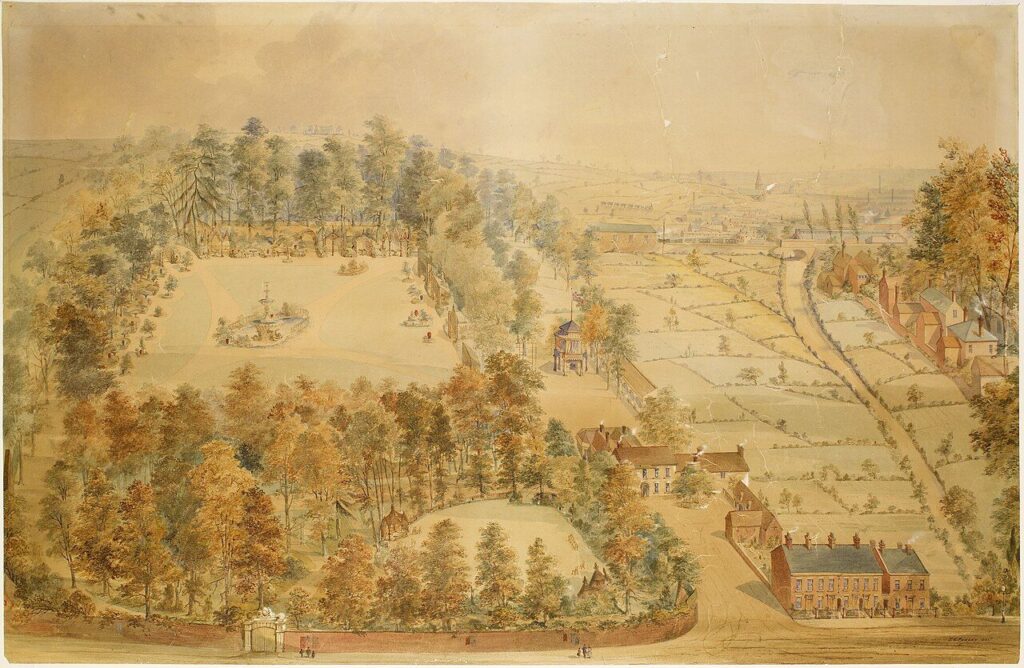
One of Vauxhall’s best-known historic features was Vauxhall Gardens, an 18th-century pleasure ground from which the district took its name. During the nineteenth century the area was rapidly transformed into a densely industrial quarter, with the surrounding streets filled with metalworking firms, foundries, machine shops and supply trades. These industries formed part of Birmingham’s famous manufacturing web, stretching from Aston through the Gun Quarter and Digbeth. By the late Victorian period Vauxhall was firmly established as a working-class industrial district, closely tied to the rhythms of factory life and canal transport.
The social fabric of Vauxhall reflected that of many similar Birmingham districts. Families lived close to their workplaces, children attended local schools, and pubs, corner shops and chapels formed the backbone of daily life. Despite the tough conditions of industrial labour, the area developed a strong sense of community, shaped by generations of workers who lived and worked within a very small geographic area.
Like much of inner Birmingham, Vauxhall was heavily affected by twentieth-century change. Wartime bombing, post-war redevelopment and the decline of traditional manufacturing led to the gradual disappearance of many of its original streets and factories. Large-scale clearance schemes removed much of the old housing stock, and road building and modern commercial developments further altered the landscape. As a result, Vauxhall today is no longer a clearly defined residential neighbourhood but a patchwork of industrial units, transport corridors and redeveloped land.
In modern terms, Vauxhall falls within the wider Nechells ward and lies close to some of Birmingham’s major transport routes, including Aston Expressway and the ring road network. Its position near the city centre and major roads has made it a focus for logistics, light industry and commercial premises rather than traditional housing. While few historic buildings survive in recognisable form, the area’s layout and infrastructure still reflect its industrial past.
Although Vauxhall is not a destination in the way that areas like Digbeth or the Jewellery Quarter are, it remains an important piece of Birmingham’s hidden geography. It represents the type of inner-city industrial district that once formed the backbone of the city’s economy, supplying labour, goods and connectivity that allowed Birmingham to grow into one of Britain’s most important urban centres.
Today, Vauxhall stands as a reminder of the city’s working-class and industrial heritage, quietly embedded between newer developments and major roads. Its story is typical of many parts of Birmingham that powered the city through the Industrial Revolution and beyond, even if their names and identities are now less widely known than they once were.





Leave a Reply