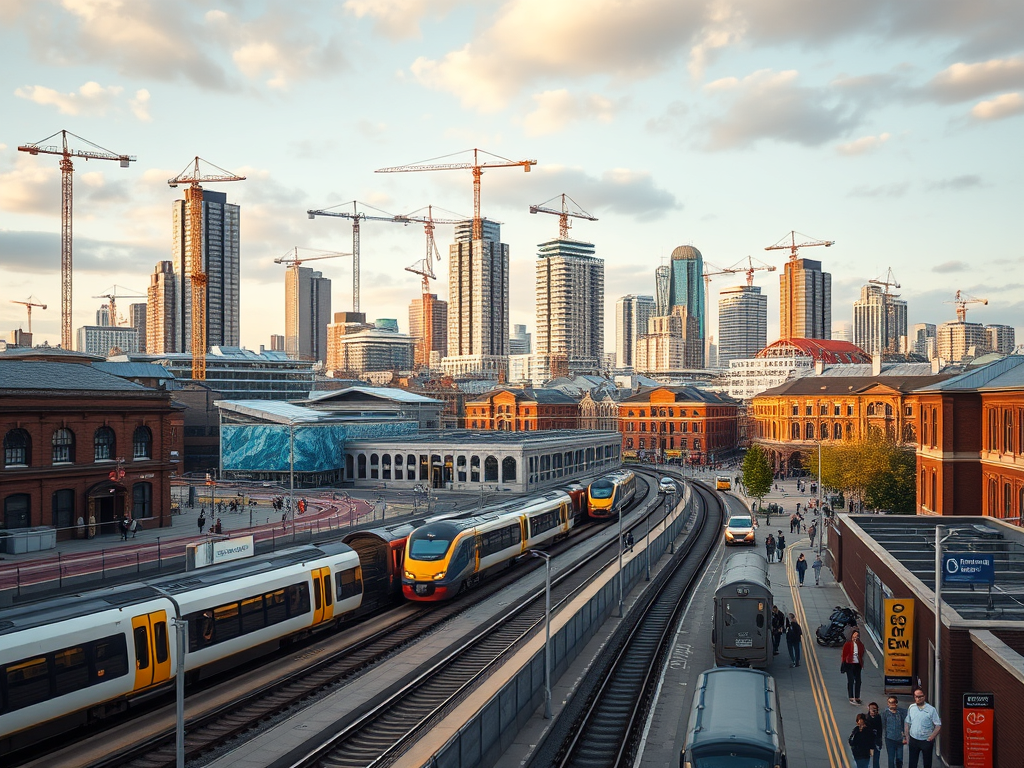
Over the past decade Birmingham has been quietly transformed. Once pigeonholed as an industrial city past its peak, it is now emerging as one of the UK’s most dynamic urban economies, with new homes, jobs and cultural landmarks reshaping its skyline and reputation. The city’s strategic position in the heart of the country makes it ideal for growth, and recent years have seen an unprecedented level of investment as public bodies, universities and private developers all place their bets on Birmingham’s future.
Arguably the most significant force behind this transformation is HS2, the high-speed rail link that will make Birmingham one of the best-connected cities in Britain. The new Curzon Street station, currently rising on the edge of the city centre, will eventually bring London within an hour’s journey and unlock development across Eastside, Digbeth and beyond. Even before trains start running, HS2 has driven regeneration and investment interest in the surrounding area, with developers planning new housing, offices and mixed-use neighbourhoods that will turn once-underused land into vibrant new quarters. These changes are expected to support tens of thousands of jobs and add billions of pounds to the local economy, acting as a genuine catalyst for long-term growth.
Beyond HS2, Birmingham is attracting major domestic and international investors in sectors such as technology, advanced manufacturing, healthcare and finance. The Knowledge Quarter is creating dedicated innovation space linked to the city’s universities, and large-scale schemes are delivering thousands of new homes, retail space and community facilities right across the centre. New residential towers like One Eastside are reshaping the skyline, while major infrastructure improvements, including expanded tram links and transport upgrades, are making it easier for people to live, work and socialise across the city. At the same time, international firms continue to expand here, with high-profile companies committing to growing their workforce locally and reinforcing Birmingham’s reputation as a serious business hub.
It would be naïve to ignore the challenges the city still faces. Birmingham City Council has struggled with issues from waste collection to budget pressures, reminders that rapid change doesn’t erase everyday civic pressures. Yet, even here, long-term plans for housing upgrades, community investment and neighbourhood renewal show a commitment to tackling these problems alongside growth rather than in spite of it.
So could Birmingham be the UK’s next powerhouse city? The ingredients are certainly in place. With improved transport links, a young and diverse population, expanding business sectors and major public and private investment driving regeneration, Birmingham is transforming at a faster pace than many other UK cities outside London. Its future looks like that of a modern, internationally competitive metropolis with a resilient economy and an identity that blends industrial heritage with twenty-first-century opportunity. In the story of British cities, Birmingham is no longer just the “second city” in name — it is shaping up to be one of the most exciting places to live, work and invest in the years ahead.





Leave a Reply