
Birmingham has long been known as the “workshop of the world”, a city where invention, experimentation and practical engineering flourished over centuries. Unlike places dominated by a single industry, Birmingham’s strength lay in its diversity: thousands of small workshops, skilled artisans and engineers producing new ideas, tools and technologies. This environment encouraged innovation not just in heavy industry, but in everyday objects, manufacturing processes and systems that shaped modern life. From the Industrial Revolution through to the twentieth century, Birmingham pioneered or played a central role in developments that spread across Britain and the world.
Below is a list of 20 of the most important inventions or innovations pioneered or developed in Birmingham, with brief context on the people or companies involved and why each mattered.
1. Watt Steam Engine
Developed by James Watt in partnership with Matthew Boulton at the Soho Manufactory, this improved steam engine transformed industry by dramatically increasing efficiency. It powered factories, mines and mills and became the foundation of the Industrial Revolution.
2. The Soho Manufactory System
Run by Soho Manufactory, it pioneered modern factory organisation, bringing multiple skilled processes under one roof and setting the model for industrial mass production.
3. Mass-Produced Buttons
Birmingham became the world centre for button manufacture in the 18th and 19th centuries, producing metal, glass and enamel buttons in huge quantities, helping establish early mass-production techniques.
4. Pen Nibs and Steel Pens
The Jewellery Quarter and surrounding districts led global production of steel pen nibs, replacing quill pens and making writing cheaper and more accessible worldwide.
5. The Modern Bicycle Industry
Companies such as Rudge and Rover helped pioneer bicycle design, including the safety bicycle, which directly influenced the later development of motorcycles and cars.
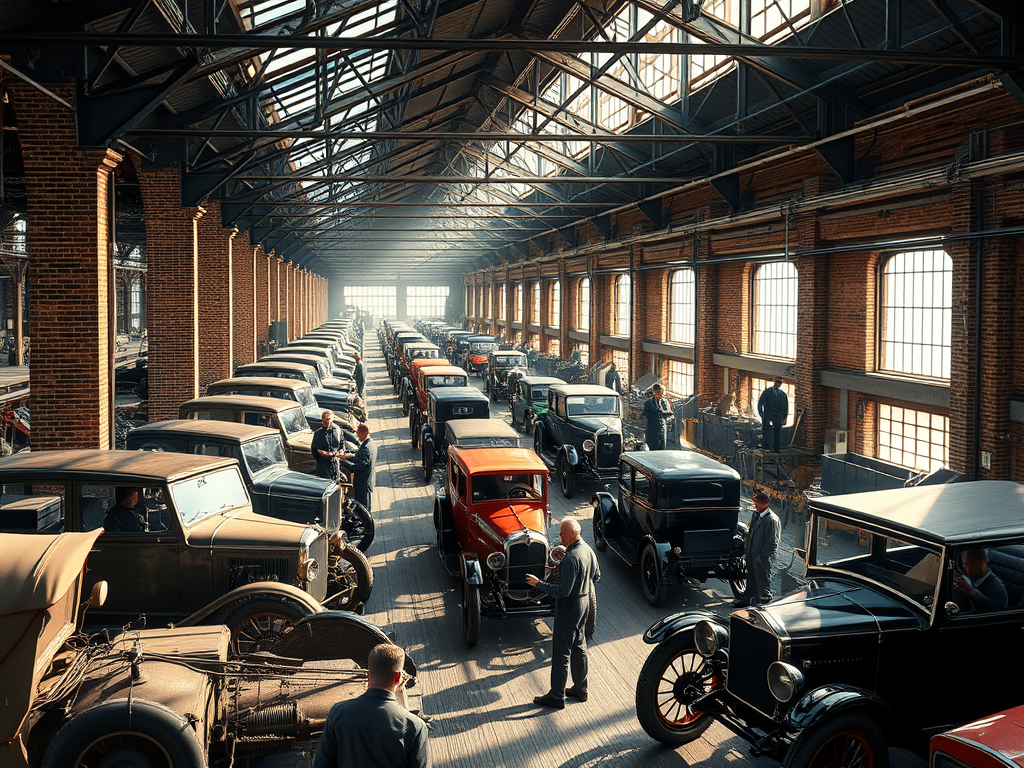
6. The First Practical Motor Car in Britain
The Lanchester Motor Company, founded in Birmingham, produced some of the earliest British cars, introducing innovations such as disc brakes and balanced engines.
7. Cadbury Chocolate Manufacturing
Cadbury revolutionised chocolate production and pioneered ethical industrial practices, including model housing at Bournville.
8. Modern Coin Minting
The Soho Mint introduced precision coin minting, supplying coins worldwide and helping standardise modern currency production.
9. Gas Lighting Components
Birmingham manufacturers supplied key components for gas lighting systems, helping light streets and homes across Britain during the 19th century.
10. The Industrial Screw and Fastener Industry
Birmingham became the global centre for nuts, bolts and screws, standardising fasteners essential for modern engineering and construction.
11. Steam-Powered Minting Press
Developed at the Soho Mint, this innovation allowed coins to be produced faster, more accurately and with greater security against counterfeiting.
12. Modern Jewellery Manufacturing
The Jewellery Quarter pioneered techniques for mass-producing high-quality jewellery, combining craftsmanship with industrial methods.
13. The Villiers Two-Stroke Engine
Produced by Villiers Engineering Company, these engines powered motorcycles, scooters, lawnmowers and machinery across the world.
14. The Lunar Society’s Scientific Exchange
The Lunar Society fostered innovation through collaboration between scientists, inventors and industrialists, influencing advances in chemistry, engineering and medicine.
15. The First British Aluminium Industry
Birmingham played a key role in early aluminium processing, helping turn a rare metal into a practical industrial material.
16. The Pen Factory System
Large-scale pen factories in Birmingham created efficient production lines that influenced later office-supply manufacturing worldwide.
17. Early Electrical Components
Birmingham firms produced switches, fittings and electrical hardware essential to the electrification of homes and factories.
18. The Mass-Produced Lock
Companies such as Chubb developed secure locks that became standard in homes, banks and institutions.
19. Modern Brass and Copper Working
Birmingham pioneered rolled brass and copper sheet production, vital for engineering, plumbing and decorative industries.
20. The City’s Model of Small-Scale Innovation
Perhaps Birmingham’s greatest contribution was not a single invention but a system: thousands of small firms innovating rapidly, sharing skills and adapting ideas faster than large centralised industries.
Birmingham’s contribution to invention was rooted in practical problem-solving rather than theory alone. Its inventors focused on making things work better, cheaper and at scale. The city’s legacy lives on not just in museums or archives, but in everyday objects and systems still in use around the world today.






Leave a Reply