
The Joseph Lucas Ltd company was one of Birmingham’s most important and influential industrial firms, playing a central role in the development of automotive and electrical engineering in Britain for over a century. Closely associated with the Midlands motor industry, Lucas became a global supplier whose products were fitted to millions of vehicles, while its vast Birmingham factories employed generations of local workers and helped define the city’s twentieth-century industrial identity.
Lucas was founded in 1872 by Joseph Lucas, initially as a small workshop producing lamp fittings for carriages and bicycles. Birmingham was an ideal base for the business, offering a skilled workforce, established metalworking trades and access to transport networks. As cycling grew in popularity in the late nineteenth century, Lucas lamps became widely used, establishing the company’s reputation for reliable mass production.
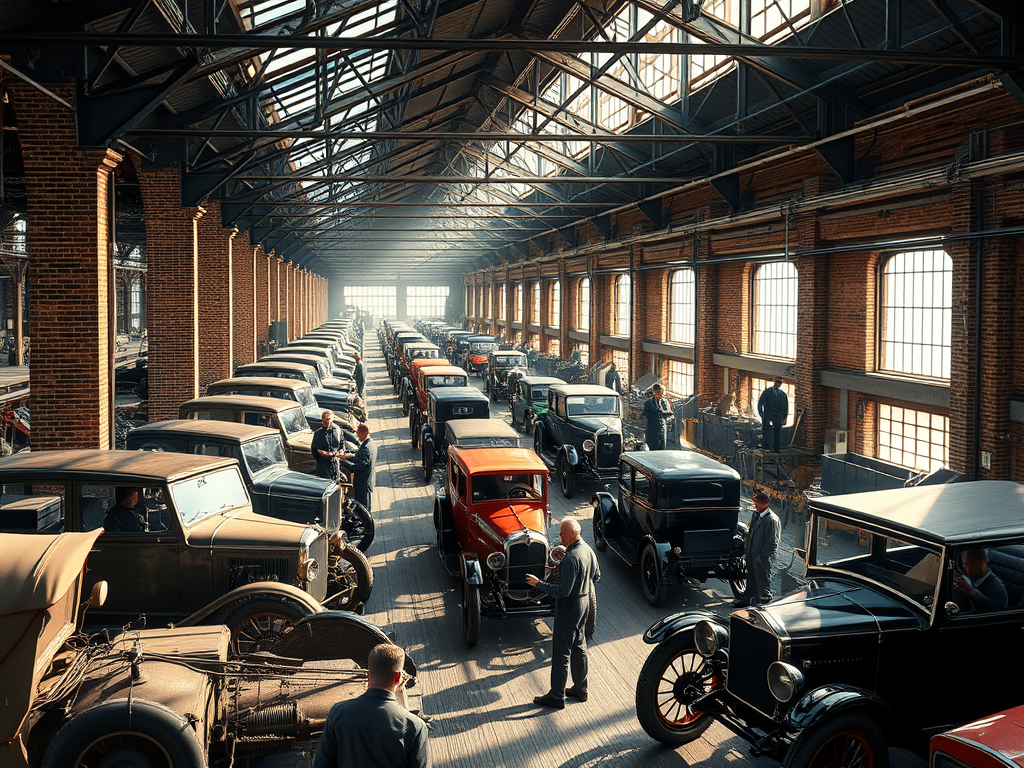
The rise of the motor car transformed Lucas’s fortunes. As vehicles became more complex, the need for dependable electrical systems increased dramatically. Lucas expanded rapidly into the manufacture of magnetos, dynamos, starters, lighting systems and other electrical components. By the early twentieth century, Lucas had become the dominant supplier of automotive electrics in Britain, providing equipment to almost every major British vehicle manufacturer, including Morris, Austin, Rover, Jaguar, Triumph and many others.
Birmingham lay at the heart of this success. Lucas developed major factory complexes in the city, most notably at Great King Street factory in the Aston area. This vast site became one of the most recognisable industrial landmarks in Birmingham, employing tens of thousands of workers at its peak. The factory was effectively a city within a city, with production lines turning out huge volumes of electrical components that were shipped across Britain and exported worldwide. Lucas also operated other sites across Birmingham and the wider Midlands, embedding the company deeply into the region’s industrial fabric.
During both the First and Second World Wars, Lucas was a critical contributor to the national war effort. Its factories produced aircraft electrical systems, magnetos and components essential to military vehicles and aviation. Wartime expansion further increased the company’s scale and importance, and Lucas emerged from the Second World War as one of Britain’s flagship engineering firms, employing vast numbers of people and symbolising industrial strength.
In the post-war decades, Lucas continued to grow, diversifying into aerospace, defence and advanced electronics while remaining closely tied to the motor industry. However, the company also became infamous among motorists for reliability issues with some of its automotive electrical components, giving rise to long-standing jokes and the nickname “the Prince of Darkness”. While often exaggerated, these criticisms reflected genuine challenges faced by British manufacturers during a period of intense competition, cost pressure and technological change.
From the 1970s onwards, Lucas began to struggle. The decline of the British motor industry, increased foreign competition, rising costs and repeated restructuring weakened the company. Lucas merged with GKN in 1996 to form LucasVarity, marking the end of Lucas as an independent Birmingham-based firm. This merger reflected a wider pattern of consolidation across British manufacturing, as traditional companies sought survival through scale rather than local roots.
The impact on Birmingham was profound. Large parts of the Great King Street site and other Lucas facilities closed or were sold off, leading to significant job losses and the end of an era for Aston and surrounding districts. Over time, much of the factory land was cleared and redeveloped for housing, retail and smaller industrial units, erasing much of the physical presence of one of Birmingham’s greatest employers.
The Lucas name did not entirely disappear, but it ceased to exist as a unified British manufacturing company. After further mergers and break-ups, parts of the former Lucas business became absorbed into multinational corporations. Today, the Lucas brand survives mainly as a licensed name used on automotive parts and accessories, often manufactured outside the UK. While the brand retains historic recognition, it no longer represents a Birmingham-based engineering powerhouse.
Lucas’s legacy in Birmingham is nevertheless immense. For more than a century, the company provided skilled employment, supported the city’s motor industry and contributed to Britain’s position as a global manufacturing nation. The rise and fall of Lucas mirrors the broader story of Birmingham’s industrial history: innovation and dominance, followed by decline and transformation in a globalised economy. Though the factories have gone and the company has changed beyond recognition, Lucas remains one of the defining names in Birmingham’s industrial past.




Leave a Reply