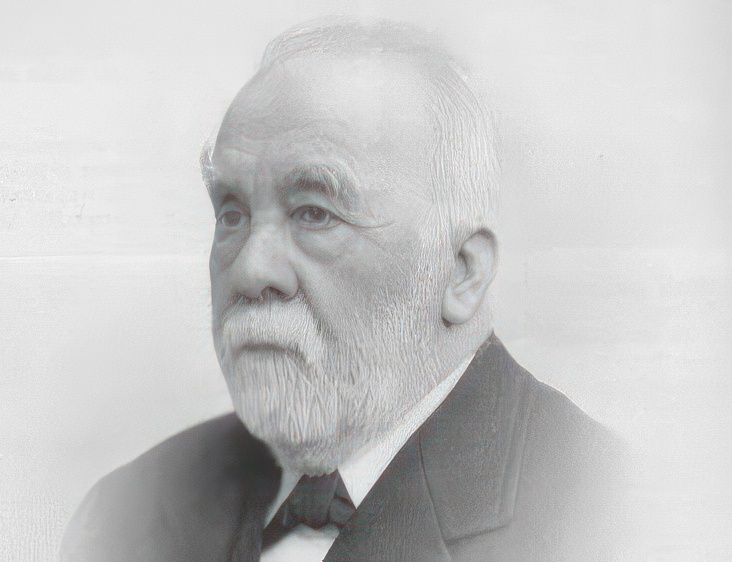
John Marston was one of the most influential industrialists to emerge from the Midlands during the late nineteenth and early twentieth centuries, and a key figure in the development of British engineering, cycling and motor manufacture. Best known as the founder of the Villiers Engineering Company and the Sunbeam brand, Marston played a major role in shaping the industrial landscape of Birmingham and the wider Black Country at a time when the region was at the forefront of global manufacturing.

John Marston was born in 1836 in Ludlow, Shropshire, and began his working life as an apprentice japanner, learning the decorative metal-finishing techniques that were a speciality of the Midlands. This grounding in skilled craftsmanship would strongly influence his later business philosophy, which emphasised quality, precision and reliability. After moving to Wolverhampton, then part of the wider Birmingham industrial region, Marston established himself as a manufacturer of high-quality metal goods, initially producing items such as domestic wares and decorative metalwork.
In 1877, Marston founded what would become the Sunbeam brand, initially producing bicycles that quickly gained a reputation for exceptional quality. Sunbeam cycles were marketed as premium products, famously promoted with the slogan “Built like a watch”, reflecting Marston’s insistence on meticulous engineering and finish. The success of Sunbeam bicycles laid the foundation for expansion into motorised transport, including motorcycles and later motor cars, making Sunbeam one of the most respected names in early British motoring.
Recognising the growing demand for small, reliable engines, Marston founded the Villiers Engineering Company in 1898. The aim was to produce engines that could be supplied to a wide range of manufacturers, allowing them to build motorcycles and machinery without developing their own power units. This was a strategic move that had a profound impact on British industry. Villiers engines became widely used across Birmingham and the Midlands, powering motorcycles, scooters, industrial equipment and agricultural machinery, and supporting countless smaller firms that relied on Villiers as a trusted supplier.
Marston’s businesses benefited greatly from Birmingham’s dense industrial network, with its skilled workforce, specialist suppliers and transport links. Although Villiers’ main factory was located in Wolverhampton, its influence was deeply tied to Birmingham’s engineering economy, feeding into the city’s reputation as the “workshop of the world”. Marston was known not only as a successful entrepreneur but also as a forward-thinking employer, taking a paternalistic approach to worker welfare that was typical of some Victorian industrialists.
Beyond manufacturing, Marston was an active civic figure. He served as Mayor of Wolverhampton and was involved in a wide range of public and charitable activities. His interests extended into education, public health and the improvement of living conditions, reflecting a belief that industrial success carried social responsibility. This combination of commercial ambition and civic duty helped cement his standing as a respected public figure in the region.
John Marston died in 1918, but his influence endured long after his death. The companies he founded continued to shape British engineering for decades, and his emphasis on quality left a lasting mark on British manufacturing culture. Through Villiers, in particular, Marston enabled generations of engineers and manufacturers to innovate, providing the reliable engines that powered much of Britain’s twentieth-century motor industry.
Today, John Marston is remembered as a central figure in the story of Birmingham and Midlands industry: a man whose vision, craftsmanship and entrepreneurial skill helped drive the transition from traditional metalworking to modern mechanical engineering, leaving a legacy that continues to be recognised by historians, enthusiasts and engineers alike.







Leave a Reply