
The Dunlop name is one of the most famous to emerge from Britain’s industrial age and is inseparably linked with Birmingham. From a modest invention in the late nineteenth century, Dunlop grew into a global industrial giant whose products shaped transport, sport and manufacturing worldwide. Its rise, transformation and eventual fragmentation closely mirror the wider story of British industry.
Dunlop’s story began in 1888 with John Boyd Dunlop, a Scottish veterinary surgeon living in Belfast. Seeking a more comfortable ride for his son’s tricycle, Dunlop developed the first practical pneumatic tyre. Although similar ideas had existed earlier, Dunlop’s design was workable, patentable and commercially viable. The invention rapidly proved its value, particularly in cycling, where it revolutionised performance and comfort almost overnight.
The commercial potential of the pneumatic tyre led to the formation of the Dunlop Pneumatic Tyre Company in the late 1880s. Birmingham soon became central to the business due to its skilled workforce, metalworking expertise and transport links. By the early twentieth century, Dunlop had established major manufacturing operations in the city, producing tyres, rubber goods and later a wide range of industrial products. Birmingham’s role as a hub of innovation and mass production allowed Dunlop to scale rapidly and dominate emerging markets.
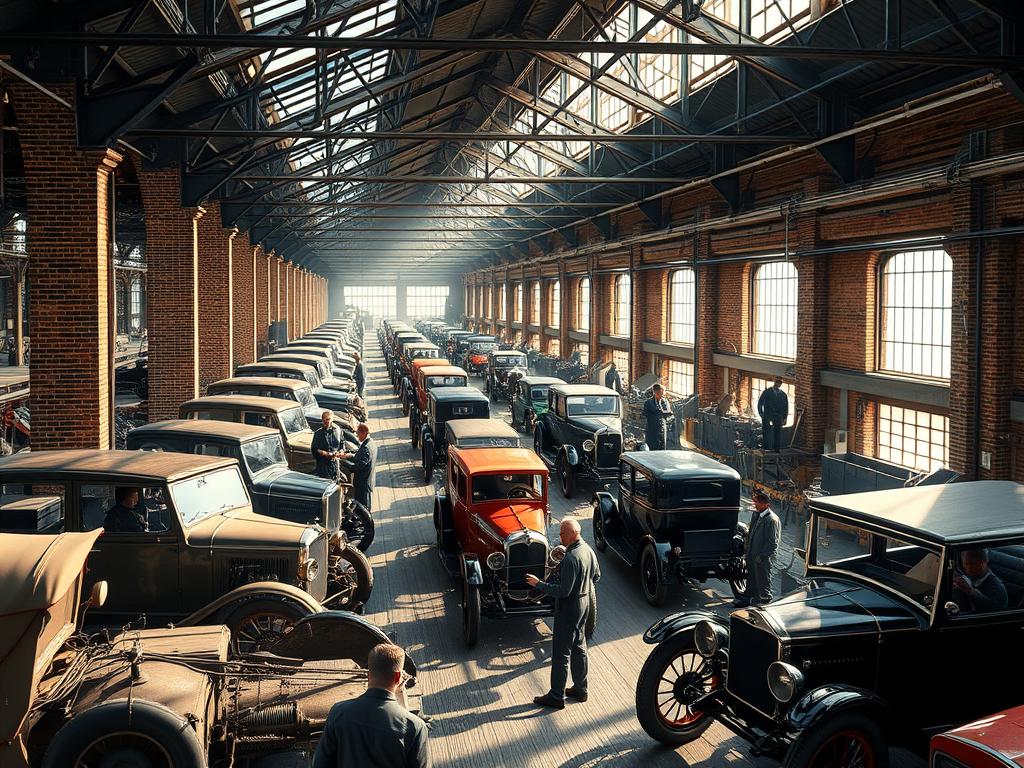
Dunlop expanded far beyond bicycle tyres. As motor vehicles became widespread, the company became a leading supplier of car, motorcycle and aircraft tyres. It also diversified into rubberised clothing, footwear, industrial hoses, belts, sports equipment and even military products. During both world wars, Dunlop was a key contributor to the war effort, producing tyres, aircraft components and specialised rubber goods critical to Britain’s defence.
The most visible symbol of Dunlop’s connection to Birmingham was Fort Dunlop. Opened in 1917 in Erdington, Fort Dunlop was once the largest tyre factory in the world. At its peak, it employed tens of thousands of workers and operated as a near self-contained industrial complex, complete with its own railway sidings. The sheer scale of the building made it a landmark of British industrial power and a defining feature of north Birmingham for much of the twentieth century.
By the post-war period, Dunlop was one of Britain’s flagship industrial companies, operating globally and employing hundreds of thousands of people worldwide. However, from the 1960s onwards, the company faced increasing difficulties. Rising competition from overseas manufacturers, especially in Japan and later other parts of Asia, combined with high production costs, industrial unrest and changing global markets, placed growing strain on the business.
In the 1980s, Dunlop underwent a series of restructurings and sell-offs. The company was broken up, with different divisions sold to different owners. Tyre manufacturing, sports goods and industrial products were separated, effectively ending Dunlop as a single, unified British industrial enterprise. Production at Fort Dunlop ceased in 1980, marking the end of an era for Birmingham’s manufacturing base. The vast building later stood largely empty before being redeveloped in the early twenty-first century into offices, retail and leisure space, preserving the structure but not its original function.
Despite the collapse of the original company, the Dunlop name did not disappear. Today, Dunlop exists as a brand rather than a single company. The rights to the Dunlop name are owned by different corporations in different sectors and regions. Dunlop tyres, for example, are produced under licence by international companies, including Goodyear, while Dunlop-branded sports equipment is owned by other global firms.
As a result, Dunlop is no longer a British-owned manufacturing company in the traditional sense. While the brand originated in Britain and retains strong historical associations with Birmingham, its modern incarnation is international, with ownership, production and management spread across multiple countries. What remains British is the legacy: the invention, the engineering heritage and the physical presence of Fort Dunlop as a reminder of the city’s industrial past.
Dunlop’s story is one of extraordinary innovation and global success, followed by fragmentation in a changing economic world. From a single pneumatic tyre to a worldwide industrial empire, and finally to a globally licensed brand, Dunlop encapsulates both the achievements and the challenges of Britain’s industrial history. For Birmingham in particular, it remains one of the city’s most important industrial names, symbolising a period when local invention reshaped the world.




Leave a Reply