
For most of the twentieth century, Birmingham and the West Midlands did not merely host a vehicle industry; they defined it. From Longbridge and Solihull to Coventry, Small Heath, Wolverhampton and the Black Country, the region formed one of the densest manufacturing ecosystems in the world. Cars, motorcycles, engines, gearboxes, castings, electrics and tools were all produced within a short radius. That is why the eventual collapse still feels baffling. If the skills existed and demand clearly remained, why were such vast companies unable to adapt quickly enough to survive?
Japanese and other foreign competition is often presented as the simple explanation, but this view is incomplete. The deeper causes lay in industrial structure, management culture, investment decisions and the practical limits of government intervention. The industry did not fail because it lacked talent or imagination. It failed because it struggled to convert those strengths into a modern, disciplined and consistently reliable industrial system at the speed the global market demanded.
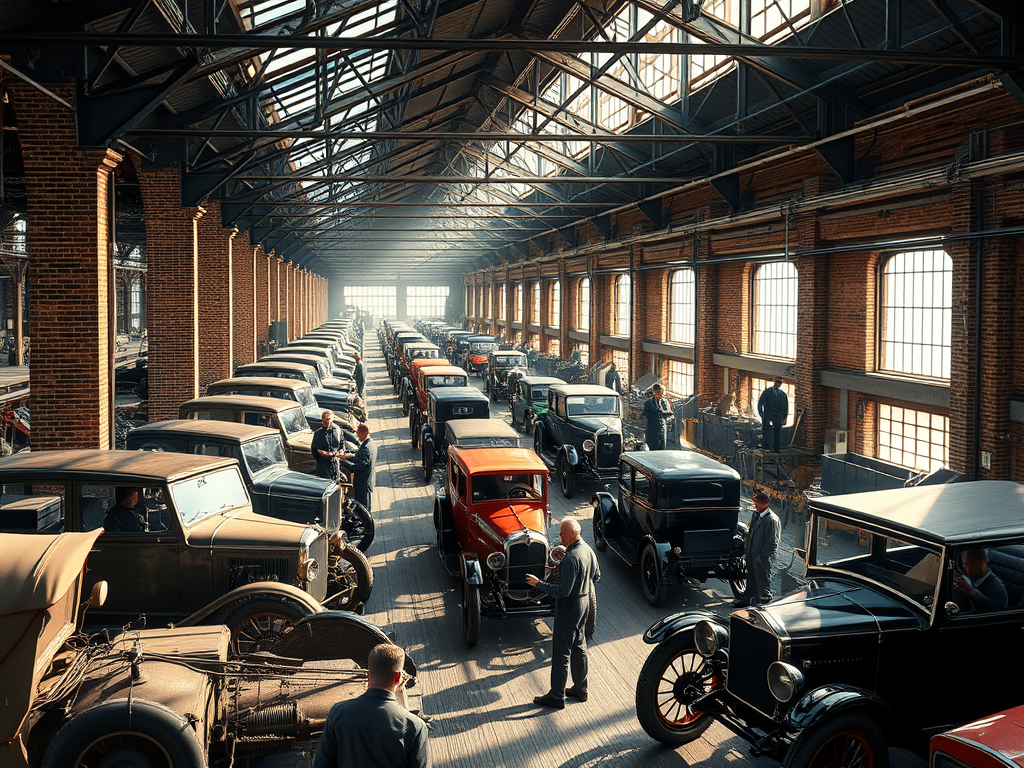
By the 1960s and 1970s many British vehicle manufacturers were operating with outdated factory layouts, fragmented production sites and overly complex product ranges. Decades of mergers had created corporate empires that looked formidable on paper but were inefficient in practice. Multiple factories frequently produced overlapping models using different components and processes, making standardisation costly and difficult.
Modernisation required enormous capital investment: new tooling, automation, improved corrosion protection, better paint processes, tighter quality control and faster development cycles. These investments demanded long-term commitment before profits could be realised, at a time when Britain was grappling with inflation, oil crises and unstable economic policy. Japanese manufacturers invested early and consistently, while British firms tended to modernise in short bursts, repeatedly disrupted by financial crises and changes in leadership.
The creation of British Leyland was intended to produce a national automotive champion, but instead resulted in a sprawling organisation with too many brands, factories and internal power centres. When the company collapsed financially in the mid-1970s, government intervention prevented immediate catastrophe. Reports and plans proposed rationalisation, investment and reform, yet implementing them proved far more difficult than drafting them.
Funding was provided, but results were slow to appear. Political pressure made factory closures extremely difficult, even when plants were inefficient or duplicated production elsewhere. Product planning became a series of compromises between brand loyalties, union influence and short-term survival. Cars were often launched before quality issues were fully resolved, damaging customer confidence and reinforcing perceptions of unreliability.
This was not a failure of skill on the factory floor. It was a failure of systems. Quality depends on consistency, and consistency depends on stable processes, disciplined supply chains and long-term planning. These were precisely the areas in which the organisation struggled most.
British motorcycle manufacturers encountered similar problems, but earlier and more abruptly. Companies such as BSA, Triumph and Norton produced machines admired for their character, performance and racing pedigree. However, global expectations changed quickly. Buyers increasingly demanded electric starters, smooth multi-cylinder engines, oil-tightness, dependable electrics and low maintenance ownership.
Japanese manufacturers delivered these features alongside mass-production reliability and strong dealer networks. British firms often responded with clever engineering and incremental improvements, but not with the wholesale transformation of manufacturing methods that was required. Even strong designs could be undermined by inconsistent build quality or limited global distribution. Once customers experienced dependable ownership elsewhere, brand loyalty faded. Admiration remained, but admiration alone could not sustain factories without repeat sales.
Management decisions undoubtedly played a role, but they were made under extraordinary pressure. Leaders were forced to balance employment, political scrutiny, union relations and financial survival while competing against companies operating in more stable economic environments. Measures that made commercial sense, such as closing factories or reducing product ranges, carried severe social and political consequences.
Decision-making became slow and fragmented. Development cycles lengthened while competitors moved faster. Internal rivalries prevented simplification, and short-term crisis management replaced long-term strategy. Over time, hesitation proved more damaging than any single error.
Government intervention succeeded in preventing immediate collapse and mass unemployment, but state ownership could not guarantee productivity, innovation or market confidence. Political realities limited how radical restructuring could be, and support often focused on keeping companies alive rather than rebuilding them into globally competitive enterprises.
In later years, policy shifted toward privatisation, partnerships and a greater reliance on market forces. This brought success in certain premium and specialist sectors, but it also marked the end of British-owned mass-market vehicle production in the region. By the time major closures occurred, such as Longbridge in 2005, the industrial ecosystem that had once sustained large-scale manufacturing had already been weakened beyond recovery.






Leave a Reply