The history of Birmingham City Council
Birmingham City Council is the largest local authority in Europe and one of the most influential municipal bodies in British history. Its origins lie in the rapid growth of Birmingham during the nineteenth century, when industrial expansion created urgent demands for public services, infrastructure and governance that older forms of local administration could no longer manage.
Before the modern council existed, Birmingham was governed by a patchwork of parish authorities and improvement commissioners. This system proved inadequate as the town expanded. In 1838, following the Municipal Corporations Act, Birmingham was formally incorporated as a municipal borough, allowing an elected council to take responsibility for policing, sanitation, streets and public order. This marked the beginning of organised municipal government in the town and laid the foundations for what would become a powerful civic institution.
Birmingham’s rise to city status in 1889 transformed the council into a major force in local government. Under the leadership of reformers such as Joseph Chamberlain, who served as mayor in the 1870s, the council became nationally famous for its bold approach to municipal reform. It took direct control of gas and water supplies, invested heavily in sanitation, cleared slums and improved housing, and promoted public health and education. This period gave rise to the phrase “municipal socialism”, with Birmingham often cited as a model of how local government could actively improve living conditions.
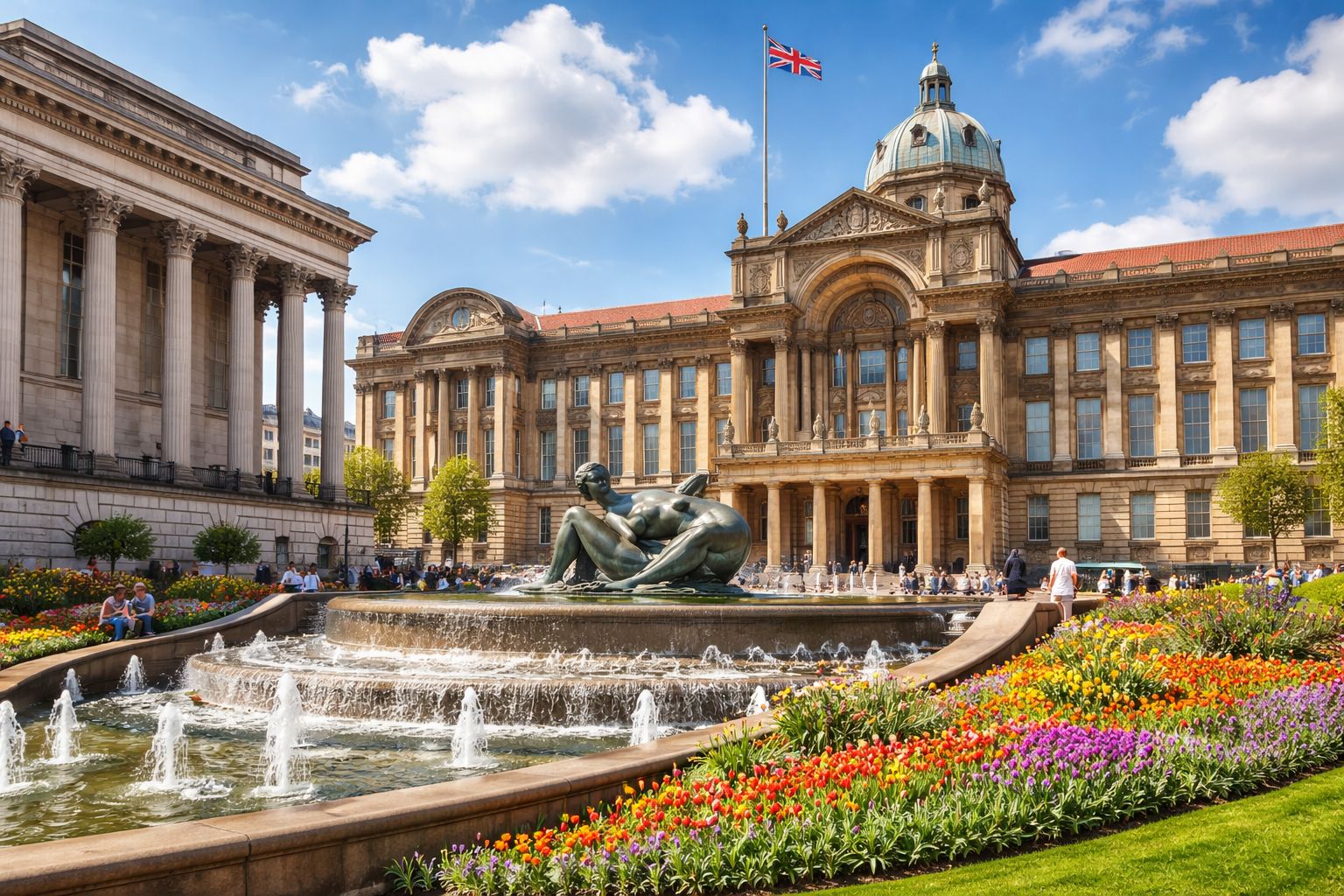
Throughout the late nineteenth and early twentieth centuries, Birmingham City Council expanded its responsibilities alongside the growing city. It oversaw major infrastructure projects including roads, public buildings, libraries, parks and tramways. The council’s civic buildings around Victoria Square symbolised confidence in local government and civic pride. By the inter war years, Birmingham had developed a reputation for strong administration and ambitious planning, even as it grappled with poverty, housing shortages and the social effects of industrial decline.
The Second World War brought new challenges. The council played a central role in civil defence, emergency housing and post war reconstruction. Large scale redevelopment followed in the 1950s and 1960s, including extensive council house building and ambitious city centre schemes. While these projects addressed urgent housing needs, some later attracted criticism for their scale, design and impact on historic neighbourhoods.
Like many large authorities, Birmingham City Council has experienced controversy and scandal over time. There have been disputes over housing policy, planning decisions, equal pay claims and allegations of mismanagement. One of the most significant long running issues involved equal pay for female council workers, which resulted in costly legal settlements over many years and placed sustained pressure on council finances. At various points, concerns were also raised about internal governance, accountability and the complexity of managing such a vast organisation.
In the twenty first century, the council faced mounting financial strain caused by reduced central government funding, rising demand for social care, historic liabilities and major IT and transformation projects that failed to deliver expected savings. These pressures culminated in September 2023 when Birmingham City Council effectively declared itself bankrupt by issuing a Section 114 notice. This move halted most non essential spending and brought national attention to the fragility of local government finances in large urban authorities.
The financial crisis did not emerge overnight. It reflected years of structural challenges, including the cost of equal pay claims, escalating care budgets and ambitious but problematic digital transformation programmes. Government intervention followed, with external oversight and a requirement for long term financial recovery plans. The situation sparked intense debate about the sustainability of local government funding, not only in Birmingham but across England.
Today, Birmingham City Council remains a vital institution, responsible for services that affect more than a million residents. While its reputation has been damaged by recent events, its historical importance cannot be overstated. From pioneering municipal reform in the Victorian era to grappling with the realities of modern urban governance, the council’s story mirrors the wider story of Birmingham itself: ambitious, complex, sometimes flawed, but central to the life and identity of the city.







Leave a Reply