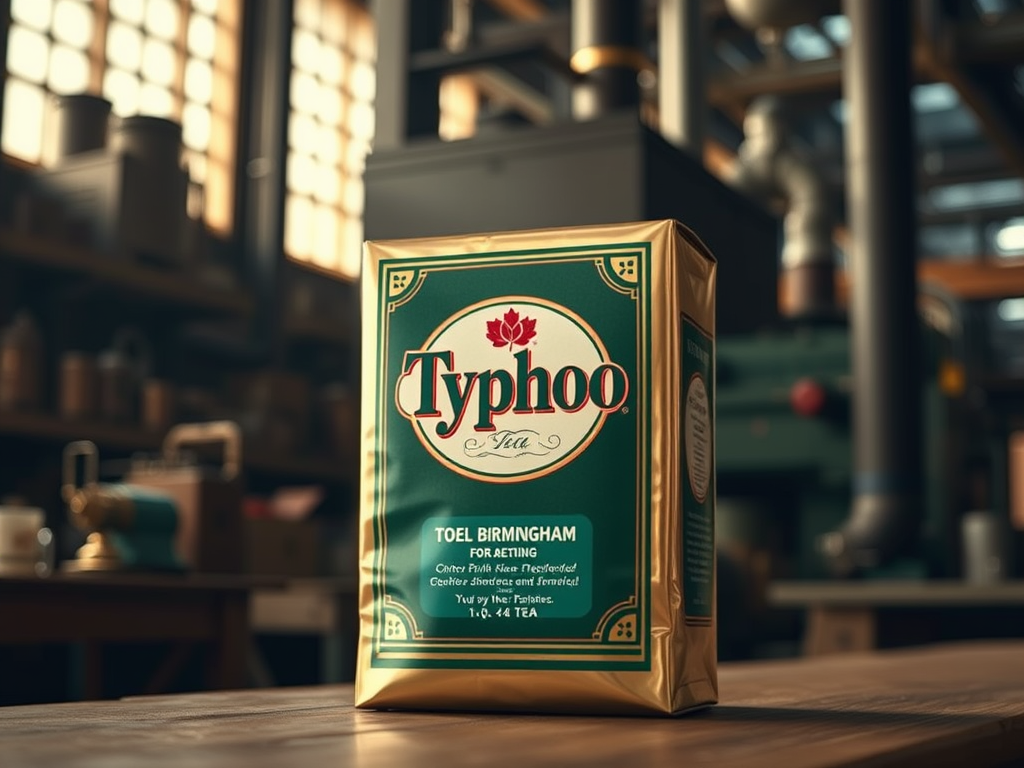
Typhoo Tea — A Birmingham Legacy
Typhoo Tea is one of Britain’s most iconic tea brands, with a history that reaches back into the heart of the industrial era and the city of Birmingham. Known for its distinctive flavour and broad appeal, Typhoo has been part of British households for over a century. Its story is not just one of commerce, but of innovation, industrial growth, and the changing face of British manufacturing.
Origins and Early History
Typhoo Tea was founded in 1903 by a Birmingham pharmacist named John Sumner. Sumner began by selling remedies and health products from his shop at 54 High Street in the Moseley area of Birmingham. The name “Typhoo” is believed to derive from “typhoid,” reflecting Sumner’s early marketing claim that his blend was particularly pure and beneficial to health. At a time when tea quality varied widely, this emphasis on purity resonated with customers.
Initially, Sumner packaged loose tea, but demand grew steadily. The product’s popularity was driven by its consistent quality and effective branding, a relatively novel approach in those days. Within a few years, Typhoo had established itself as a trusted household name throughout the region.
The Birmingham Factory
By the early 20th century, the success of Typhoo Tea necessitated larger production facilities. In 1928, the company opened a purpose-built factory on Typhoo Road in Birmingham, not far from the city centre. The location was ideal: close to rail lines for distribution, and part of a city that had long been a hub of industry and innovation.
The factory was a significant investment, reflecting Typhoo’s transition from a regional producer to a nationally recognised brand. Within its walls, tea leaves from around the world were blended, packed, and prepared for delivery to grocers and wholesalers. The site became an important local employer and a symbol of Birmingham’s industrial prowess during the inter-war period and beyond.
Over the decades, the factory expanded as the company modernised its processes to meet increasing demand. Typhoo’s distinctive red and white packaging became familiar on grocer’s shelves across the United Kingdom.
Evolution Through the 20th Century
Throughout the mid-20th century, Typhoo Tea continued to evolve. The brand maintained its reputation for classic British teas, even as tastes and retailing patterns changed in the wake of the Second World War. The factory in Birmingham remained a centrepiece of production, employing generations of local workers who took pride in their role in creating one of Britain’s most enduring brands.
Marketing efforts expanded with the growth of radio and television. Typhoo appeared in advertisements that cemented its place in British popular culture. By the 1960s and 1970s, it was one of the best-selling teas in the country.
Changes in Ownership and Manufacturing
Despite its success, Typhoo Tea faced challenges in the late 20th century as global competition, shifting consumer habits, and corporate consolidation reshaped the food and drink industry. In 1968, the company was sold to pharmaceutical giant Thornton & Ross, which continued to operate the Birmingham factory.
More significant changes came in subsequent decades. In 1995, Typhoo was acquired by a consortium that included Indian tea interests. However, the most dramatic shift came in 2018, when the Typhoo brand and its parent company were purchased by Value Foods Ltd, a UK-based firm with connections to larger international tea producers.
In the years that followed, production gradually moved away from the historic Birmingham site. Rising costs, the need for modern facilities, and the globalisation of supply chains all contributed to this decision. Ultimately, the old Typhoo factory in Birmingham ceased operations, marking the end of an era for the city’s direct association with the brand’s manufacture.
Legacy and Brand Today
Although production is no longer based in Birmingham, Typhoo Tea remains a major name on supermarket shelves throughout the UK. Under new ownership, the brand has sought to balance its heritage with contemporary market demands, including the introduction of new blends and packaging designed to appeal to today’s consumers.
Typhoo’s legacy, however, remains deeply rooted in Birmingham. For much of the 20th century, the city’s factory was an emblem of British industry — a place where ordinary workers helped build one of the nation’s most recognisable household names. The story of Typhoo is part of Birmingham’s wider industrial narrative, reflecting both the city’s ingenuity and the broader economic shifts that have transformed British manufacturing.






Leave a Reply