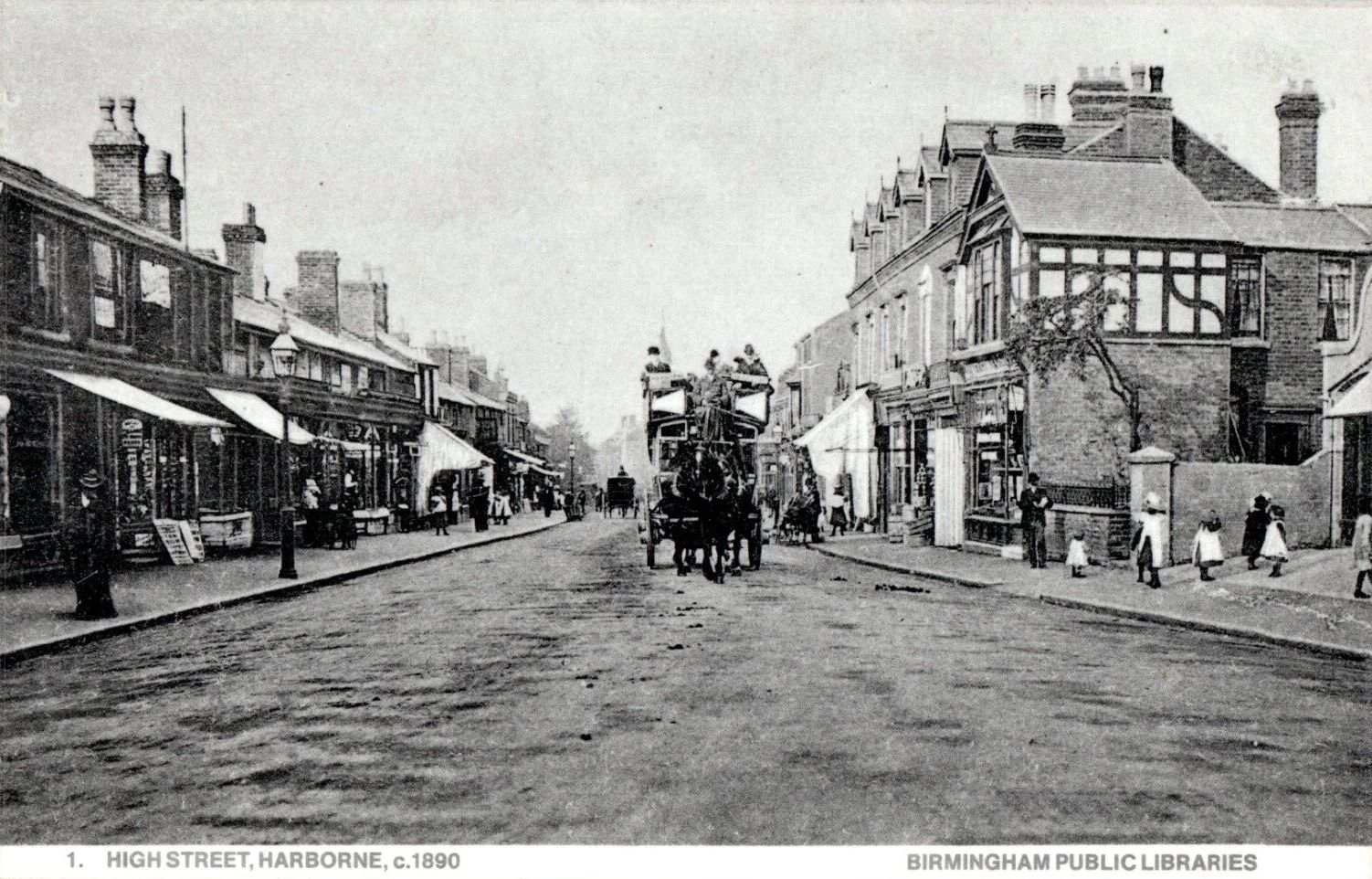
The village of Harborne goes back to the days of the Domesday Book. It used to be known as Horeborne a small rural village in the county of Staffordshire. In Victorian times it expanded rapidly from a population of some 1,500 in the 1840’s to just over 10,000 at the turn of the 1900’s. Birmingham used to be part of Warwickshire and in 1891 Harborne became part of Birmingham

Harborne is one of Birmingham’s most historic and well-established districts, lying to the west of the city centre between Edgbaston, Selly Oak and Quinton. For centuries it was a separate rural village, and even today it retains a strong sense of identity built around its high street, green spaces and distinctive mix of old and new buildings.
The name Harborne is believed to come from an old Saxon term meaning “boundary stream”, a reference to the brook that once marked the edge between ancient parishes. In medieval times Harborne was a small farming community, with cottages, fields and common land clustered around what is now Harborne High Street. This rural character survived until the nineteenth century, when Birmingham’s rapid expansion began to turn the village into a suburb.
One of Harborne’s most important historic buildings is St Peter’s Church, which dates back to the twelfth century. Its tower and churchyard stand on the site of the original village centre and remain a visible link to Harborne’s medieval past. Nearby, the pattern of old roads and plots still reflects the layout of the original settlement.
During the Victorian and Edwardian periods Harborne became one of Birmingham’s most desirable suburbs. Large houses were built for middle-class families, while terraced streets filled with clerks, teachers and skilled workers who commuted into the city. The arrival of trams and later motor buses made Harborne High Street a thriving shopping and social centre, a role it continues to play today.
Harborne also sits close to several of Birmingham’s major institutions. The Queen Elizabeth Hospital and the University of Birmingham lie just to the east, making Harborne an important residential base for doctors, academics and students. This has given the district a lively, cosmopolitan feel alongside its long-established community.
Harborne used to have it’s own railway and the old railway line now a disused walkway still cuts through the Harborne area. Looking out from any high building in Edgbaston over the locality of Harborne and you can quickly appreciate just how green the area is.
It has still retained it’s original character and is a very pleasant area of Birmingham in which to live. Housing is not cheap here however so be prepared for a big mortgage.
Although not an industrial area itself, Harborne was closely connected to Birmingham’s manufacturing economy, providing homes for people who worked in the factories, workshops and offices of the city. Today it remains one of Birmingham’s most sought-after districts, valued for its blend of history, village atmosphere and urban convenience, and for the way it has managed to evolve while retaining its original character.




Leave a Reply