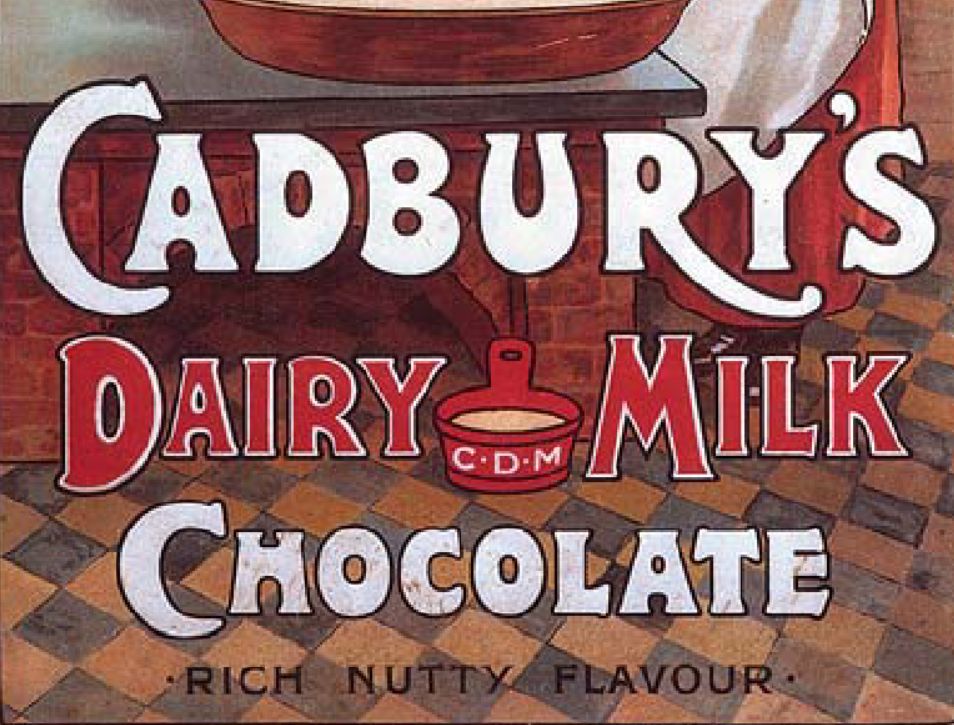
Cadbury’s as we know it today started from humble beginnings in Bull Street, Birmingham. A shop was opened by John Cadbury in 1824. It did not begin as a confectionery shop, but sold tea, coffee, and homemade drinking chocolate (cocoa), which he prepared himself for his customers.
In those days cocoa and chocolate were luxury items, affordable only to the wealthy. John’s experiments with chocolate, combined with an aggressive marketing campaign, soon made him a leading trader in Birmingham. The shop prospered and grew increasingly popular.
John Cadbury moved into the manufacturing of drinking chocolate and cocoa. By the early 1840s Cadbury operated from a factory in Bridge Street and went into partnership with his brother Benjamin. “Cadbury Brothers of Birmingham” was now operational, and the chocolate industry received a much-needed boost in the 1850s when the government reduced high import taxes on cocoa. Chocolate was now within reach of the masses.
Cadbury received a Royal Warrant in 1854 as manufacturers of chocolate for Queen Victoria. After this successful start the business fell upon hard times, and John Cadbury’s sons, Richard and George, struggled after their father retired in 1861. Long hours, little reward, and sheer determination and perseverance kept the business going.
New processes and a new product called cocoa essence helped the business improve so much that by the end of the decade they were able to move from the Bridge Street factory to what is now Bournville. The name is derived from Bournbrook, with “brook” replaced by the French word “ville”, meaning town. This was a shrewd move, as French chocolate was regarded as the best in the world at the time.
In 1878 the Bournbrook estate, comprising fourteen and a half acres of what was then countryside on the outskirts of Birmingham, was acquired by the brothers. With nearby rail and canal links and main roads, it was an ideal location. The new factory was completed in 1879, laying the foundations for what was to come.
Using expertise from abroad and with their first export order from Australia in 1881, the company prospered. Milk chocolate was introduced, and competition from Switzerland and France was matched with comparable products. These were continually perfected until Cadbury could claim superiority in chocolate manufacture in both quality and taste. New recipes and experimentation created innovative products that ensured continued success.
Cadbury moved on to become a limited company, and after the death of Richard Cadbury, the sons of the two brothers joined the firm, headed by George Cadbury. This remained a family business in every sense of the word.
New products followed swiftly and the business expanded rapidly. By the turn of the century the new factory employed around 2,500 workers.
Cadbury was far more than an ordinary factory. Under the direction of George Cadbury, and far ahead of its time, workers were provided with housing, education, and training. Pension schemes and medical facilities ensured a healthy and dedicated workforce. George Cadbury regarded employees as part of his extended family and treated them with respect and recognition.
Cadbury’s Dairy Milk became a household name. After the First World War the factory was redeveloped and mass production began in earnest. A merger with J. S. Fry & Sons in 1919 brought well-known brands such as Fry’s Chocolate Cream and Fry’s Turkish Delight, which are still sold today. In 1915 Cadbury’s Milk Tray was introduced and proved a resounding success, followed by Roses in 1938.
During the war years chocolate was regarded as an essential food and placed under government supervision. After the war normal production resumed and Cadbury went from strength to strength. More factories opened, new products were developed, and advances in technology improved production to meet the ever-growing demand for chocolate.
In 1969 the Cadbury Group merged with Schweppes. Cadbury Schweppes Plc became a leader in confectionery and soft drinks in both the UK and abroad. With factories around the world and a host of well-known brand names, it became a household name in many countries.
Today, Cadbury World has a visitor centre dedicated to the history of chocolate. Factory tours take visitors on guided journeys through this vast chocolate factory, and the factory shop, with its keen prices, ensures that no visitor leaves empty-handed.





Leave a Reply