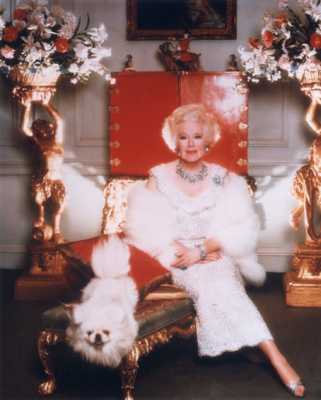
The Cartland family can be traced back to Scotland, where a village bears their name and records place them in Lanarkshire as early as AD 1200. Some members of the family later moved south, and Barbara Cartland’s great-grandfather owned an estate in Worcestershire. During the Industrial Revolution, around 1840, he relocated to Warwickshire and built a large house in open countryside at what is now Kings Norton, Birmingham. A wealthy brass manufacturer, his second son James Cartland became a prominent financier and was Barbara Cartland’s grandfather.
James Cartland played a significant role in the development of Birmingham and was twice offered a baronetcy and a knighthood, both of which he declined. He married Flora Falkner, a direct descendant of King Robert the Bruce of Scotland. Their only child, James Bertram Falkner Cartland, married Mary “Polly” Hamilton Scobell. On 9 July 1901, at Vectis Lodge in Edgbaston, their daughter Mary Barbara Hamilton Cartland was born.
Although born into relative comfort, the family’s circumstances changed dramatically following the suicide of Barbara’s paternal grandfather, leaving them financially insecure. They moved to Amery Court in Pershore, but tragedy struck again when Major James Cartland was killed in France in the closing weeks of the First World War. Barbara was just seventeen. Asked by her mother where she wished to live, she chose London, and the family moved there with her two brothers, Ronald and Anthony. To support them, Polly Cartland opened a dress shop. Both Ronald and Anthony were later killed in action in 1940, just one day apart.
After attending Malvern Girls’ College and Abbey House in Hampshire, Barbara Cartland became a journalist and gossip columnist. Her first novel, Jigsaw, was published in 1923 and proved a great success, prompting her to write professionally to support herself.
In 1927 she married Alexander George McCorquodale, a former officer of the Argyll and Sutherland Highlanders and heir to a British printing fortune. They had a daughter, Raine, who became Deb of the Year in 1947 and later the stepmother of Diana, Princess of Wales.
The 1930s were turbulent years. Following her divorce, Barbara was left with a modest settlement after her former husband’s family confiscated his wealth. Determined to help her brother Ronald stand for Parliament in the Labour-held Kings Norton division of Birmingham, she wrote up to 10,000 words a day to fund his campaign. Ronald won the seat with a majority of nearly 6,000 votes.
Barbara Cartland later married Hugh McCorquodale, an officer in the Queen’s Own Cameron Highlanders and recipient of the Military Cross. They had two sons, Ian and Glen. Throughout her life, Barbara retained a strong affection for Scotland and spoke fondly of family visits to the Highlands.
“I travel all over the world. I am thrilled by the exotic beauty of the East and the vital virility of the West. But as I turn for home, my heart is in the Highlands.”
Barbara Cartland lived at Camfield Place in Hatfield, Hertfordshire, an estate still owned by the family and first settled in 1275. A Tudor manor once stood there before being rebuilt in 1867 by Beatrix Potter’s grandfather. Potter herself wrote that Camfield was the place she loved best and where she wrote The Tale of Peter Rabbit. The estate includes an oak tree planted by Queen Elizabeth I in 1550 during her imprisonment at Hatfield.

Camfield Place, Hatfield, Hertfordshire.
In 1989 Barbara Cartland became the first person to appear twice on the television programme This Is Your Life. She championed many causes, serving as a county councillor for nine years and campaigning for improved housing for the elderly. She also played a key role in changing the law to ensure Romany children received education, helping establish fourteen council camps in Hertfordshire, one of which was named Barbaraville.
Despite often being portrayed as living in a fantasy world, Barbara Cartland was deeply engaged with real-world issues. She wrote extensively on health, answered around 40,000 letters a year—many concerning medical advice—and carried out a great deal of unpaid advocacy work.
Her achievements were recognised internationally. In France, where tens of millions of her books were sold, she received honours from the City of Paris. She regularly visited Birmingham, appeared on Pebble Mill and local radio, and always expressed pride in being born in the city.
According to her publishers, Barbara Cartland wrote 724 books, sold over one billion copies worldwide, and entered the Guinness Book of Records as the world’s best-selling author. She remains the most successful writer of romantic fiction of all time—and she was born in Birmingham.
Awards
- 1945 – Certificate of Merit, Eastern Command, for welfare work with troops
- 1953 – Commander of the Order of St John of Jerusalem
- 1972 – Dame of Grace of the Order of St John
- 1981 – Achiever of the Year, National Home Furnishing Association, USA
- 1984 – Bishop Wright Air Industry Award
- 1988 – Gold Medal of the City of Paris
- 1991 – Dame Commander of the Order of the British Empire
Links
Romantic Times profile
www.barbaracartland.com
Book list
BBC feature




Leave a Reply