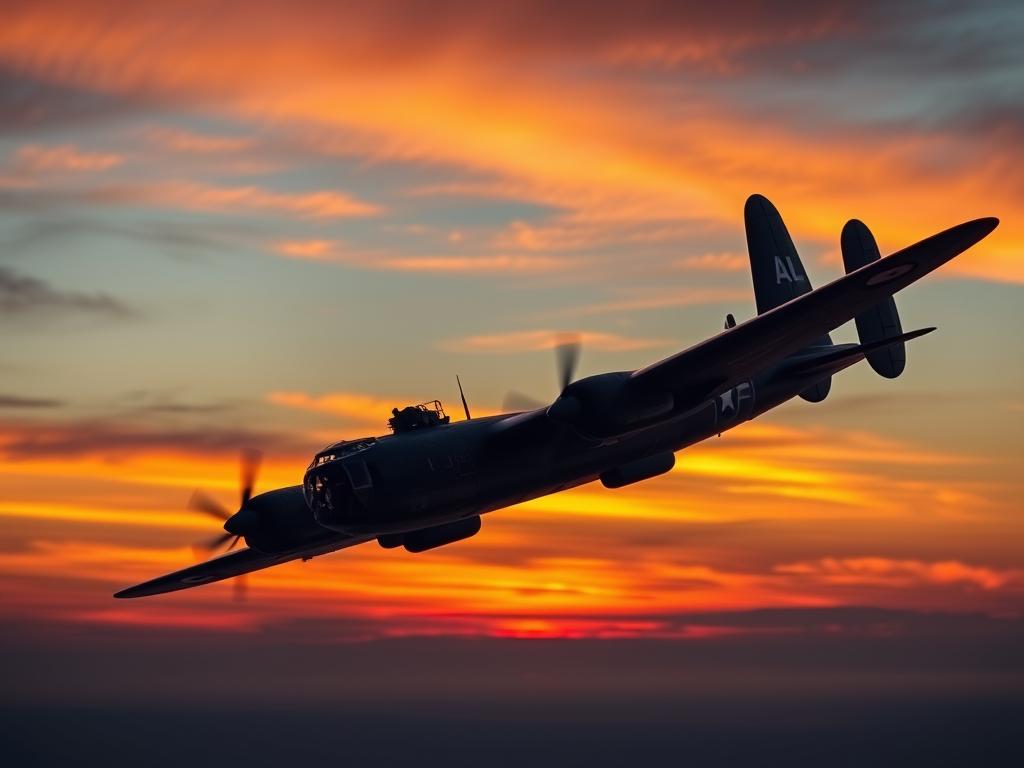
The Avro Lancaster was one of the most famous combat aircraft of the Second World War. A total of 7,737 Lancasters were built. Each aircraft carried a crew of seven: pilot, navigator, flight engineer, wireless operator, bomb aimer and two gunners.
The Lancaster could carry a heavy payload of up to 14,000 lb in its 33-foot bomb bay. With specially adapted bomb doors this could be increased to 22,000 lb. With a maximum speed of around 280 mph at 15,000 feet, it was a formidable weapon in the Royal Air Force’s arsenal.
Defensive armament consisted of eight 7.7 mm Browning machine guns mounted in three turrets, giving the aircraft a strong defensive capability. Nevertheless, like all heavy bombers, its vulnerability to modern enemy fighters meant it was used primarily in night-time operations.
Many people will remember the film The Dam Busters, which dramatises the actions of Lancaster crews during Operation Chastise in 1943 against dams in Germany’s Ruhr Valley.
In Birmingham, the Lancaster was built by the Austin Motor Company at its Longbridge works. It is widely regarded as the finest British heavy bomber of the Second World War. Its efficient design and ease of construction allowed for rapid, large-scale production, contributing significantly to the Allied war effort.
Lancasters attacked the German battleship Tirpitz on numerous occasions before she was finally sunk on 12 November 1944 by 12,000 lb bombs dropped by Lancaster bombers.
Between 1942 and 1945, Lancasters flew approximately 156,000 operations and dropped an estimated 608,612 tons of bombs. More than 3,000 aircraft were lost in action. Today, only two fully airworthy Avro Lancasters remain: one with the Battle of Britain Memorial Flight and the other with the Canadian Warplane Heritage Museum.







Leave a Reply