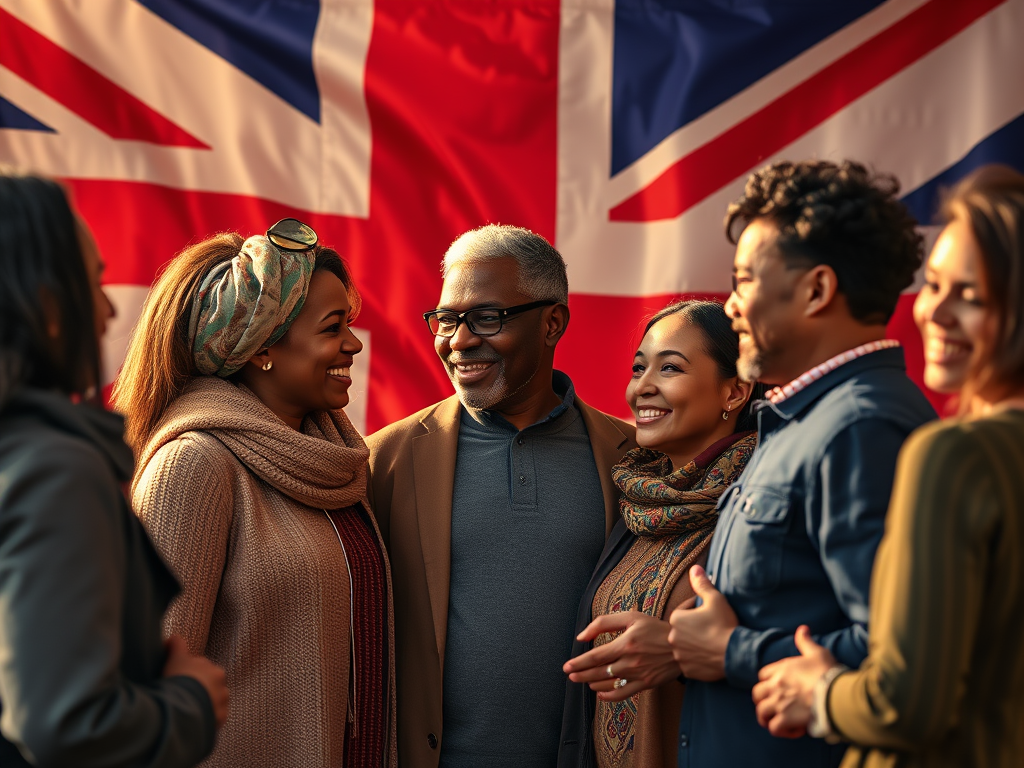
Birmingham is one of Britain’s most ethnically diverse cities, a place where different cultures, languages and traditions sit side by side as part of everyday life. This diversity did not emerge overnight. It is the result of centuries of migration, economic opportunity and community building that have gradually reshaped the city into a true multicultural centre.
What the numbers show today
The most recent census confirms just how diverse Birmingham has become. The city is now close to evenly split between White and non-White populations, with no single ethnic group forming an overwhelming majority.
Around 48.7% of Birmingham’s residents identify as White, including White British and other White backgrounds. Approximately 31.0% identify as Asian, making this the largest minority group in the city, including people of Pakistani, Indian, Bangladeshi and other Asian heritages. Around 10.9% of residents identify as Black, including Caribbean and African backgrounds. A further 4.8% identify as Mixed ethnicity, while around 4.6% identify as Arab or other ethnic groups. Just over a quarter of the population, roughly 26.7%, were born outside the United Kingdom.
Together, these figures show that Birmingham is no longer shaped by one dominant background but by a wide mix of communities whose influence is visible across the city.
A brief and slightly cheeky history of arrivals
Birmingham’s diversity grew in stages rather than waves crashing all at once. During the Industrial Revolution, people arrived from across Britain and Ireland to work in factories and workshops. By the late nineteenth and early twentieth centuries, Irish communities were well established, leaving a lasting mark on the city’s social and cultural life.
After the Second World War, Birmingham needed workers again. This time people arrived from the Caribbean, India, Pakistan and later Bangladesh, followed by communities from Africa and the Middle East. In the late twentieth and early twenty-first centuries, further migration from Eastern Europe, alongside refugees from global conflicts, added new layers to the city’s identity. Over time, Birmingham evolved from an industrial powerhouse into a city defined as much by its people as by its production.
Why Birmingham became a magnet
The reasons people chose Birmingham were practical rather than romantic. There were jobs, transport links, housing and established communities that made settling easier. Once families put down roots, shops, places of worship, schools and restaurants followed. These networks encouraged others to arrive, creating neighbourhoods that felt lived-in rather than temporary.
This is why Birmingham’s diversity is often experienced street by street. One area may feel deeply rooted in South Asian culture, another in Caribbean traditions, another shaped by newer European or African communities.
What the statistics mean in real life
The percentages translate into everyday experiences. Children grow up hearing multiple languages at school. High streets sell foods from every continent. Religious festivals overlap across the calendar. Younger age groups are noticeably more diverse than older ones, meaning the city’s future identity is already taking shape in classrooms and playgrounds.
Birmingham’s ethnic mix is not uniform. Some neighbourhoods are among the most diverse in the country, while others reflect more traditional demographic patterns. This patchwork is part of what gives the city its character.
The benefits, the challenges and the reality
Birmingham’s diversity brings energy, creativity and resilience. It has fuelled a thriving food scene, strong small-business culture and rich artistic life. At the same time, it brings challenges, including pressure on housing, services and the need for thoughtful urban planning that works for everyone.
For most residents, however, diversity is simply normal life. It is neighbours sharing food, colleagues swapping traditions and communities learning to live alongside one another.
In summary
Birmingham did not become diverse because of a single policy or moment. It became diverse because people came for opportunity, stayed to build lives and raised families who now call the city home. Its ethnic mix is not just a statistic but a living story, written daily across its streets, schools and homes.
If Britain had a tasting menu of migration, Birmingham would be the house special: complex, generous, occasionally messy and always full of flavour.


Leave a Reply