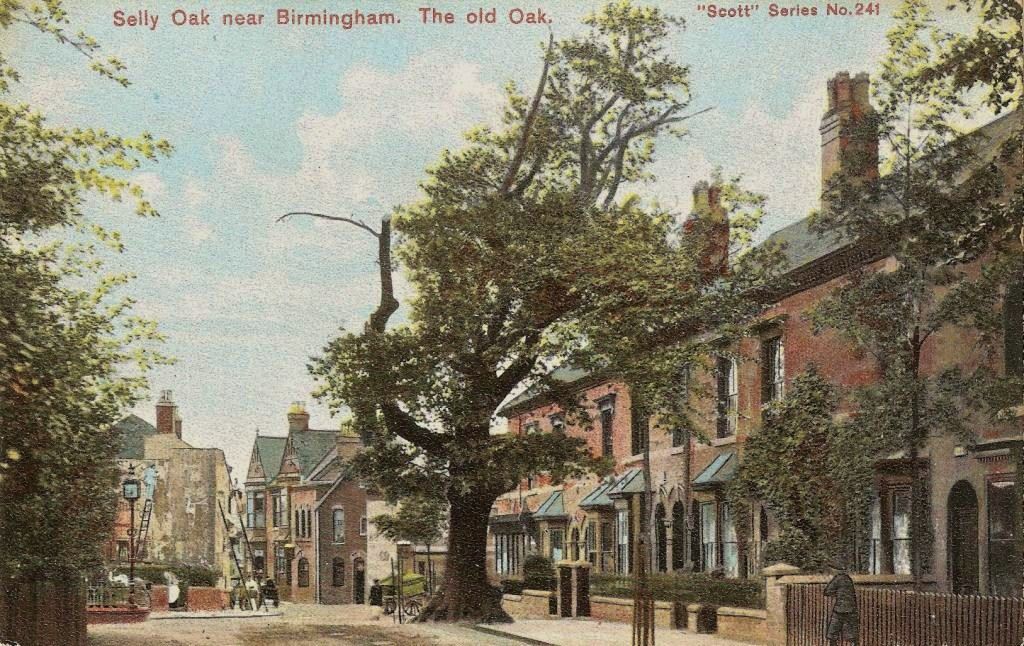
Old Selly Oak Hospital early 1900s, the original Victorian red-brick infirmary buildings.”
Selly Oak Hospital was one of Birmingham’s longest-serving and most historically important medical sites, with roots that reach back to the Victorian era. The familiar red-brick buildings that stood abandoned for years were not just a hospital but part of a much older story of welfare, medicine and social change in the city.
The site began life in the early 1870s as the King’s Norton Union Workhouse, built to house and care for the poor under the Victorian Poor Law system. In 1897 a large infirmary was added, designed with long pavilion wards, wide corridors and good ventilation, which were considered advanced for the time. These red-brick infirmary buildings became the core of what would later be known as Selly Oak Hospital.
In the early twentieth century the workhouse system was phased out and the infirmary was turned into a general hospital. It became known as Selly Oak Hospital in 1911 when the area was incorporated into Birmingham. Over the decades the hospital expanded and adapted, serving both local residents and the wider region. When the National Health Service was created in 1948, Selly Oak became part of the new public healthcare system and continued to grow in importance.
In the early 2000s Selly Oak gained national and international attention as the home of the Royal Centre for Defence Medicine, treating British service personnel injured in conflicts such as Iraq and Afghanistan. Despite this, much of the hospital estate was ageing, with many of the Victorian and early twentieth-century buildings no longer suited to modern healthcare standards. Maintaining and upgrading them was increasingly impractical.
A new chapter began when the Queen Elizabeth Hospital Birmingham was built nearby in Edgbaston as a state-of-the-art medical complex. From 2010 onwards, services were gradually transferred from Selly Oak to the new hospital, and Selly Oak Hospital finally closed in October 2011 after more than a century of service. The red-brick wards, corridors and outbuildings were left empty, and for several years the site became a striking and sometimes eerie example of urban abandonment, widely photographed and explored.
Rather than being wiped away, the historic hospital complex was chosen for transformation. The land was sold for redevelopment, and a masterplan was created to turn the former hospital into a new residential neighbourhood. The scheme includes hundreds of new homes, green spaces and community areas, creating a new village within Selly Oak.
Crucially, many of the most important Victorian red-brick buildings have been retained and restored rather than demolished. Former wards, administrative blocks and gatehouses are being converted into apartments, with original architectural features preserved and blended with modern interiors. New buildings have been added alongside them, but the distinctive character of the old hospital remains visible throughout the site.
Today, Selly Oak Hospital is being reborn as a residential community that respects its past. Where once patients were treated and lives were saved, people now live and work among the restored brickwork and landscaped streets. The transformation of the old hospital stands as one of Birmingham’s most striking examples of how a major historic site can be adapted for the future while still preserving its story.







Leave a Reply