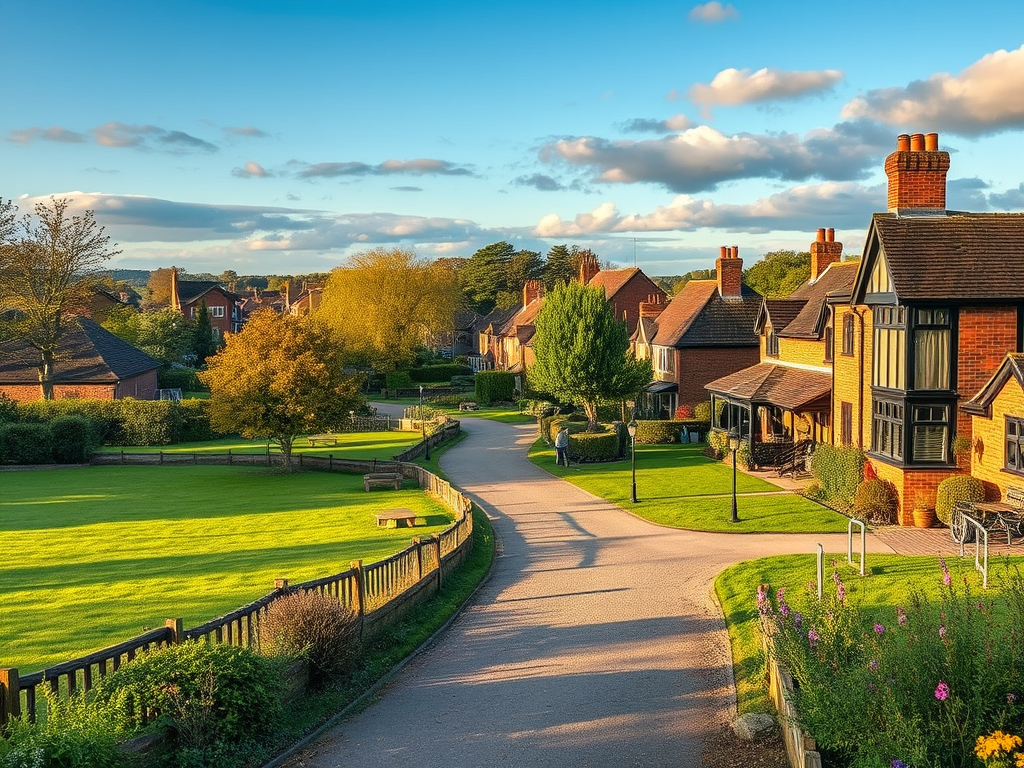
Balsall Common is a large and historic village in the Metropolitan Borough of Solihull, lying between Coventry, Kenilworth and the eastern edge of Birmingham. Although today it forms part of the West Midlands commuter belt, Balsall Common has deep rural roots and remains closely tied to the Warwickshire countryside that surrounds it.
The village takes its name from the medieval settlement of Balsall, which stood a short distance to the south near the River Blythe. The word “Common” refers to the open land that was once used for grazing and shared by local people. Over time, as roads and railways developed, the focus of settlement shifted northwards to what is now Balsall Common, gradually becoming the main centre of the area.
For centuries the district was dominated by farming, woodland and small hamlets, with life revolving around agriculture and the nearby Blythe Valley. This began to change in the nineteenth century with the arrival of the railway, which connected the area to Coventry, Birmingham and London. Like many villages in the region, Balsall Common became attractive to people who wanted to live in a rural setting while working in the growing industrial and commercial centres nearby.
One of Balsall Common’s most important historic features is its proximity to Balsall, a deserted medieval village and former religious centre where a priory once stood. Although little survives above ground, this site gives the area a much deeper history than is immediately obvious and connects it to the medieval religious landscape of Warwickshire.
The modern village centre developed mainly in the twentieth century, with shops, schools and community facilities growing around Station Road and the surrounding streets. Unlike many commuter villages, Balsall Common has retained a strong local identity, with a busy High Street, village hall, churches and sports clubs that give it the feel of a self-contained community rather than just a dormitory for nearby cities.
Balsall Common is also closely connected to the surrounding countryside. The Blythe Valley Park and nearby green spaces preserve large areas of meadow, woodland and wetland, making the village one of the greener parts of the Solihull borough. These landscapes not only provide recreation but also reflect the agricultural environment that once dominated the area.
Today Balsall Common sits at the point where the rural heart of Warwickshire meets the urban West Midlands. It offers the advantages of strong transport links and modern facilities while still retaining a village character rooted in centuries of farming, common land and medieval settlement. This balance between past and present is what makes Balsall Common one of the most distinctive communities in the Solihull and Coventry area.







Leave a Reply