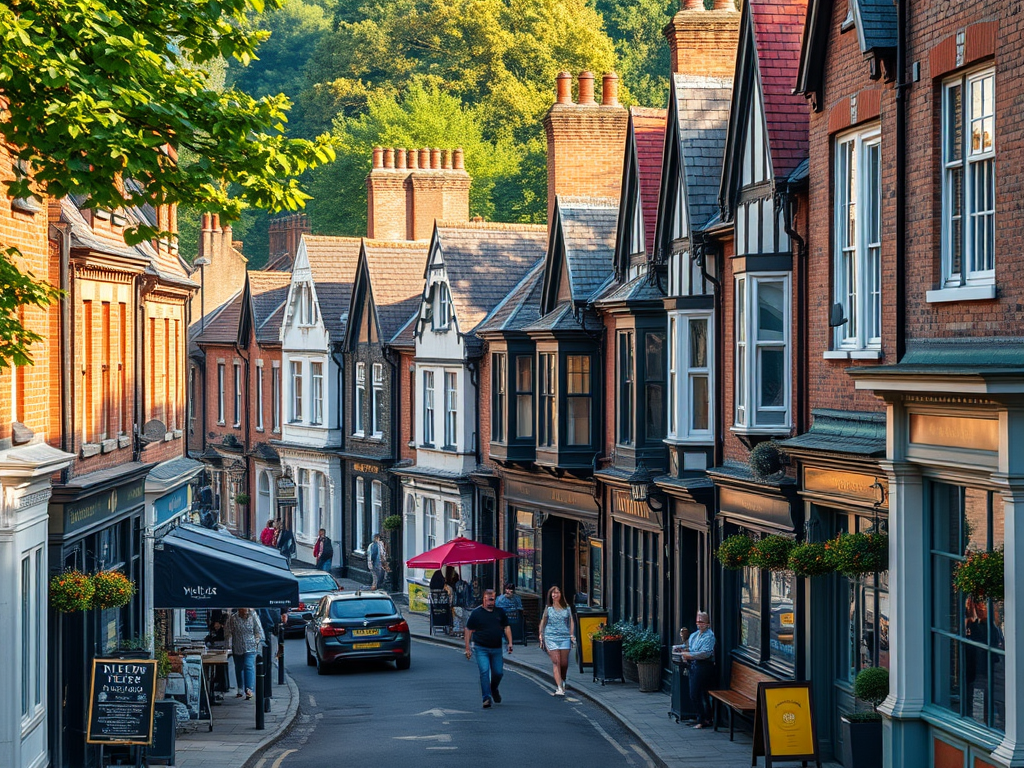
Wylde Green is a long-established district of Sutton Coldfield, lying to the south-east of the town centre between Boldmere, Erdington and Walmley. It developed as a distinct place during the nineteenth century, although its origins go back much further, when this area was still part of the open heathland and farmland on the edge of Sutton Chase, the royal hunting ground that once covered much of Sutton Coldfield.
The name Wylde Green reflects this earlier landscape, referring to wild or uncultivated common land that lay outside the more intensively farmed areas. For centuries it was little more than a scattering of cottages, inns and smallholdings along the old roads linking Sutton Coldfield to Erdington and Birmingham. This began to change with the arrival of the railway in 1862, when Wylde Green station was opened on the line between Birmingham and Lichfield, turning the area into a popular commuter suburb.
The railway sparked rapid growth, and during the late Victorian and Edwardian periods streets of terraced houses, villas and larger suburban homes were built around the station and along the main roads. Wylde Green developed a strong local centre, with shops, pubs, churches and small businesses serving the growing population. Unlike some purely residential parts of Sutton Coldfield, it became a lively district in its own right, with its own high street and community life.
Wylde Green also has close links to neighbouring Erdington, one of Birmingham’s oldest settlements, and for many years the two areas grew together along the Chester Road and surrounding streets. This gave Wylde Green a slightly more urban character than parts of Sutton Coldfield to the north, with a mix of housing types and a stronger commercial presence.
Today Wylde Green remains a busy and well-connected part of Sutton Coldfield, valued for its railway station, its shops and its strong sense of local identity. Its blend of Victorian and early twentieth-century housing, together with its long history as a place on the edge between town and countryside, makes it a distinctive and important part of the wider Sutton Coldfield area within Birmingham.







Leave a Reply