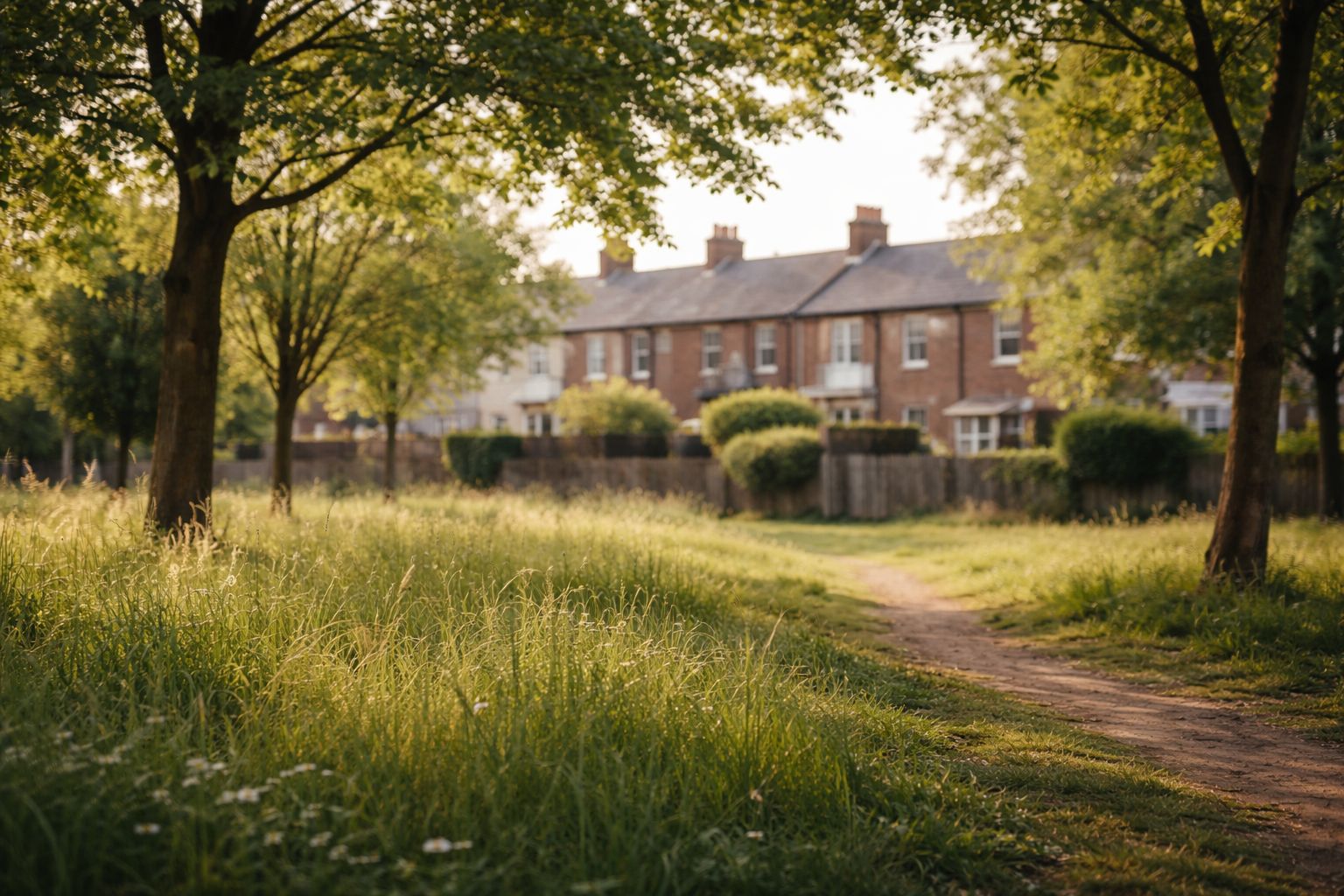
Perry Common is a residential district of north Birmingham, lying between Kingstanding, Oscott, Erdington and Great Barr. It takes its name from the ancient common land that once covered much of this part of the city, a wide open area of heath, grazing ground and woodland that was shared by local villagers long before Birmingham expanded into the countryside.
For centuries, Perry Common formed part of the rural edge of the parish of Aston. The land was used for grazing animals, collecting wood and other common rights, and it remained largely undeveloped well into the nineteenth century. As Birmingham grew rapidly during the Industrial Revolution, pressure for new housing increased, and the common land was gradually enclosed and sold off for development.
Most of modern Perry Common was built during the inter-war and post-war periods, when Birmingham City Council created large housing estates to rehouse families from overcrowded inner-city areas. Streets of semi-detached houses, maisonettes and low-rise flats replaced the open land, laid out with grass verges, small parks and wide roads designed to give residents more space and better living conditions than the older industrial districts.
The area developed a strong community identity, with local schools, churches, shopping parades and social clubs serving the growing population. Many families who moved to Perry Common did so from inner Birmingham, bringing with them close-knit social networks that helped shape the character of the neighbourhood.
One of the area’s most important open spaces is Perry Common Park, which preserves a fragment of the land that once stretched across much of north Birmingham. The park provides football pitches, walking routes and green space for local people, continuing the tradition of shared land that gave the district its name.
Perry Common is also shaped by its position near major roads such as the A34 and the nearby M6 and Spaghetti Junction. These transport links make it easy to reach the city centre and the wider West Midlands, but they also highlight how the area sits between Birmingham’s inner suburbs and its outer fringe.
Today, Perry Common is a quiet, mainly residential part of the city, known for its green spaces and long-established families. Although little remains of the original common land, its name and its park still echo a much older landscape, reminding residents that this suburban district grew from what was once open countryside on the edge of Birmingham.







Leave a Reply