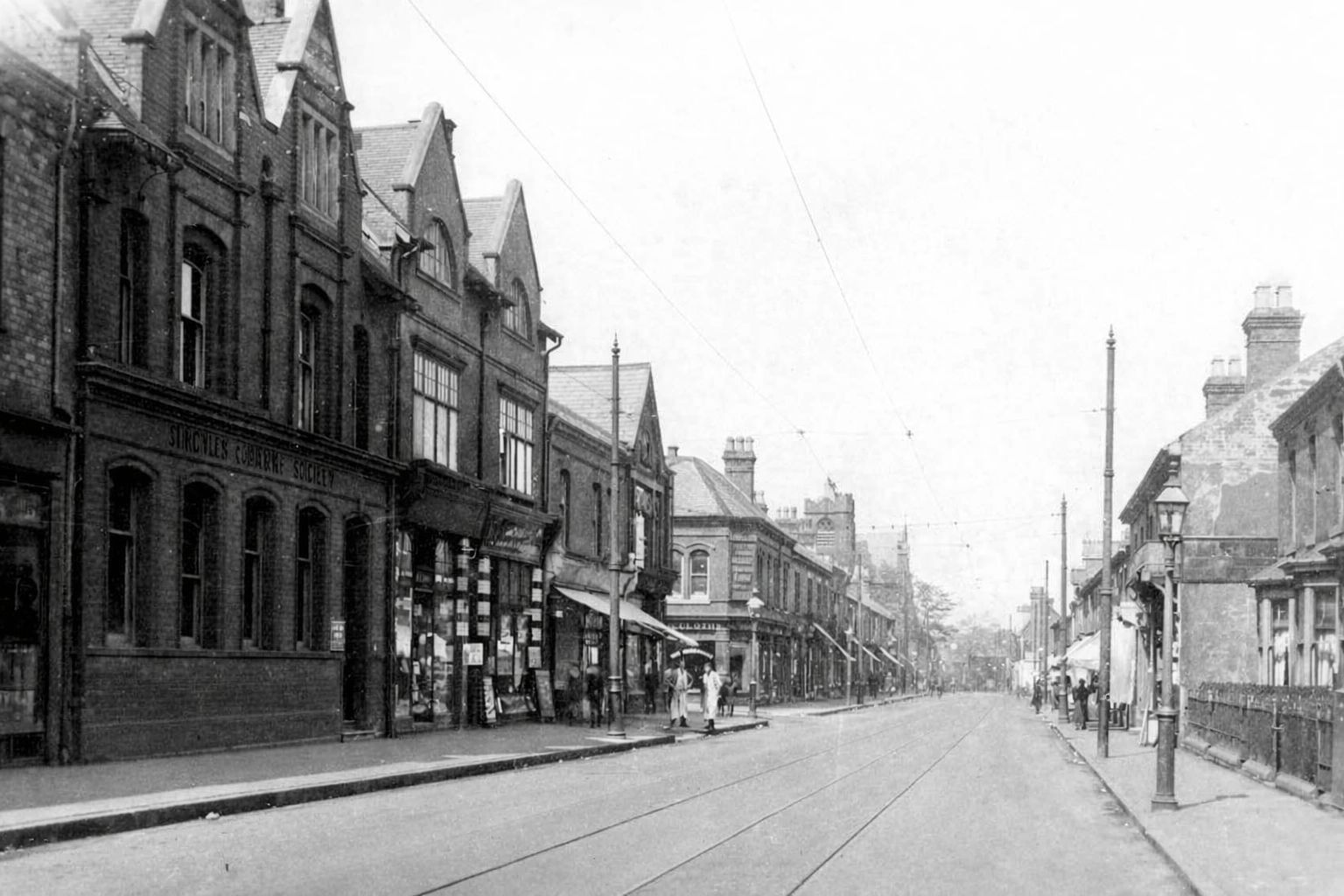
Stirchley lies in south Birmingham between Bournville, Selly Park, Cotteridge and Kings Heath, and has long been one of the city’s most distinctive industrial and working communities. Although today it is often described as an up-and-coming neighbourhood, its roots go back centuries, and much of its character was shaped during the great expansion of Birmingham in the nineteenth and early twentieth centuries.
Before industrialisation, Stirchley was a rural hamlet surrounded by fields, woods and small farms, sitting along the course of the River Rea and the Bourn Brook. The name itself is thought to come from Old English, referring to pasture or grazing land. For centuries it remained lightly settled, supplying agricultural produce to Birmingham, until canals, railways and factories began to transform the area.
The Worcester and Birmingham Canal was one of the first forces to reshape Stirchley. Running directly through the district, it brought coal, raw materials and trade, making the area attractive for mills, brickworks and metalworking businesses. Later, the arrival of the railway and Stirchley station turned it into an important transport hub, linking it not only to the city centre but also to Redditch, Worcester and beyond. These routes allowed factories to grow rapidly and made Stirchley one of Birmingham’s key industrial suburbs.
Among the most important employers were the British Rubber Company, later known as Dunlop, which had large works nearby, and the Hazelwell and Stirchley engineering firms that produced everything from machine parts to industrial tools. Brickworks, metal foundries, cabinet makers and food processors also filled the area, particularly around the canal and the railway lines. Thousands of workers lived in the dense terraces that grew up around Pershore Road, Hazelwell Lane and the back streets that still define much of Stirchley today.
Stirchley Baths, opened in 1911 on Bournville Lane, was built as a public swimming baths and wash house for the local community. After closing in 1988 it was later scheduled for demolition, but following a major restoration carried out between 2014 and 2016 the listed Edwardian building was saved and reopened as Stirchley Baths Community Centre, bringing the former pool hall back into public use.
Stirchley also developed a strong commercial heart along Pershore Road, which became its main high street. Shops, cinemas, pubs and cafés served the local population, creating a busy, self-contained community. The district was never wealthy, but it was industrious, proud and tightly knit, with strong links between workplace, home and local institutions such as churches, social clubs and schools.
Despite being next to the carefully planned Bournville Estate, Stirchley followed a very different path. Where Bournville was designed as a model garden village, Stirchley grew organically as a working district shaped by industry and transport. Yet the two areas were closely connected, and many Stirchley residents worked at the Cadbury factory, just as others worked in engineering and manufacturing closer to home.
After the Second World War, Stirchley, like much of Birmingham, was affected by industrial decline. Many of the old factories closed, and some parts of the district fell into neglect. However, its strong building stock, canal frontage and rail connections meant it was never abandoned. In recent years, former industrial sites have been converted into housing, workshops and cultural spaces, while independent breweries, cafés and creative businesses have given Stirchley a renewed sense of energy.

Dogpool Lane, one of Stirchley’s oldest streets running from Pershore Road down to the Worcester & Birmingham Canal, has long been associated with the area’s working past of wharves, yards and small factories, but it is just as famous locally for a piece of mischievous humour: the street sign’s L is repeatedly painted over so that it reads “Dog Poo Lane”. However often the council restores it, someone soon obligingly removes the letter again, turning an otherwise ordinary Birmingham street into a long-running local joke that has become part of Stirchley folklore.
Today Stirchley is one of Birmingham’s most interesting and fast-changing neighbourhoods. It still carries the imprint of its working past in its streets, canals and terraces, but it is also a place of new ideas and new communities. From its rural origins to its industrial heyday and its modern revival, Stirchley remains a district with a clear identity, rooted in hard work, resilience and a strong sense of place.







Leave a Reply