Bromford lies in the east of Birmingham, between Hodge Hill, Ward End, Castle Bromwich and the old industrial corridors that once served the city’s factories. It is a relatively modern district by Birmingham standards, but it occupies land with a long and layered history that stretches back to medieval times. The name Bromford comes from an old crossing point on the River Tame, meaning “the ford by the broom”, referring to the shrubs that once grew along its banks.
For centuries this area was largely rural, made up of fields, farms and wetland along the River Tame valley. It remained outside Birmingham’s built-up area until well into the twentieth century, forming part of the agricultural landscape that fed the growing town. The transformation of Bromford came after the Second World War, when Birmingham faced an acute housing shortage and large areas of new council housing were planned on the city’s outer edges.
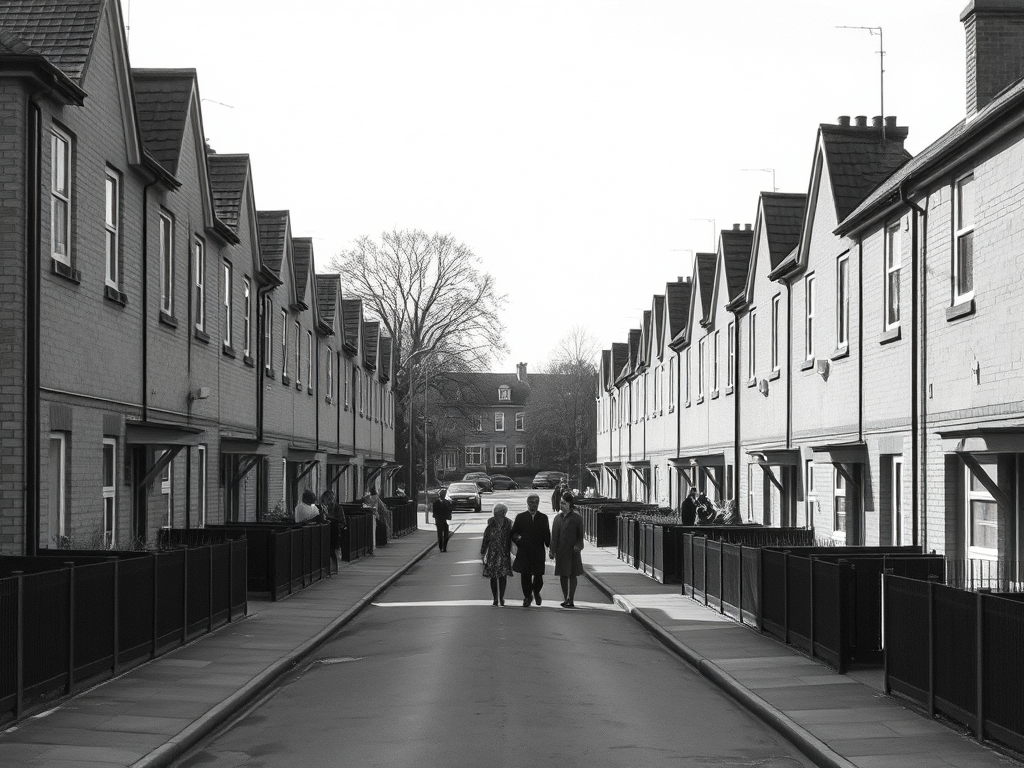
Bromford was developed in the late 1940s and 1950s as one of Birmingham’s major post-war housing estates. Rows of new homes, maisonettes and flats were built to rehouse families from overcrowded and bomb-damaged inner-city districts. The estate was designed with open spaces, schools, shops and community facilities, reflecting the planning ideals of the time, which aimed to create healthier, more spacious environments than the dense Victorian streets they replaced.
Although primarily residential, Bromford was closely tied to Birmingham’s industrial economy. Many of its residents worked in nearby factories in Hodge Hill, Erdington, Castle Bromwich and Aston, including the vast engineering and car plants that dominated east Birmingham. The proximity of major roads and industrial estates meant Bromford became home to a workforce that powered some of the city’s most important industries.
The River Tame and the green spaces along its valley have always been a defining feature of Bromford. Parks, playing fields and river walks provide a sense of openness that contrasts with the urban areas to the west, and they preserve something of the landscape that existed before the estate was built. These green corridors have become increasingly important as places for recreation and wildlife.
Over the decades Bromford has developed a strong community identity. Like many post-war estates it has faced challenges linked to economic change, but it has also shown resilience, with active local groups, schools and places of worship playing a central role in neighbourhood life. The area’s mix of long-established families and newer residents reflects the wider story of Birmingham’s changing population.
Today Bromford remains an important part of east Birmingham’s housing landscape. Its post-war architecture, open spaces and riverside setting give it a character distinct from older inner-city districts, while its history as farmland, a river crossing and finally a planned community connects it firmly to the longer story of how Birmingham has grown and adapted over time.







Leave a Reply